Core Capabilities of Modern Fabrication Providers
Cutting and Forming Technologies
The modern fabrication work service landscape has shifted dramatically from the manual labor shops of the past. Today, providers leverage high precision machinery to deliver components that meet stringent engineering tolerances. CNC punching and laser cutting have replaced the torch and template, offering repeatability that simply was not possible a generation ago. In fact, the latest fiber lasers can cut through thick plate steel with a speed and edge quality that reduces secondary finishing work dramatically.
These advanced systems allow for complex geometries without the need for expensive tooling. When a project calls for a high volume of identical parts, or a one off prototype, the setup digital files ensure accuracy. This technological capability is central to any comprehensive fabrication work service, particularly for industries like mining and agriculture where downtime is costly.
Forming technologies are equally critical to the structural integrity of the final product. Press braking with automated back gauges ensures every bend is accurate to a fraction of a millimetre, which is essential for components that must fit together seamlessly on site. Key capabilities to look for include:
– A capacity for bending thick materials.
– The ability to handle large sheet sizes.
– Access to rolling machines for cylindrical shapes.
Robotic welding cells further augment these forming capabilities, ensuring consistent weld penetration on critical joints. A reliable fabrication work service pairs this heavy machinery with skilled operators who understand metallurgy. This combination ensures the finished product is not just dimensionally correct, but also possesses the necessary tensile strength to endure harsh South African conditions. The integration of these technologies streamlines the entire production cycle, from raw plate to ready to install assembly.
Welding and Joining Methods
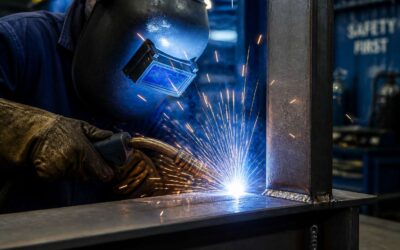
Welding and joining define the structural soul of a finished product. A modern fabrication work service pairs skilled artisans with advanced power sources to achieve deep penetration and clean metallurgy. MIG welding handles heavy sections with speed, while TIG delivers precision for thinner gauges and exotic alloys.
Certified welders follow strict procedure specifications, ensuring every joint meets the required strength. Common processes include:
- Gas metal arc welding for general steel fabrication
- Gas tungsten arc welding for high quality stainless steel
- Flux cored arc welding for outdoor and thick plate work
- Resistance welding for rapid joining of sheet metal
Each method requires specific filler metals and shielding gases. The choice depends on material thickness, service environment, and load demands. A reliable provider documents all parameters, from preheat temperature to interpass cooling. That diligence prevents defects like porosity or hydrogen cracking. This attention to process control is what separates a durable assembly from a premature failure!
CNC Machining and Precision Work
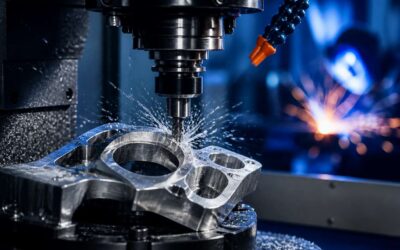
Few moments in modern manufacturing match the quiet confidence of a CNC spindle engaging raw plate steel. The roar is contained, the sparks are orchestrated, and the tolerance is measured in microns. This is where the true capability of a fabrication work service moves beyond brute force and into digital precision. While cutting and welding shape the physical form, computer numerical control defines the exact geometry that makes assembly possible without rework.
A reputable fabrication work service utilises multi-axis machining centres to deliver components that fit with surgical accuracy. This machinery eliminates the margin for human error in repetitive tasks. The same program that guides a one-off prototype can replicate that exact part a thousand times over without losing integrity. This consistency is vital for industries that rely on interchangeability, such as mining equipment and agricultural machinery.
Typical precision capabilities found in a modern workshop include:
– CNC milling for complex 3D profiles and slotting work
– CNC turning for shafts, bushings, and threaded components
– Precision drilling and tapping with automated tool changers
– Coordinate measuring machine verification for quality assurance
The integration of these processes allows a single fabrication work service to manage projects from raw material to finished machined component. By maintaining control over the machining phase, the provider ensures that drilled holes align perfectly with pre-cut profiles. This removes the friction of outsourcing and shortens the production timeline. The final assembly fits the first time, every time. This is the quiet efficiency that separates a professional operation from a basic metal workshop.
Finishing and Surface Treatment
The true measure of a fabrication work service is often found in the final finish. This stage signals the transition from component creation to product readiness. A raw weld may be structurally sound, but it does not yet represent the quality expected by industries such as food processing or marine engineering. Texture and coating are the final layers that define both appearance and longevity.
Surface treatment is not merely cosmetic; it is a protective barrier against the harsh South African climate and demanding operational environments. Humidity, salt air, and abrasive dust win quickly against untreated steel. A professional provider applies the correct treatment to fortify the component for its intended service life. This process reduces the frequency of replacement and safeguards the client’s operational budget.
The specific treatment depends on the application. Corrosion resistance is a priority for coastal operations, while abrasion resistance is critical in mining and aggregate handling. A comprehensive fabrication work service will offer several avenues for protection:
– Sandblasting to strip contaminants and create a superior bonding profile
– Industrial powder coating for a durable and uniform finish
– Electroplating for enhanced conductivity and corrosion resistance
– Pickling and passivation for stainless steel restoration
Selecting the correct process requires metallurgical knowledge and practical experience. The best operator will know that a rushed application leads to premature failure. They will manage the environment and the application thickness meticulously. This attention to detail ensures the product leaves the floor with a finish that performs as well as it looks, closing the loop on a truly complete service.
Assembly and Installation Services
Assembly and installation transform fabricated components into operational assets. A fabrication work service that stops at the workshop floor leaves the client with logistical puzzles and alignment headaches. Modern providers bring bolting sequences, lifting plans, and on-site safety protocols directly to the project site.
Consider a structural steel frame for a new warehouse in Johannesburg. The precision cutting and welding matter little if the columns arrive misaligned or the base plates lack proper shimming. Professional installation crews verify tolerances with laser levels and torque wrenches, ensuring the structure stands true for decades.
The capabilities of a full-service provider typically include:
– Pre-assembly of sub-sections to reduce costly on-site labour
– Site surveys to confirm dimensions before fabrication begins
– Rigging and lifting coordination for heavy components
– Final alignment and bolting to specification
This integration of assembly expertise separates a true fabrication work service from a mere parts supplier. In my experience, clients notice the difference immediately when the handover goes smoothly.
Common Types of Fabrication Work Offered
Custom Metal Fabrication
South Africa runs on steel, and a dependable fabrication work service proves it daily. A typical shop handles far more than raw cutting and joining. Its projects support warehouse roofs, shield food processing equipment, and keep mining operations moving.
The most common requests include:
- Structural steel frames for warehouses and factory sheds
- Stainless steel enclosures for food processing plants
- Architectural metalwork for shopping centres and office towers
- Pipe and tube assemblies for mining operations
We also repair existing structures on site when failures occur. One-off prototypes arrive regularly, often before a client commits to full production. No two jobs look alike, and that variety keeps the team sharp. It is honest, hands-on work!
Structural Steel Fabrication
When you look at a factory shed or a towering office block, the bones are what hold it together. That framework is the result of structural steel fabrication, the most foundational work a fabrication work service can offer. It is not glamorous, but it is essential. We cut and assemble the primary skeleton, the I-beams and columns that give a building its strength and its shape.
The work is measured in tonnes, not millimetres. A fabrication work service in this field plans the load paths, the bracing, and the sheer weight that a structure must bear. For a typical warehouse project, we might supply:
– Roof trusses and portal frames
– Mezzanine floor support structures
– Crane gantry girders for lifting equipment
This is heavy, deliberate work. It demands a different kind of precision than a stainless steel enclosure for a food plant. That work is about hygiene and seamless corners. Structural steel is about durability and absolute tolerance in a different sense. The steel will face the sun, the wind, and the strain of decades of use. In South Africa, where industrial demand is constant, getting this right is the difference between a structure that stands for generations and one that fails under pressure. It is the quiet, unyielding foundation of our built environment.
Sheet Metal Fabrication
Think small. That is the first rule of sheet metal fabrication. A structural steel column is measured in metres, but a control panel housing is measured in millimetres. This trade is the other end of the fabrication work service spectrum, where precision dictates the final product’s integrity.
When you commission a fabrication work service for sheet metal, you are looking at the skins and enclosures that protect sensitive equipment. The steel is thin, often cold rolled, and it bends to a different master. We shape these sheets into the ducts, the electrical cabinets, and the machine guards that keep operations running in South African factories.
The common work here spans a variety of essential products:
– Air conditioning and ventilation ducting
– Electrical control box enclosures
– Protective machine covers and guards
The tolerance levels are harsh. A bend that is off by a single degree causes a door to stick or a panel to vibrate loose. It is a quieter, sharper form of craftsmanship. The material is unforgiving, but the finished piece fits like a glove. Without this layer of the fabrication work service industry, the heavy infrastructure we discussed earlier remains exposed and vulnerable to the elements.
Pipe and Tube Fabrication
For pipe and tube fabrication, the world changes shape. These hollow sections carry fluids, gases, and structural loads across mines, refineries, and power plants. A fabrication work service that handles pipe must master bending, cutting, and joining under strict pressure ratings. The material can be seamless or welded, with wall thicknesses measured in schedules rather than simple gauges.
The challenges here are distinct. A pipe that carries high-pressure steam demands a weld that holds at extreme temperatures. A tube for a handrail requires a smooth finish for safe handling. The common tasks include:
- Cutting and beveling for precise fit-ups
- Bending to specific radii without collapsing the section
- Welding with root passes and cap passes
- Pressure testing to verify integrity
Architectural and Ornamental Fabrication
The visible permanence of a structure often hinges on the specific type of fabrication work service that shapes its face. While structural steel bears the hidden load, architectural and ornamental fabrication creates the skin and the signature details that define a building’s character. This discipline transforms raw metal into balustrades, staircases, and intricate facades that must meet both visual and safety standards, a craft where aesthetics and engineering are inseparably fused.
This work is less about tolerances for moving parts and more about the perception of line, shadow, and finish. The skill required is the ability to interpret a design and give it physical form with exacting precision. A handrail must feel correct in the grip as much as it must support the weight of a person leaning against it. The final product is a permanent installation, subject to the elements and the scrutiny of every passerby.
Projects in this category often include:
Custom staircases and spiral staircases
Entrance gates, fences, and security barriers
Decorative screens and privacy panels
Handrails, guardrails, and balustrades
Architectural features like canopies and pergolas
The challenge for any fabrication work service operating here is the balance between the client’s vision and the physical limits of the material. Achieving a complex curve or a sharp corner without compromising the metal’s integrity requires a deep understanding of its behavior. The finish, whether a raw mill scale or a polished mirror, is the final signature of the work. It is an exacting service that leaves a permanent impression on the landscape, demanding a commitment to quality that will endure for decades.
The Step-by-Step Fabrication Workflow
Project Consultation and Design
The adage “measure twice, cut once” holds true, but the modern workshop’s version involves blueprints and spreadsheets rather than chalk lines. Every successful project begins with a thorough consultation. This stage is less about steel and more about conversation. It is where your vague sketches and rough ideas are translated into a language that engineers and artisans can understand. A good fabricator listens for functionality and restraint, seeking to understand how a piece will be used before a single drawing is made.
During this initial dialogue, a skilled team will determine the critical parameters of your project. These conversations dictate the entire trajectory of the build, and it is imperative that nothing is left to assumption.
– The intended operational environment and load-bearing requirements
– The material grade necessary for longevity and performance
– The preferred timeline and budget constraints
– The specific tolerances for assembly and aesthetic finish
Once these details are codified, the design phase begins. Meticulous technical drawings are produced, often using advanced CAD software to simulate stress points and material behaviour. This documentation becomes the definitive guide for the workshop floor. It is this rigorous planning that breathes life into a professional fabrication work service, ensuring the subsequent precision machinery and skilled hands work in perfect harmony.
Material Selection and Sourcing
Some workshops treat material selection like a trip to the buffet. They pile on whatever is cheap and hope nobody notices the aftertaste. That approach is a fast track to rust, fatigue, and a client who is suddenly very interested in your liability insurance. The truth is, steel is not steel. Choosing the right alloy for the harsh South African sun, or the corrosive kiss of coastal air, is as important as the welding that follows. This is step zero, and skipping it is professional self-sabotage.
A responsible workshop traces the lineage of its stock. It asks for mill certificates and checks the hardness. This is where a fabrication work service proves it understands the difference between a structural column and a decorative handrail.
– Hot-rolled sections for heavy frame integrity.
– Cold-rolled sheet for precise geometries.
– Corten steel for weather-exposed public art.
Local sourcing often trumps the allure of imported bargains. Delivery delays and strange metallurgy are not worth the spreadsheet savings. A good supplier relationship is a quiet, reliable workhorse. It ensures the correct grade arrives on time, every time. Remember, the metal you pick today is the bill you pay tomorrow. In a professional fabrication work service, this decision is never left to a coin toss. The material is the story, and the workshop must source the right storyteller.
Cutting and Shaping Components
It is a sight that puts the craft on display. The cord of a first cut is the literal spark of creation. The shop floor becomes a theatre of controlled violence, where 20-millimetre plate steel surrenders to a programmed torch. This phase is where the promise of a perfect alloy transforms into the geometry of a final product. The dance between raw material and machine is a delicate negotiation, and the fabrication work service is the interpreter.
Once the raw stock is set, the true translation begins. Sketches are resolved to millimetres. A plasma arc kisses the metal, and the air fills with the scent of ozone and burnt steel. It is a sensory experience that never dulls. The workshop relies on a systematic approach to shape each piece, minimising waste and maximising tolerance. A well-organised cutting bay is a symphony of controlled sparks and calculated movements.
The sequence is critical, as errors compound. A poor cut will doom the final weld fit-up. This is why an accredited fabrication work service treats the cutting floor as a disciplined science. The workflow demands a clear mind and a steady hand, ensuring every edge is keyed for the exact depth of the weld seam.
Here is the standard process that governs the floor:
- Drafting the cutting layout to nest parts efficiently and reduce scrap.
- Blanking and bevelling edges to ensure proper weld penetration.
- Drilling and tapping holes for final assembly, rather than on site.
- Marking and tagging each component for traceability back to the drawing.
The goal is to create a kit of parts that fits together like a puzzle. When the components are cut, shaped, and numbered with clarity, the subsequent stages of assembly are free from confusion. It is here that the client receives the first true glimpse of the workshop’s soul. The right fabrication work service treats this step with the reverence it deserves, knowing that a flawless finale is born in the heat of the initial cut.
Welding and Assembly
I have watched a 2 mm root gap mismatch stop a column splice on a Highveld contract before the first arc struck. That is why the welding and assembly sequence begins with fit-up verification, not with a torch. Each joint is checked against the drawing, cleaned to bare metal, and measured for gap and alignment. The fabrication work service then assigns a weld map: root passes, fill passes, and inspection points are recorded against the component tag. Distortion allowance is factored into the tacking plan so the finished frame stays within tolerance.
The final assembly follows that map. Components are tacked, squared, and measured again before full welds are completed. Weld sequence is rotated across the frame to control heat input. Every completed joint is logged for traceability.
Quality Control and Testing
Every fabrication work service depends on a rhythm of verification. We measure, weld, then measure again. The first check happens before any cutting line is marked, because a steel plate does not forgive a poor assumption.
Quality control is not a final act. It lives in each station. Dimensional tolerances are checked with calibrated instruments, and weld integrity is tested through visual inspection, dye penetrant, or ultrasonic methods depending on the specification.
- Check incoming material against mill certificates.
- Verify fit-up and gap before tacking.
- Inspect completed welds against the acceptance criteria.
- Document every result against the component tag.
Testing extends beyond the weld bead. Hardness checks, straightness readings, and load verification are recorded. That documentation becomes the proof a client holds for years. A fabrication work service that skips these steps saves minutes and spends reputations.
Delivery and On-Site Installation
A statistic from the Southern African Institute of Steel Construction notes that rework due to installation errors can consume up to 5% of a project’s budget. The true measure of any fabrication work service appears not in the workshop, but on the concrete slab where the final bolt is torqued. Delivery is an orchestrated event, not a simple trucking arrangement.
The transport plan considers road permits for abnormal loads, escort requirements, and the specific sequencing of components. We crate machined surfaces with desiccant packs. We tag every assembly with a reference that matches the erection drawings. The site manager receives a load-out schedule detailing each component’s position on the vehicle. This prevents the frustrating scenario where the first column required is buried at the back of the trailer.
On-site installation requires patience. Prior to lifting, we verify the anchor bolt settings and base plate elevations. The erection sequence follows the design logic, ensuring stability at every stage. We use laser levels for alignment and check plumbness with theodolites.
– Confirm the foundation coordinates against the surveyor’s report.
– Rig the component with certified slings and inspect the lift points.
– Set the base plate and perform the initial bolt snugging.
– Verify verticality and alignment before final tensioning.
The final step is the tightening process. We move from a snug-tight condition to the specified torque values using calibrated wrenches. After the last nut is turned, we grout the base plates and conduct a final visual inspection. This is the point where the digital model and the physical reality merge. The client receives the keys, the documentation, and the assurance that the structure will perform as engineered. This is the quiet conclusion to a meticulous process, and it is precisely where a professional fabrication work service proves its worth.
Materials and Their Applications in Fabrication
Carbon Steel and Alloy Steel
Carbon steel remains the backbone of industrial fabrication, offering predictable strength and weldability. Alloy steel, with added chromium or molybdenum, resists wear and heat where conditions turn brutal. In South Africa, mining infrastructure and agricultural equipment demand both. A reliable fabrication work service evaluates the operating environment before choosing a grade. Corrosion, abrasion, and cyclic loading each point to different metallurgy. For example, carbon steel handles structural frames and storage tanks efficiently. Alloy steel suits crusher components and high temperature piping. I have seen projects fail when the wrong steel was specified, costing weeks of downtime.
– Carbon steel: cost effective for general structural work.
– Alloy steel: necessary for abrasive or corrosive settings.
Selecting the right material is not a secondary detail. It determines longevity and safety of the finished product.
Stainless Steel and Corrosion Resistance
Rust is a slow, patient thief. It costs South African industry billions every year, quietly eating away at infrastructure along the coast and in processing plants. Stainless steel is the countermeasure. A competent fabrication work service will specify it where chloride exposure and moisture are the enemies. The chromium content forms a passive oxide layer. This film heals itself when scratched, unlike painted carbon steel that invites corrosion under the first nick.
Consider the typical application. Food and beverage production requires frequent washdowns. Chemical processing involves caustic substances that laugh at zinc coatings. Marine environments attack ordinary steel relentlessly. The metallurgy matters. Grade 304 handles most general work, while 316 adds molybdenum for harsher chloride attack.
- Grade 304: standard choice for food equipment and architectural trim
- Grade 316: essential for coastal installations and chemical handling
- Duplex grades: for high stress and severe corrosion combinations
Pumping equipment and heat exchangers benefit from proper stainless selection through extended service intervals. The initial cost draws attention, but the total lifecycle cost tells the real story. A thoughtful fabrication work service weighs capital expenditure against maintenance interruptions, and the decision impacts production uptime for decades.
Aluminum and Lightweight Structures
Aluminum offers a different set of answers. Its density is roughly one third that of steel, which changes everything for transport and structural loads. A fabrication work service using aluminum reduces dead weight without sacrificing service life, provided the alloy matches the environment. Marine grade 5083 resists saltwater, while 6061 handles general fabrication with good weldability. Heat treatable alloys like 7075 deliver aerospace grade strength but require careful handling.
- Roofing and cladding for industrial buildings
- Walkways and platforms that must limit load on existing structures
- Vehicle bodies and trailer decks
Lightweight structures affect foundation requirements, transport costs, and manual handling. For a fabrication work service, aluminum means different welding parameters and thermal expansion. The material moves more under heat, so distortion control becomes a skill. It also conducts electricity well, which matters for busbars and heat exchangers.
Copper, Brass, and Other Metals
Copper and brass bring a different character to a fabrication work service. Copper’s exceptional electrical conductivity and natural antimicrobial properties make it ideal for busbars, heat exchangers, and roofing. Brass, an alloy of copper and zinc, delivers corrosion resistance and a smooth surface for valves, gauges, and ornamental details. These metals conduct heat rapidly, so welding and brazing require precise temperature control to avoid warping or oxidation.
- Electrical switchgear and transformer components
- Plumbing fixtures and pipe fittings
- Architectural cladding and custom signage
Other metals like bronze and titanium occupy specific niches. Bronze resists saltwater and abrasive wear, which suits marine hardware and heavy-duty bearings. Titanium offers a superb strength to weight ratio, but its high cost and reactive nature limit it to aerospace and medical applications. A skilled fabrication work service in South Africa sources these materials locally, where copper mining and processing support a significant industrial base.
Composites and Plastics in Fabrication
Carbon fibre composites behave almost like living materials. They warn you before they fail, through subtle creaks, a visible change in weave tension, or a faint mist of resin dust. For a fabrication work service, this changes everything. The craftsman must read these signals, not just follow a blueprint. Thermoset plastics, once cured, cannot be reshaped. Working with them demands absolute certainty before any compound is mixed, for there is no second chance in the bond.
Fibreglass and Kevlar add a robust layer of protection against corrosion, a boon for South Africa’s chemical and fishing industries. Unlike metallic components, composites can be tuned to direct immense strength in a single direction, with zero compromise on weight. Thermoplastics, which can be heated, bent, and reformed, offer more forgiving handling for complex enclosures, protective housings, and fluid storage tanks.
A modern fabrication work service often employs these materials to solve problems metal cannot touch.
– Reducing structural weight on mobile mining equipment
– Creating non-conductive barriers for electrical substations
– Building weatherproof enclosures for coastal installations
– Lining vessels against chemical erosion and high abrasion
The fabrication work service also utilises acrylic and polycarbonate for glazing and safety shields, merging the strength of steel with the clarity of glass. In the high-velocity world of automotive performance, carbon fibre panels cut weight dramatically, yet they demand a specific skillset in vacuum bagging and oven curing. Plastics and composites are not replacements for steel. They are the new vocabulary in the same language of manufacturing, allowing us to build structures that were whispers of impossible just years ago.
Industries Benefiting from Professional Fabrication Work
Construction and Infrastructure
In construction and infrastructure, the margin for error is measured in millimetres and the cost of failure is measured in lives. This is where the true value of a professional fabrication work service becomes undeniable. A poorly executed structural joint can compromise an entire building, a bridge, or a mining facility, transforming a routine operation into a catastrophic risk. Fabricators do not merely cut and weld metal; they are responsible for the skeletal integrity of the spaces we occupy and the roads we travel.
The backbone of South Africa’s economy, from the Johannesburg skyline to the Durban harbours, relies heavily on robust infrastructure. Every beam, column, and railing must withstand immense pressure and harsh weather conditions. To achieve this, engineers depend on a service that prioritises load-bearing accuracy and adherence to strict industry standards. It is a silent promise of safety that happens long before any concrete is poured or any foundation is laid.
Specific applications in this sector often require an incredibly high degree of veracity:
– Structural frames for high-rise buildings that must align perfectly for curtain wall installation.
– Bridge girders which must accommodate thermal expansion without cracking.
– Heavy-duty platforms for mining operations that face constant vibration and abrasive wear.
– Support brackets for HVAC systems, where misalignment leads to inefficiency and premature wear.
The complexity of these projects demands more than just heavy machinery. It requires expert reading of blueprints and a deep understanding of stress points. Without this level of proficiency, a development project can quickly become a liability. Precision is not a luxury here; it is the baseline requirement for longevity and, most importantly, for public safety. The durability of our transport networks and public utilities is directly tied to the quality of the metalwork that holds them together.
Oil, Gas, and Energy
The oil, gas, and energy sector expects metal to perform under conditions that break lesser components. Salt spray corrodes exposed structures. Volatile media move through pipes at lethal pressures. Turbine housings vibrate through millions of cycles.
A professional fabrication work service meets these challenges with verified weld procedures and strict dimensional control. We have observed failures in this industry: a single hairline crack in a high-pressure line can halt production for weeks. South African energy infrastructure, from the offshore gas fields near Mossel Bay to the Mpumalanga coal fleet, depends on components engineered for longevity.
A fabrication work service for this sector typically produces:
- Pipe spools manufactured to API standards
- Structural supports for compressors and pumps
- Pressure vessel shells with certified weld integrity
- Skid frames for modular processing units
These items must tolerate thermal cycling, vibration, and corrosive exposure from the moment of installation.
Automotive and Transportation
It is a curious paradox of the modern driving experience. We glide in silence over potholes that would have shattered a suspension a decade ago, yet we remain blissfully unaware of the engineering that makes such comfort possible. The automotive and transportation sector in South Africa operates under a unique strain. From the logistics fleets thundering down the N3 to the commuter rail stock servicing Gauteng, every component is subjected to relentless fatigue.
A professional fabrication work service addresses the unsung heroes of this industry: the jigs that hold panels, the heavy-duty tow bars, and the custom brackets for mining vehicles. These are not glamorous parts, but they are essential. When a truck chassis needs reinforcing for off-road conditions, or a prototype requires a bespoke fuel tank, the speed and precision of a dedicated workshop outpaces any assembly line.
We have seen firsthand how a well-crafted repair jig can save a fleet from weeks of downtime. The true test lies in matching the original manufacturer’s tolerances, ensuring that a replacement part fits as though it were born with the vehicle. This demands a careful balance of strength and weight, a calculation that only comes from experienced hands. The result is roll cages built to FIA specs, or custom intake manifolds that survive the dust of the Karoo. It is unglamorous work, but the quiet hum of a well-maintained engine is its own reward.
Aerospace and Defense
Few industries place such a premium on absolute precision as aerospace and defense. A tolerance measured in microns here can determine the difference between a successful mission and a catastrophic failure. South African defense contractors and private aviation operators face a unique challenge, however. They must maintain aging platforms while integrating modern systems, a task that demands a fabrication work service capable of bridging decades of technological change.
We have seen this most clearly in the restoration of vintage aircraft. The original tooling is long gone, and the supply chain for specific brackets or fairings has dried up. The only path forward is to reverse engineer the component, fabricate a new part from raw billet, and validate its integrity through rigorous testing. This is not production work; it is forensic engineering. The ground crews and maintenance teams rely on these skills to keep airframes legally airworthy.
For defense applications, the priorities shift toward durability and stealth. Components must withstand extreme G-forces, temperature swings, and ballistic shock. A fabricator working in this sector must be conversant with specialized alloys and the strictest quality standards. The critical items often include:
- Precision tooling for composite layup processes
- Custom avionics racks and mounting trays
- Armored vehicle hatch frames and hinge assemblies
- Ground support equipment for rapid deployment scenarios
The secrecy surrounding these projects adds another layer of complexity. Communication must be flawless, yet discreet. Specifications are often provided piecemeal, requiring the workshop to hold the broader picture in mind while executing each individual step. It is a demanding environment, but one where the quiet satisfaction of a perfect fit on a test bench speaks volumes. The margin for error is zero, and that is precisely why experienced hands are worth their weight in gold. Ultimately, the longevity of national assets depends on the quiet competency of a reliable fabrication work service.
Food and Beverage Processing
Food and beverage processing plants operate on a simple principle: what you cannot see can still hurt you. A fabrication work service in this sector builds trust between a producer and every consumer who opens the product. The consequences of a flawed weld are not immediate, they are cumulative. A microscopic crevice allows bacteria to survive the cleaning cycle.
South African dairies, breweries, and fruit processors demand equipment that endures aggressive caustic washdowns while remaining easy to inspect. The fabricator must understand drainage angles, flow dynamics, and the chemical resistance of every material. The most common deliverables include:
- Sanitary mixing tanks with mirror finished welds
- Support platforms designed without hidden ledges
- Clean-in-place piping and manifolds
When the fabrication work service delivers, the plant runs smoothly and nobody notices. I have stood on those production floors, and that silence tells me everything. That is the point. The absence of failure is the measure of success.
Marine and Offshore
The South Atlantic and Indian Oceans punish complacency. Salt spray, constant motion, and the corrosive embrace of seawater expose any structural weakness within months. A fabrication work service for the marine and offshore sector must therefore deliver components that survive conditions where conventional tolerances are unacceptable and where the cost of failure extends far beyond money.
We build for tugs, fishing trawlers, and offshore supply vessels operating from Durban to Walvis Bay. The work demands precise metallurgy and fatigue analysis, not just robust welding. We fabricate:
– Deck machinery supports and A-frames designed to absorb dynamic stress
– Pipe spools and riser sections rated for full hydrostatic pressure
– Safety railings and walkways with hot-dip galvanized protection
Every joint must handle cyclic loading, thermal expansion, and the occasional impact of a mooring line. Shipyards rely on our fabrication work service to deliver these elements on schedule, knowing that a single bad weld can compromise an entire asset and its crew.
Selecting and Evaluating a Fabrication Work Service Partner
Certifications and Compliance Standards
Selecting a fabrication work service partner in South Africa demands more than a glance at their portfolio. A single compliance failure can halt your project and cost millions. I have seen firms with flawless welds crumble under audit pressure. Certifications are the invisible blueprint of trust.
Look for ISO 9001 as a baseline. Then verify industry specific accreditations. For local projects, SABS approval matters. These credentials prove that every process, from intake to delivery, meets rigorous standards. Without them, you are gambling on promises.
Ask for their compliance records! Request documentation of safety protocols and environmental regulations. A reliable partner will share these openly. In my experience, hesitation signals hidden problems.
- ISO 9001 certification
- SABS or equivalent local marks
- Safety compliance records
Each item reveals how seriously they treat accountability. A fabrication work service that cannot show these is a liability, not a partner.
Portfolio and Experience Evaluation
The portfolio is the memory of a fabrication work service. It records every project as a chapter in their industrial story. A partner with a rich and varied history demonstrates resilience and adaptability. Scrutinize case studies that mirror your own project’s scale; seek out examples of complex geometries and challenging materials that required inventive solutions.
Evaluating experience demands a careful look at their problem solving approach. Ask how they navigated supply chain disruptions or design revisions. A seasoned team will have clear narratives about managing these obstacles, not just showcasing flawless outcomes. Consider their track record in your specific sector. Expertise in mining infrastructure does not automatically translate to skill in food processing equipment.
A credible portfolio should include:
– Projects of progressive complexity
– Testimonials from substantive clients
– Visual documentation of process and product
These elements reveal a culture of continuous improvement. The right partner offers a history that aligns with your project’s demands. Their experience becomes a tool for anticipating your needs and mitigating risks before they emerge on the shop floor.
Production Capacity and Lead Times
Production capacity is the quiet architecture behind every promise a fabrication work service makes. When a partner states they can handle your volume, they are not just referencing floor space or the number of machines in a bay. They are referencing the rhythm of their entire operation, from the procurement of raw plate to the final dispatch of a completed assembly. A true measure of capacity lies in how a facility manages the friction between competing orders and the finite hours of a working day.
Lead times are often where aspirations meet reality. A shop that quotes an impossibly fast turnaround may be planning to sacrifice one client for another. A fabrication work service that offers honest timelines demonstrates a respect for the physics of their craft. The manipulation of heavy steel, the sequence of welds, and the cooling of materials all follow a tempo that cannot be rushed without consequence. A lead time is not a promise made in a sales room; it is a commitment born on the shop floor.
Consider the elements that define a partner’s true bandwidth:
– Their equipment load versus available labor hours
– The complexity of the parts queued for production
– The redundancy of their supply chain for critical materials
– Their policy for managing urgent, unplanned work
When you evaluate a vendor, ask about their current backlog. Inquire about their shift structure and how they handle seasonal surges. The right partner will view your timeline as a shared objective, not a point of contention. They will explain their sequencing logic and the potential bottlenecks, offering solutions rather than just dates. The most pragmatic measure of a fabrication work service is their ability to align their production schedule with your operational launch, ensuring that the final delivery is an event of precision, not a moment of anxiety. The true cost of a delay is never measured in downtime alone, but in the lost momentum of your entire project.
Pricing Transparency and Value
The true cost of a fabrication work service is often an occult ledger, far removed from the initial quote. I look for partners who are transparent about material costs and labor hours. A detailed pricing structure reveals their confidence in the process. In South Africa, fluctuating material supply can test any budget. To navigate this, ask for a complete breakdown of costs. A vendor’s willingness to open their books signals a partnership built on trust, not just a transaction.
Value is found in the integrity of the final product. A cheap quote can portend compromises in material grade or weld quality. The pragmatic calculus of procurement weighs the upfront price against the long-term cost of a failure. A fabrication work service that justifies its price with a documented quality process offers a return that extends beyond the invoice. I often suggest hiring an independent inspector for a pre-delivery review. This small investment protects the project and confirms the vendor’s claims.
Post-Sale Support and Warranties
A warranty is a bit like a gym membership. Everyone claims to have one, but almost nobody reads the fine print until something snaps. When selecting a fabrication work service, the post-sale support often reveals more about a vendor than their slickest marketing brochure. The real test begins after the invoice is paid, and the equipment is running in your facility.
A robust warranty should cover workmanship defects, not just the obvious failures. During my time evaluating suppliers in Gauteng and the Western Cape, I have seen contracts that hinge on unreasonable interpretation. Ask pointed questions about response times, replacement procedures, and who exactly foots the logistics bill for returns. The answers will separate the serious operators from the fly-by-night crowd.
Consider the following when you review support structures:
– Confirm the warranty duration and what specific components it covers
– Ask for a clear escalation path when urgent issues arise
– Check if the vendor stocks critical spare parts locally or must import them
– Verify the process for submitting a claim and the expected turnaround time
The true measure of a fabrication work service is how they handle the unglamorous moments after commissioning. A vendor who disappears once the deposit is banked is a liability disguised as a supplier. Look for teams that schedule proactive inspections and respond to queries with tangible action, not vague promises. This level of commitment transforms a simple transaction into an operational asset. In an environment where production downtime carries a heavy price, the support structure around the steel matters as much as the steel itself. Your procurement strategy should therefore weigh the cost of a failure against the value of a partner who remains present until the job is done right.


0 Comments