Materials Selection and Their Role in Custom Fabrication
Evaluating Material Properties for Demanding Applications
In the high stakes world of industrial output, the selection of raw material is the first and most critical act of engineering. Johannesburg’s skyline and the mines beneath it stand as testaments to what happens when tensile strength and fatigue resistance are prioritized from the drawing board. However, the choice is rarely about finding the hardest alloy. It is a calculation of environmental exposure, lifecycle cost, and the tolerance for failure.
Every component we forge carries a specific biography of stress. Evaluating yield strength against the corrosive whispers of brine, or thermal shock, requires more than a data sheet. For demanding applications, we consider the microstructure of the steel. We measure how a metal will behave after a hundred thousand cycles, not just on day one.
The properties that matter most often live in opposition:
– Abrasion resistance versus machinability.
– Weight reduction versus structural rigidity.
– Weldability versus hardness.
– Cost per unit versus longevity.
Engineering becomes the art of balancing these tensions. When we specify a material for a slurry pump or a mining bucket, we are predicting a decade of brutal performance. The wrong choice is not a nuisance; it is a catastrophic event that halts production and threatens lives. This is why the discipline of custom fabrication and engineering here in South Africa demands a reverence for the physical world. We do not merely shape metal; we interpret its limits and test its spirit against the harsh realities of the Karoo or the highveld. That judgment is the true value we deliver.
Comparing Steel Alloys, Aluminum, and Exotic Metals
The difference between a 10-ton mining bucket that lasts eighteen months and one that fails in six is rarely the price tag. Steel alloys deliver proven toughness in structural frames. Aluminum offers a reprieve where weight is a critical concern. Exotic metals, such as titanium or Inconel, step in when temperatures and pressures exceed what conventional options can handle.
In custom fabrication and engineering, the comparison is not academic. A manganese steel chute outlasts mild steel by years. An aluminum conveyor section reduces dead load but demands careful weld preparation. Exotic metals carry higher costs and longer procurement timelines, but they prevent catastrophic failures in high-heat applications.
Consider what we weigh on each project:
- Local stock availability and lead times
- Compatibility with existing welding processes
- Post-fabrication heat treatment or coating needs
Each material asks different questions. Our role is to answer them honestly!
Surface Treatments and Coatings for Longevity
The ocean fog that rolls off the Atlantic carries salt that never sleeps. That salt finds unprotected steel and begins its slow work within days. We see it in the rust streaks on mining conveyors and the pitting on harbour equipment. The material beneath matters, but the surface determines who wins.
In custom fabrication and engineering, surface treatments decide how the finished piece will meet its environment. The choice depends on the conditions ahead:
- Hot-dip galvanizing for structural steel exposed to coastal air and moisture
- Powder coating for sealed barriers against chemicals and abrasion
- Thermal spray for rebuilding worn dimensions and hardening contact faces
Each method demands its own preparation, and preparation is where patience separates lasting work from early failure. A skipped blasting step or a rushed etch is the beginning of a crack you cannot see until it is too late.
Sustainability and Recyclability in Material Choices
We inherit a silent ledger when choosing materials in custom fabrication and engineering. Every kilogram of steel we cut carries a history of energy, extraction, and transport. That history does not disappear when the part fails. It compounds.
In South Africa, where power constraints and material costs press from every side, the choice between virgin and recycled alloy carries economic consequences that rival the environmental ones. Recycled aluminium requires 95% less energy than primary production. That difference surfaces in project budgets and the national grid!
Ask what happens after the product’s life. Can the alloy be separated from its coatings? Can it return to the foundry without degrading? Design for disassembly matters here. The most sustainable fabrication allows material to cycle endlessly, not once.
When engineers weigh options, an order helps:
- Recycled content over virgin feedstock
- Mono-material assemblies over mixed metals
- Standard grades over proprietary compounds
Each choice ripples outward.
Precision Machining and Advanced Manufacturing Processes
CNC Milling and Turning for Complex Geometries
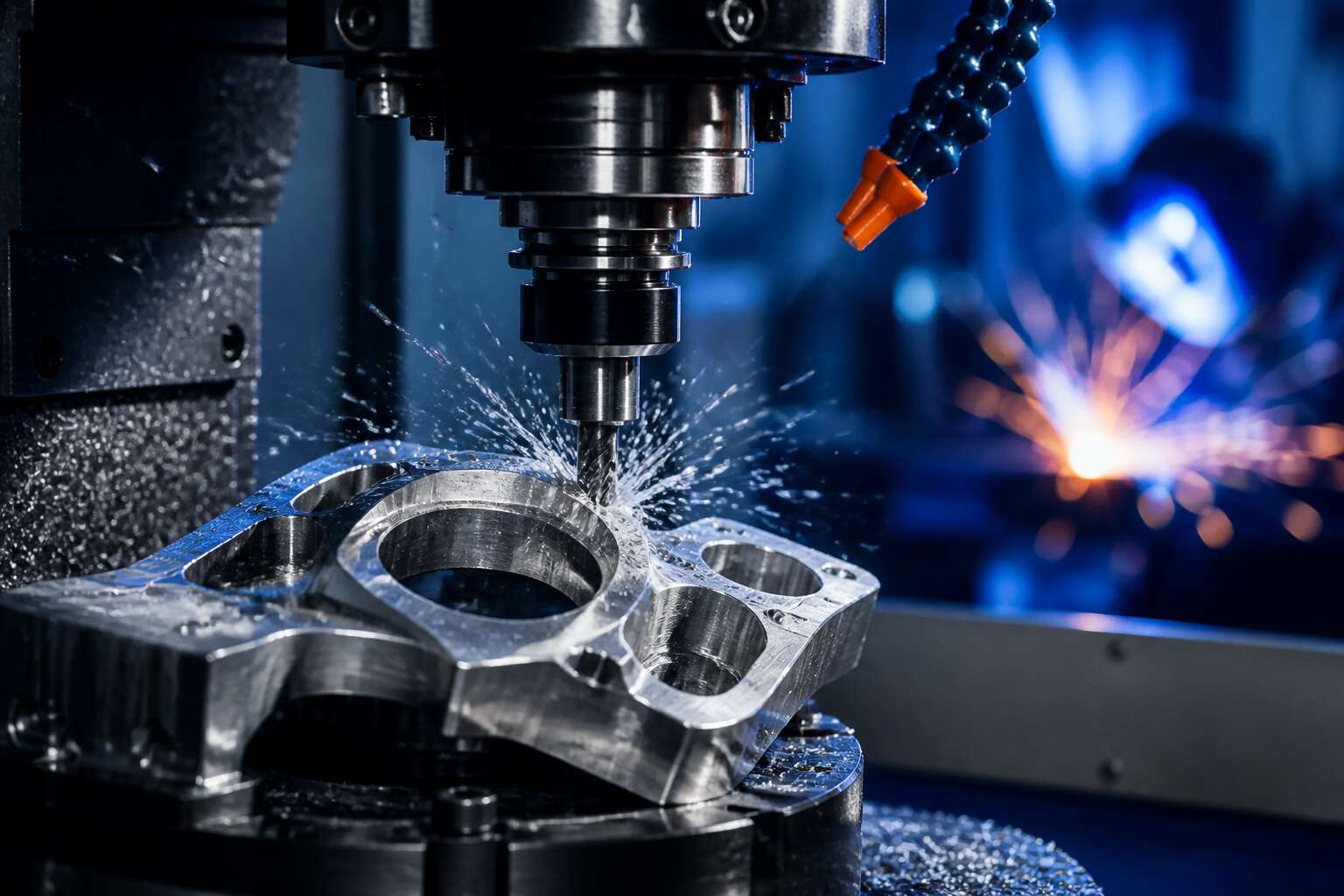
Precision machining feels like a conversation with metal, where every micron demands respect. In our shop, CNC milling and turning transform raw billets into intricate forms that defy assumptions. That is the essence of custom fabrication and engineering, a discipline of controlled force and exacting angles.
We program five axis paths that carve helical grooves and undercuts with repeatable accuracy! Turning centers spin components while live tooling scratches surfaces that would baffle traditional methods. The results are geometries that serve, not merely exist, with tolerances measured in thousandths of a millimeter.
Additive Manufacturing vs. Subtractive Techniques
Across modern manufacturing, a single component often tells two stories about how it came to be. One is built by removing material, the other by adding it. This distinction defines the spectrum of custom fabrication and engineering capabilities available to South African industries. Subtractive methods, like the CNC milling we discussed earlier, carve away from solid stock. Additive manufacturing, including 3D printing, builds parts layer by layer from powders or filaments.
The choice matters for cost and performance. Subtractive processes offer proven material integrity and surface finishes. Additive processes excel at creating internal channels and lattice structures that are impossible to machine. A recent industry survey noted a 40% reduction in material waste for low-volume titanium parts produced additively. This matters in a market where raw exotic metals are expensive and lead times are long.
– Additive eliminates tooling constraints, allowing for rapid design iterations.
– Subtractive processes deliver superior dimensional precision for critical interfaces.
– Hybrid approaches combine printed near-net shapes with final machined surfaces.
For custom fabrication and engineering, neither method is universally superior. The right choice depends on production volume, stress requirements, and surface finish expectations. What is certain is that a workshop proficient in both offers clients the most practical path forward.
Laser Cutting, Waterjet, and EDM Explained
Laser cutting, waterjet, and EDM operate in the quieter corners of the workshop, where light, pressure, and electrical erosion do their patient work. A laser beam severs steel with focused energy, leaving a heat-affected zone that demands attention. Waterjet cuts without warmth, using abrasive garnet suspended in a high-pressure stream, preserving the metallurgical character of the workpiece. EDM, or electrical discharge machining, erodes conductive material through controlled sparks, producing cavities and contours rotary tools cannot reach.
For custom fabrication and engineering, these processes serve distinct functions:
1. Laser cutting suits rapid, precise profiles in sheet metal.
2. Waterjet handles thick sections and heat-sensitive alloys.
3. EDM refines dies, molds, and hardened components.
Each option carries its own tolerances and surface characteristics. A workshop that commands all three, we find, is prepared for the demands of custom fabrication and engineering.
Welding and Joining Methods for Structural Integrity
Precision machining has moved beyond simple tolerances. In South African workshops, five-axis systems and in-process probing hold dimensions that make older machinists pause. The process is quiet and unforgiving. But machining only creates the parts. Structural integrity comes from how those parts are joined.
Welding and joining methods determine whether a frame survives years of vibration or fails on the first load. For custom fabrication and engineering, the choice between MIG, TIG, and flux-cored arc welding depends on thickness, position, and metallurgical outcome. Each method leaves its own signature:
- TIG for thin-wall tubing and exotic alloys.
- MIG for production speed on mild steel.
- Flux-cored for outdoor work where wind scatters shielding gas.
Beyond the arc lies preparation. Fit-up, preheating, and interpass temperature control. We treat these as seriously as the machined surfaces! A weld cannot compensate for a poorly prepared joint. In custom fabrication and engineering, that reality is non-negotiable, especially where fatigue life defines product worth.
Finishing Operations That Elevate Product Quality
Finishing operations separate components that merely function from those that define a brand. In South African workshops, the difference appears in edge breaks, surface roughness values, and the way light falls across a machined face. These details determine the outcome of the entire process.
A part with perfect geometry can fail in service due to a single burr. That is why finishing commands its own discipline. For any custom fabrication and engineering project, the final steps determine performance and perception:
- Deburring and edge radiusing on critical load paths
- Vibratory finishing for consistent texture
- Precision grinding after thermal treatment
Each operation removes evidence of previous steps while preparing the surface for coating or assembly. In custom fabrication and engineering, consistent finishing reduces warranty claims and extends service life. Skipped steps surface later, often at the worst moment.
Design for Manufacturability in Custom Engineering
Optimizing CAD Models for Production Efficiency
A design that looks flawless on screen can still fail on the shop floor. In custom fabrication and engineering, the distance between your CAD model and a finished part is where rework hides. Optimizing for production efficiency means questioning every geometry before it reaches a machine.
One common issue is overconstraining tolerances. Tight tolerances on noncritical features drive up cycle times and inspection costs without improving function. Another is leaving sharp internal corners that force tool changes or wire EDM passes.
- Simplify feature depth and spacing to suit standard tooling.
- Add draft angles for any part that will be cast or molded.
- Eliminate deep pockets that require long reach cutters.
When you adjust a model for how it will actually be made, you reduce scrap and lead time. Good design for manufacturability turns a promising idea into a profitable repeatable process, which is the real measure of success in custom fabrication and engineering.
Prototyping and Iterative Design Validation
The phrase “ship it and see” is a dangerous luxury in this industry. A prototype that performs adequately in a lab setting can unravel entirely when exposed to real-world thermal loads or vibration spectra. That is why the prototyping phase exists: to prove out the manufacturing process as much as the product function. In custom fabrication and engineering, a prototype is not a vanity piece. It is a data acquisition tool.
The iterative loop between design and validation is where the true character of a project is revealed. Each cycle should target a specific set of unknowns, whether that means confirming the behavior of a weldment under fatigue or understanding how a part deflects under its own weight during machining. You are not simply checking dimensions here. You are interrogating the entire production sequence before you commit to tooling costs.
For this to work, you need a feedback loop that is fast. Waiting two weeks for a single part update kills momentum. The goal is to get a manufacturable artifact into your hands, not a perfect one. Then you measure, break it, and measure again. Subsequent iterations should shrink in scope as the risk profile drops.
What the iterative phase routinely exposes in custom fabrication and engineering:
– Where your assumed stock material dimensions were actually loose enough to cause runout.
– If your fixture design is robust enough to hold tight datums across multiple ops.
– Whether the surface finish you specified is achievable without a secondary hand-polish step.
Skipping this validation invites the chance that a design flaw is baked into your production run. Iteration is how you de-risk the transition from a concept file to a parts list that your shop floor can trust.
Balancing Tolerances with Cost-Effective Production
In my years working with South African workshops, the most expensive sentence in any drawing is “hold to within 0.01 mm.” That level of precision demands dedicated setups, slower machine times, and skilled operators. Rarely is it necessary across the entire part!
Design for manufacturability in custom fabrication and engineering forces a practical question: which dimensions truly affect function? A mounting hole can often tolerate 0.5 mm. A bearing seat cannot. That distinction drives production cost.
- Identify critical datums that require tight control.
- Specify looser tolerances on cosmetic or non-interference features.
- Consult the machinist before finalising the drawing.
Loosening a tolerance in custom fabrication and engineering can cut production cost by double digits while improving deliverability. Tighten only what the application demands; relax everything else.
Quality Assurance and Tolerance Management
Establishing Industry-Standard Tolerance Frameworks
Precision in custom fabrication and engineering is not a single measurement but a philosophy. Where a component will pivot or seal, a deviation of microns can mean the difference between seamless operation and premature failure. The quantification of accuracy resides within our tolerance matrices, which define the permissible boundaries for every critical dimension. We anchor our processes to international standards, ensuring that the specifications we document are universally understood and achievable.
- Defining geometric dimensioning and tolerancing (GD&T) symbols for clear communication.
- Selecting fit classes for mating parts, from clearance to interference.
- Aligning measurement strategies with the function, not just the feature size.
Our approach engages statistical process control to monitor production in real time. This is not a final inspection gauntlet but a continuous dialogue between the machine, the material, and the blueprint. We record data at each stage, which allows us to predict and correct drift before it creates waste. The result is a robust framework where every component is validated against the same rigorous criteria, ensuring interoperability and reliability for our clients.
Inspection Tools: CMM, Optical Scanners, and Gauges
Across the shop floor, the true character of a component is revealed only through precise measurement. While statistical control monitors the process, the physical verification of each part relies on a layered system of inspection tools. A Coordinate Measuring Machine, or CMM, serves as the primary arbiter for dimensional truth. It probes critical features, translating physical coordinates into digital data that we compare against the CAD model. This is not a simple pass or fail. It is a detailed interrogation of geometry, revealing subtle deviations in form and position that might escape a casual check.
Optical scanners introduce a different perspective. They capture millions of data points to create a digital twin of the fabricated part, which is invaluable for complex, freeform surfaces. These scanners excel at evaluating the entire shape, not just discrete points. For high-volume verification, fixed and adjustable gauges provide rapid, repeatable checks. They offer immediate feedback on whether a dimension remains within its permissible boundaries.
– Verifying hole positions and true position callouts.
– Analysing surface profiles against the nominal data.
– Confirming thread pitch and depth with dedicated gauges.
– Checking overall form and straightness on long sections.
Each tool has a distinct role in this hierarchy. The CMM offers depth, the scanner provides breadth, and gauges deliver speed. We select the tool based on the risk associated with a specific dimension. This integration ensures that every part leaving the facility meets the stringent demands of custom fabrication and engineering. The data generated is not archived and forgotten. It informs future machining strategies, creating a feedback loop that refines our approach with every batch.
Statistical Process Control for Consistent Output
Variation is the quiet constant in every manufacturing environment. Statistical Process Control gives us a structured way to measure that variation and respond before it compounds into a defect. Control charts track dimensional drift in real time, letting us adjust tooling or parameters while the process still runs.
For custom fabrication and engineering, this discipline turns raw data into foresight. A shift in the moving range signals a process change, not a random blip. We intervene when the pattern demands it, and that is how we keep output consistent across every run.
The metrics we watch are straightforward:
- Cp and Cpk values for process capability
- X-bar charts to monitor central tendency
- Range charts to catch instability in variation
SPC does not replace our inspection tools. It simply reduces the surprises those tools would otherwise uncover. And that makes all the difference on a busy shop floor!
Traceability and Documentation for Compliance
Quality assurance in custom fabrication and engineering extends beyond the final inspection report. Tolerance management lives in the details of how we document each decision. When a dimension shifts during production, we record the cause, the correction, and the verification. That trail becomes the backbone of compliance.
Traceability ties every component back to its material certificate, machine operator, and calibration record. Documentation for compliance is not paperwork for its own sake. It is the evidence that our processes held firm under real conditions.
For any project requiring audit, we maintain:
– Material test certificates with batch numbers
– Dimensional inspection reports tied to specific part serials
– Calibration logs for every gauge and CMM
This documentation loop closes the gap between design intent and delivered reality. For South African manufacturers serving regulated industries, that clarity is non-negotiable.
Overcoming Common Fabrication Defects
Every fabrication shop knows the same set of recurring problems. Warping after welding, dimensional drift in thin wall sections, and surface defects that appear only after finishing. These are not isolated failures. They indicate a process that allowed tolerances to slip during production.
Quality assurance catches these defects at the source. Tolerance management means checking the part against the drawing at the right moments, not only at the end. For custom fabrication and engineering, this choice determines whether we rework a single component or scrap an entire batch.
Common fabrication defects we address:
- Distortion from uneven heat input during welding
- Tool deflection causing out of round bores
- Residual stress releasing after machining
Each defect has a measurable cause. When we track those measurements against the tolerance frame, we can adjust the process before the defect repeats.
Final Assembly and Functional Testing Protocols
Final assembly is where a fabrication order proves itself. Components that passed individual inspection now interact under load, temperature, and time. This stage determines whether custom fabrication and engineering delivers a working system or a collection of parts. Functional testing protocols verify performance beyond geometric compliance.
- True position of critical mounting points under load
- Leak integrity in sealed assemblies
- Torque retention after thermal cycling
Tolerance management continues here. Stacked tolerances in a multi part assembly can exceed the frame set for a single component. We measure and adjust during assembly, then run each unit through its specified operating range before sign-off.
Industry-Specific Applications and Future Trends
Aerospace and Defense: Lightweight and High-Strength Components
Every kilogram removed from a military airframe cuts fuel use and extends mission range. This arithmetic drives South African engineers to chase lighter components without sacrificing strength. In aerospace and defence, failure is not an option.
Custom fabrication and engineering has evolved to meet this pressure. Integrated structures merge frames and skins into single load paths. Parts must absorb energy, manage heat, and resist fatigue under sustained combat loads.
Future trends point toward the next generation of design:
– Topology optimisation that mimics natural load paths
– Embedded sensors for real time structural health monitoring
– Hybrid joining of dissimilar alloys in one assembly
The real hurdle is proving that a lightweight component survives 20 000 hours of violent vibration without micro cracks. That proof demands obsessive repeatability from first cut to final inspection. It is a tough order. The payoff is an aircraft that flies farther, faster, and safer. Custom fabrication and engineering makes that possible.
Automotive and Motorsport: Performance-Oriented Fabrication
In motorsport, every millisecond counts. South African race teams use custom fabrication and engineering to build chassis that twist less and react faster. A typical roll cage must survive a 10g impact while staying under 30 kilograms. This forces fabricators to use mandrel bent tubing and precision fixture tables.
Consider the hidden parts: pedal boxes, dry sump tanks, and intake plenums. Each one is designed around packaging constraints, not catalogue dimensions. For a local endurance series, we once reworked an upright to shave 1.4 kilograms. That single change improved cornering response noticeably.
- Suspension arms with spherical bearings
- Lightweight brake pedal assemblies
- Exhaust headers tuned for torque curves
Future trends include embedded load cells and 3D printed titanium knuckles. The challenge remains repeatability under heat and vibration, but the stopwatch shows the result.
Medical Devices and Instrumentation: Precision and Biocompatibility
Around 12 million surgical implants are placed globally each year, yet the most demanding work never sees a catalogue. In the medical sector, custom fabrication and engineering carries a different weight: biocompatibility. A titanium hip stem that performs flawlessly in a stress test can fail inside the human body if its surface finish invites bacterial adhesion. Every alloy, every passivation step, and every polishing grit matters on a microscopic level.
The challenge is that human anatomy resists standardisation. A trauma plate for a femur must follow the patient’s actual curvature, not an average. This means fabricators routinely produce short runs of highly complex parts, each one tracked and validated. The tolerances are unforgiving, but so are the consequences of a mismatch.
- Micro-machined components for robotic surgical tools
- Patient-specific drill guides produced from CT scan data
- Custom enclosures for implantable drug delivery pumps
Future trends point toward printed bioabsorbable scaffolds and smart implants with embedded sensors for post-operative monitoring. The shift is toward devices that not only replace tissue but actively report on their own integration. The persistent challenge is maintaining absolute repeatability in a setting where human lives are the final inspection protocol.
Energy Sector: Heavy-Duty Fabrication for Harsh Environments
Energy installations face brutal realities. Offshore platforms endure salt spray and high pressures, while mines operate beneath thousands of metres of rock. Standard parts fail quickly here. That is why custom fabrication and engineering matters for valves, flanges, and structural supports tailored to each site’s unique stresses.
Future trends point to condition-monitoring sensors welded directly into load-bearing frames. These sensors transmit performance data to control rooms, predicting failures before they happen. In South Africa, solar thermal and gas-to-power projects demand specialised manifolds and heat exchangers.
- Corrosion-resistant cladding for seawater cooling loops
- High-pressure piping for deep-level gold mines
The energy sector rewards components that survive decades, not months. I’ve seen fabricators adapt designs on the fly to match field conditions. That adaptability is the essence of custom work.
Automation and Robotics: Custom Frames and Enclosures
Automation systems inherit fragility from standard components. In South African factories, robotic cells endure dust, heat, and aggressive washdowns. Off-the-shelf enclosures often betray these machines, letting contamination settle where wires breathe. Custom fabrication and engineering creates a purpose-built shell, with seams placed where strain truly lives.
Frames for robotic arms must absorb torque without flexing. The future trend is embedding load cells and accelerometers directly into welded pedestals, turning inert metal into a nervous system that whispers performance data to plant software.
Custom enclosures address:
- Thermal expansion in continuous welding cells
- Hazardous area compliance for explosive dust and gas
- Retrofitting legacy machines with modern controllers
Each project begins from the robot’s working envelope, never a catalogue template. That specificity is the difference between a machine that survives and one that merely runs.
Emerging Technologies Shaping the Future of Custom Engineering
South African mines and agri-processors are adopting custom fabrication and engineering with a sharper focus on lifecycle cost. The era of building a frame and forgetting it is closing. Emerging technologies are embedding intelligence directly into structures. Sensors inside weld seams now report stress and corrosion before failure occurs. Digital twins let engineers simulate a hopper or gantry under real dust loads, without cutting steel.
Industry-specific needs drive this shift. For mining, wear-resistant alloys are paired with additive repair to keep slurry pipelines running. For food processing, hygienic designs and washdown-safe enclosures dominate. A few developments worth tracking:
- Real time weld monitoring for critical joints.
- Self-diagnosing structural components.
- On-site robotic fabrication for remote sites.
This convergence means custom fabrication and engineering is no longer a supplier service. It is a strategic tool for South African industries that refuse downtime.


0 Comments