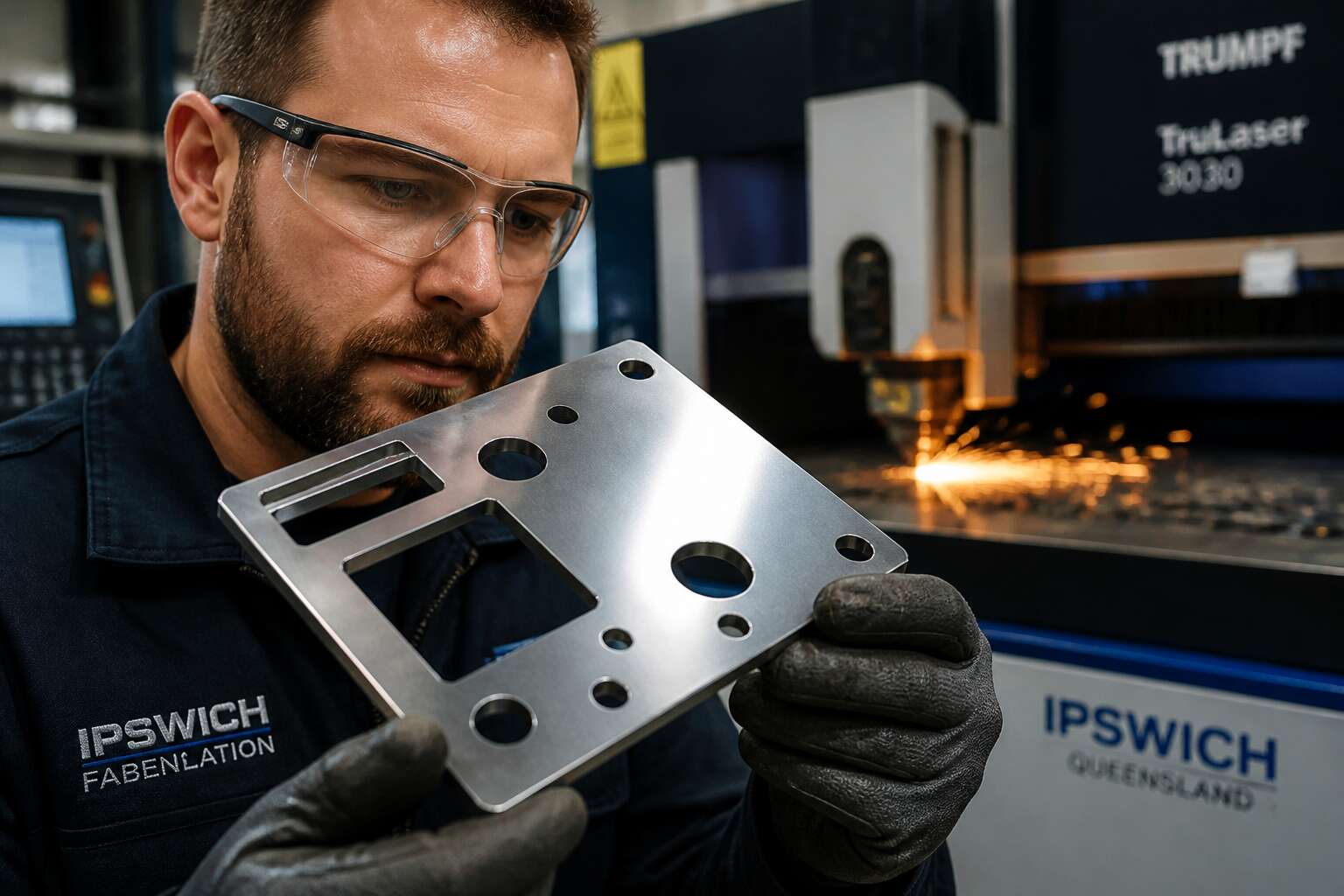
Understanding Local Fabrication Services
Core Processes and Techniques
Local fabrication services often promise precision, but the reality involves sparks, hydraulic groans, and occasional swearing. Core processes like laser cutting, press braking, and TIG welding form the foundation of any credible workshop. For sheet metal fabrication ipswich, the essential skill is matching the right technique to the material and thickness.
- Material inspection for defects and gauge accuracy.
- Cutting with plasma or fiber laser to achieve clean edges.
- Forming with a press brake to create bends without cracking.
- Welding to join pieces, with heat control to prevent warping.
These techniques are not glamorous, but they determine whether your component fits or ends up as a decorative paperweight.
Materials Commonly Used
Senior engineers in Ipswich often say the material makes the job, and they are right. Corrosion, heat tolerance, and tensile strength do not care about your project deadline. For anyone exploring sheet metal fabrication ipswich options, the material stack you choose determines the lifespan of the part.
Local workshops typically maintain a modest stock to handle the region’s demand. Mild steel and stainless steel are the workhorses in most bays. However, the specific alloy selection should be driven by the environment, not just the price per kilo.
– Mild steel (often called MS) for cost-effective structural components.
– Stainless steel, usually grade 304 or 316, for coastal applications where salt air is aggressive.
– Aluminium (grade 5052 or 6061) for lightweight assemblies requiring corrosion resistance without the weight of steel.
The choice between these alloys is a balance of economics and physics. Aluminium offers a high strength-to-weight ratio but is prone to heat distortion during welding. Stainless steel resists rust but requires different tooling to avoid work hardening. The nuance here is that imported steel from a standard supplier may behave differently than the Australian equivalent due to trace element variations. A good fabricator will make these adjustments without you having to ask.
Industries Served by Local Shops
A surprising number of Ipswich businesses rely on third-party fabrication shops to keep their operations running. The trade is not limited to heavy industry. For every mining rig, there is a commercial kitchen or a bespoke architectural feature. Local sheet metal fabrication ipswich services support a broad spectrum of sectors, each with unique tolerances and expectations.
The manufacturing landscape here is varied. Workshops in the region routinely produce components for agricultural machinery, HVAC ducting, and food processing equipment. The local authority also contracts for street furniture and safety barriers. It is a diverse workload.
– Mining and quarrying: Heavy-duty wear plates and grizzly screens.
– Construction: Custom flashings, eaves, and structural brackets.
– Defence and aerospace: Precision enclosures and chassis.
This variety demands versatility from the fabricator. One day the job is a heavy gauge steel bin for a rural property. The next, it is a delicate aluminium shroud for a control cabinet. A reputable shop becomes a strategic partner, not just a supplier. They understand that a dairy farmer in the Lockyer Valley has different needs than a software company in Springfield. The best local operatives manage this complexity without compromising on turnaround times.
Clients often stay with a fabricator for decades. The reason is simple: trust in the workmanship. When a part fails in the field, downtime is costly. It is this practical, localised service that makes sheet metal fabrication ipswich a vital part of the regional supply chain.
Quality Control Standards
A weld that appears flawless can still fail a dye penetrant test. This and similar failures explain why quality control standards in sheet metal fabrication ipswich demand calibrated callipers, laser alignment checks, and traceable documentation over visual inspection alone.
Every batch leaving the floor carries a dimensional report. The tolerance for a stainless steel food hopper may be two millimetres. For a defence enclosure, it narrows to point five. Reputable Ipswich workshops maintain their calibration schedules without exception.
- First article inspection reports before full production runs
- Weld procedure qualifications matched to each alloy
- Surface finish verification through profilometer readings
These routines guarantee repeatability. When a rural client orders fifty identical brackets, the first and the fiftieth must match exactly. That consistency is what makes sheet metal fabrication ipswich a dependable link in any supply chain.
Choosing the Right Fabrication Partner
Certifications and Compliance
One accreditation can save you an entire batch from rejection. That is the stakes when choosing a partner for sheet metal fabrication ipswich. Certifications and compliance reveal how a shop operates under pressure! In my experience, a reputable fabricator displays its credentials openly, from ISO 9001 to local safety protocols. These documents prove that every weld, bend, and cut follows a measured standard.
What should you expect from a certified partner?
- Audited processes for repeatable output
- Documented training for each technician
- Traceable material sourcing and inspection records
Without these safeguards, a well designed component can fail unexpectedly. The right partner treats compliance as a daily discipline. Their audit history is open, and their incident reports are thorough. That diligence separates durable assemblies from costly errors.
Experience with Complex Projects
Complex projects reveal the true character of a fabrication partner. I once watched a multi-stage assembly arrive with every bracket aligned, not because it was easy, but because the shop had already solved similar geometry twice before. That memory is the real inventory. For anyone pursuing sheet metal fabrication ipswich, ask how they handled a difficult job in the past. Listen for specifics! A partner with genuine experience recalls the material grade, the sequence of welds, the fixture that held everything square. Vague answers hide hidden costs. Look for shops that document their solutions.
- They will show you the actual jigs used.
- They will name the exact machine settings.
- They will speak of past tolerances without hesitation.
That level of detail turns a risky prototype into a routine production run.
Custom Machining and Prototyping
The quiet certainty of a workshop floor tells you more than any brochure. In Ipswich, the choice of a fabrication partner often comes down to who listens before they cut. A good shop interrogates your drawings, questions the edge tolerances, and challenges a material choice that might fail under cyclic load. They want to understand how the part lives in the world, not just how it fits on a table.
A consultation with a genuine sheet metal fabrication ipswich specialist feels like a collaboration from the first phone call. They ask about the end use, the environment, and the expected volume. This dialogue uncovers hidden requirements. It is a process of translation, turning your rough sketch or CAD file into a manufacturable reality.
During this phase, a competent fabricator will often provide a concise review of potential bottlenecks. It is a practical checklist that protects your project timeline and budget.
– They verify if the bend radius suits your specified alloy.
– They confirm whether the required fasteners allow for standard tooling.
– They measure the risk of distortion on thin gauges before welding.
The right partner treats prototyping as a critical discovery phase, not a formality. They will flag a tolerance that is too tight for the material gauge and suggest a cost effective alternative. This upfront honesty is the base of a reliable production relationship. When your component finally arrives, it should fit your assembly without persuasion, the result of a clear conversation conducted weeks earlier.
Lead Times and Delivery Capabilities
The quiet certainty of a workshop floor tells you more than any brochure. For sheet metal fabrication Ipswich, that certainty extends beyond the cut. It lives in the schedule. A partner who understands lead times treats the calendar as an engineering constraint, not an administrative afterthought. They know when your pallet will leave the floor before they promise a date.
Delivery capabilities reveal the character of a shop. Many claim capacity. Few possess the disciplined workflow to back it up. A reliable fabricator will tell you when they cannot meet your deadline, and they will say it before the order is placed. This honesty is a rare commodity.
– They maintain buffer capacity for urgent repairs.
– They schedule laser cutting and folding in sequence, not in chaos.
– They communicate delays in raw material supply with early warnings.
I have seen projects derailed by a supplier who promised a two week turnaround and delivered in six. The cost of that delay ripples through your own commitments. Choose a shop where the salesperson and the production manager speak the same language. Otherwise, the promise is just ink on paper.
Customer Support and Aftercare
The last rivet completes the assembly. Customer support begins where the delivery note ends. In sheet metal fabrication Ipswich, the best shops keep a file on every job. They remember the tolerances they held and the drill sizes they used. When a bracket fails in service, they can trace the bend sequence from memory.
That memory is the difference between a vendor and a partner. I have seen a technician drive thirty minutes to inspect a faulty seam on a Saturday. Nobody charged for that visit. The part was remade in two days. Aftercare is not a department. It is a disposition. A shop that records lessons from each project will carry that knowledge into your next order. Ask about their follow up process before you sign. The answer reveals more than any machine inventory.
Common Applications and Projects
Architectural Metalwork and Cladding
When a building’s cladding fails, everyone sees it. That is why architectural metalwork and cladding demand precision, and sheet metal fabrication ipswich delivers it through custom panels and structural details. Local shops handle more than flat sheets; they shape complex forms for facades, roofs, and interior accents.
- Rain screens engineered to manage water flow
- Parapet caps that fasten securely at roof edges
- Column covers and entrance canopies built for high traffic
- Louvers and sunshades tuned to local sun angles
Each piece requires a distinct approach to joining, folding, and finishing. The best operations treat every building as a prototype, because no two elevations ever repeat. That variety keeps cladding reliable, even when wind stresses the joints.
Industrial Guards, Enclosures, and Frames
One broken bolt on a machine enclosure can stop an entire assembly line. Local companies know this, which is why sheet metal fabrication ipswich must deliver guards and frames that fit without guesswork. These structures shield operators, guide cooling air, and anchor heavy motors.
- Perimeter fencing for robotic cells
- Hinged covers for gearboxes
- Load bearing bases for stamping presses
Fabricators measure existing equipment, then cut and fold steel with tolerances measured in millimetres. Welded seams receive thorough inspection, because a frame that twists under stress ruins alignment.
Enclosures for sensitive electronics demand gasketed panels and clean openings for cables. Guards must allow visibility while stopping debris. Every job requires a practical eye for how machines actually run. This attention to detail turns raw sheet metal into dependable machine protection.
Agricultural Machinery Components
A single worn auger flight can cost a farmer an entire harvest season. That is the reality of modern agriculture, where uptime is everything. Sheet metal fabrication ipswich plays a direct role in keeping heavy machinery moving through the toughest conditions.
Fabricators craft components that face constant vibration, moisture, and abrasive soil. The work is functional, built to endure.
– Grain hopper extensions that bolt directly onto existing augers
– Stone trap doors and inspection hatches for combine harvesters
– Skid plates for disc harrows that take the brunt of rocky terrain
– Cab mounting brackets that must not fatigue under years of use
Common projects also include tractor body panels and intake covers. These parts often replace originals that have rusted through or dented beyond repair. Each piece is measured from the actual machine, not from a faded drawing.
The metal used here is typically high-tensile steel or abrasion resistant plate. It needs to be tough, but it also needs to be formable. Punching holes and folding flanges with precision ensures every part lines up with existing bolt patterns. A panel that fits poorly invites chafing, which leads to premature wear and eventual failure.
Local fabricators understand that farmers cannot afford downtime. This is why they focus on creating replaceable parts that are simple to install and maintain. Quality workmanship here means a part that outlasts the original, which is what agricultural operators truly need. Sheet metal fabrication ipswich is suited to this task, adapting heavy duty methods to the unique demands of the African landscape.
Mining and Extraction Equipment
The underground environment does not forgive compromise. A single failed chute liner can halt an entire extraction circuit for days. That is where sheet metal fabrication ipswich becomes essential, delivering parts for constant abrasion and impact.
Fabricators produce replacement segments for ore transfer chutes, crusher feed boxes, and cyclone separator casings. Parts are cut, formed, and punched from wear resistant plate to match existing mounting points. In my experience, hole spacing is checked against the machine frame before shipping.
Typical mining projects include:
- Impact plates for transfer points with bolt-on edges for quick swaps
- Screen side plates with reinforced flanges
- Dust extraction hoods with angled louvres to direct airflow
- Walkway treads and handrail base plates for maintenance platforms
Each piece handles slurry, dust, and heavy vibration without losing alignment. A well-made panel stays rigid for years. A rushed one wears through in months, a cost no mine can absorb!
Automotive and Transport Parts
Transport vehicles take a beating. Truck trays, trailer decks, and chassis brackets endure constant vibration, road grit, and shifting loads. Sheet metal fabrication ipswich delivers the panels and mounts that keep commercial fleets running well beyond the typical service life.
Local fabricators produce replacement body panels for delivery trucks, custom fuel tank brackets, and reinforced tray sides for haulage vehicles. In my experience, the best shops verify hole spacing against the actual chassis frame before shipping. A misplaced hole means a vehicle sits idle for a day.
- Chassis cross members with precision punched pattern holes
- Tray canopies with curved roof sections for reduced drag
- Tow bar reinforcement plates with gusseted corners
- Battery box enclosures with ventilation louvres
Each part must handle South African roads, from potholes to gravel passes. A well made component fits without grinding or force. A rushed one fails early and costs twice as much to replace.
Bespoke Fabrication for Local Businesses
Most small business owners discover their machinery has a personality only when a custom part is needed. A food stall owner asked us to build a chute that guides biltong into packing bags without shredding it. That is what sheet metal fabrication ipswich does best!
Bespoke work for local businesses solves problems that no catalogue will ever list. We have built foldable display racks for a hardware store and a dust shield for a timber workshop’s circular saw. Each job starts with a sketch and ends with a part that fits.
- Custom shelving for a coffee roastery
- Reinforced hopper for a chicken feed supplier
- Adjustable mount for a bakery oven fan
Waiting for a factory-made solution wastes days. We turn designs into measured, drilled, and welded reality faster. That is the value of a local workshop that listens.
The Step-by-Step Fabrication Workflow
Design Consultation and Precision Drafting
Design work often decides success or failure before a single sheet is cut. In sheet metal fabrication ipswich, the consultation phase gives you the chance to align expectations with practical reality. We listen first, then ask pointed questions about load, environment, and assembly. That dialogue produces a clear brief.
Next comes precision drafting, where CAD models and detailed shop drawings lock in every dimension. Tolerances are set early to avoid surprises. Drafters also check for material thickness constraints and bend radii. A typical workflow includes:
- Confirming the part’s intended fit within a larger assembly
- Reviewing edge conditions to prevent sharp burrs
- Identifying the most efficient nesting layout for cutting
Once approved, the drawing drives the fabrication process. This step by step discipline keeps sheet metal fabrication ipswich reliable, repeatable, and ready for production.
Laser Cutting and Metal Forming
The transition from screen to steel is where the real choreography begins. Laser cutting moves with a quiet precision, tracing the approved CAD geometry into raw sheets. The beam’s kerf is narrow, which means edges come out clean and require minimal secondary work. For sheet metal fabrication ipswich, this stage delivers speed without sacrificing accuracy. Parts emerge with a consistency that hand tools could never match.
Once the profile is freed, forming gives it dimension. Press brakes apply calculated force to create bends, folds, and flanges, transforming a flat silhouette into a structural component. The operator’s skill matters here. They must account for springback and material grain, adjusting each hit to hold the specified angle. It is a physical conversation between machine and metal.
- Checking bend radius against material thickness
- Verifying hole alignment after each forming step
- Measuring final dimensions against the shop drawing
This workflow, from raw sheet to formed part, is what keeps production timelines honest. Every pass builds on the last, and the result is a component that fits the assembly without force. That reliability is the quiet engine behind sheet metal fabrication ipswich.
Welding, Joining, and Assembly
Welding transforms individual components into unified assemblies. TIG welding offers control for thinner gauges, while MIG delivers speed on structural joints. Each weld bead must penetrate cleanly without distortion. For sheet metal fabrication ipswich, this stage demands steady hands and careful heat management. Welders alternate between tacks and full passes, allowing the material to cool and settle.
Fasteners and rivets provide alternative joining methods where disassembly may be needed later. The assembly table holds subcomponents in alignment while workers fit every bracket, hinge, and brace into place.
- Checking weld penetration on test pieces
- Aligning subassemblies against jigs
- Torquing fasteners to specification
Quality checks during sheet metal fabrication ipswich projects confirm that every joint bears its intended load. The finished product leaves the floor ready for installation, completing the journey from flat drawing to durable object.
Surface Finishing and Protective Coatings
Salt air does not wait for a fresh weld to cool. In South Africa, humidity and airborne salts punish bare metal quickly. Protective coatings are the difference between failure in months and lasting decades.
For sheet metal fabrication ipswich, the finishing process starts with surface preparation. Grinding, sandblasting, or chemical cleaning removes mill scale and oils. Without this step, no coating bonds properly.
- Powder coating for tough, uniform finishes.
- Galvanizing for sacrificial zinc protection.
- Epoxy primers for sealing surfaces.
Technicians match the coating to the environment. A mining conveyor needs different treatment than an architectural handrail. Temperature, chemical exposure, and UV light all influence the selection.
Proper curing and thickness measurement ensure the coating performs. This attention prevents premature paint failure and corrosion.
Planning Cost and Time Schedules
Key Cost Drivers in Metal Projects
In the realm of sheet metal fabrication Ipswich, the initial quote can feel like a divination ritual, a guess at the future carved from cold steel. Yet, the true masters of the trade know that cost is not a single number, but a spectrum of variables. The primary drivers are material selection and the complexity of the geometry itself. A simple box demands far less labour than a chassis with intricate curves and tight tolerances. Each bend, each hole, each weld adds its own toll to the final invoice.
Beyond the obvious, hidden factors lurk in the shadows. Your choice of material grade affects not just the price, but also the longevity of the part. The precision of the required tolerances dictates whether we employ the standard press brake or a machine with micron-level accuracy. Furthermore, the volume of your order changes the math entirely. A one-off prototype carries a different burden than a production run of a thousand.
Here is where the schedule often comes undone. Consider these recurring points of friction:
– The availability of specific alloy stock, which can fluctuate.
– The queue for the finishing line if you choose a specialist coating.
– The time required for design revisions that are discovered late in the process.
The most significant cost, however, is often the silence between drawings and production. A conversation that is incomplete can lead to a part that is perfect on paper but worthless on the floor. Patience in the planning phase is a virtue that pays dividends, ensuring that your project does not suffer the slow death of a thousand small delays.
How to Get Accurate Quotes
An accurate quote for sheet metal fabrication Ipswich begins before the first line is drawn. The clarity of your brief determines the precision of the estimate. A vague description invites ambiguity, and ambiguity inevitably surfaces as a variation order later.
The schedule, too, is a negotiation. Lead times are not a fixed promise but a product of material availability, machine capacity, and the sequence of operations. When you request a quote, provide the expected volume, the required finish, and the latest acceptable delivery date.
- Define tolerances explicitly to avoid rework.
- Agree on inspection criteria before production starts.
Every clarification you offer reduces the margin for error in both cost and timeline.
Managing Production Timelines
Every hour of idle machinery in sheet metal fabrication Ipswich adds a cost that is rarely itemised on the initial quote. The true scale of a project emerges when scheduling conflicts force a worker to choose between a rush order and a precision weld. Time and money are two expressions of the same constraint.
We manage production timelines by creating a buffer matrix that absorbs variance without expanding the critical path. Our planning process involves:
– Staggering material deliveries to avoid storage bottlenecks
– Sequencing operations to minimise tool changeovers
– Assigning float hours to unpredictable stages like powder coating
This approach turns the calendar into a control instrument. When cost schedules and production timelines are planned in tandem, every revision becomes a deliberate decision rather than an emergency response.
Material Sourcing and Inventory
Material sourcing determines whether sheet metal fabrication Ipswich projects stay on schedule or stall completely. Order too early, and your capital sits idle in steel stock. Order too late, and the project halts while suppliers scramble. Inventory is not a warehouse problem; it is a financial instrument.
At our sheet metal fabrication Ipswich workshop, we track every sheet, bracket, and fastening against its project code. This lets us spot variances before they compound. When a client requests a last minute gauge change, we know instantly which stock lines are affected.
- Consolidating orders across multiple projects to earn volume pricing
- Holding safety stock only for high turnover profiles
- Negotiating mill direct deliveries for large plate orders
This system keeps cost schedules aligned. Time spent hunting for material is time extracted from the budget, so we treat sourcing as part of the job, not a prelude to it.


0 Comments