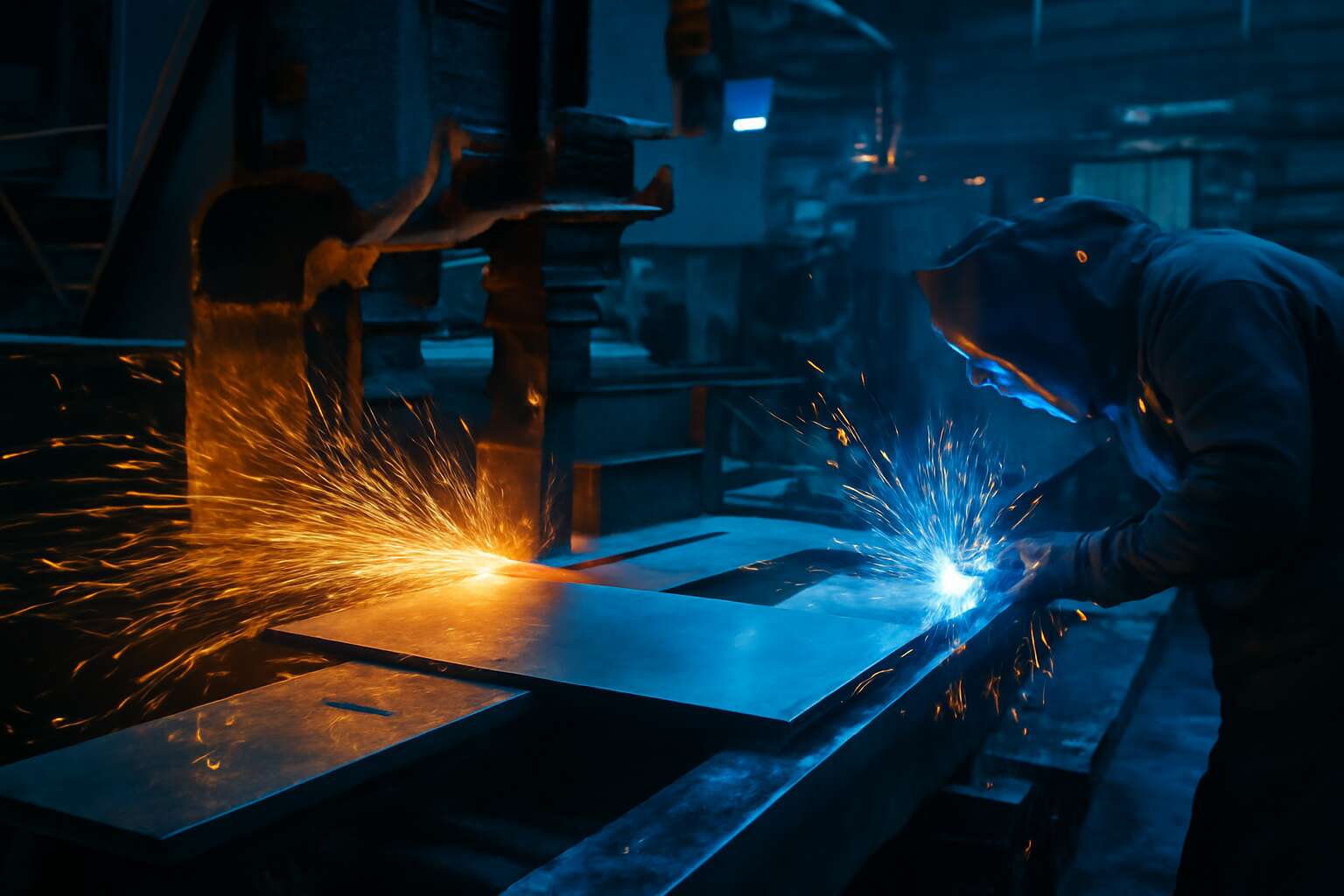
Zinc Fabrication Techniques
Machining zinc alloys
Precision is the currency of zincwork, and in South Africa a 0.05 mm tolerance can mean the difference between a flawless fit and costly rework. When I think of fabrication zinc, I hear the quiet hum of mills and the moment a metal reveals its truth: the trick isn’t brute force but listening to the grain. Zinc alloys demand patient control, a respect for springy corners, and a conscience about waste.
Technique matters as much as tool. The following methods, chosen with care, honor zinc’s nature:
- Light cutting and slow feeds to minimize reflex tearing
- Sharp, sacrificial tooling and precise coolant management to control heat
- Rigorous gauging and fixturing to maintain tolerances
- Gentle deburring and protective finishing for durability
In practice, the metal teaches patience, and the operator earns responsibility—every component completed is a quiet act of care.
Casting methods for zinc components
Molten zinc pulses, and the craft of fabrication zinc reveals its quiet poetry: precision is the currency. “In casting, the grain speaks,” a veteran once whispered. A single well-cut die can release hours of labour into flawless geometry.
Zinc components emerge from three main casting paths: die casting for high volume with tight tolerances, gravity casting for larger, simple shapes, and investment-like methods for intricate details. Zinc’s low melting point and fluidity invite rapid fills and compact, near-net shapes.
Careful venting, temperature control, and finish management sustain the surface and accuracy in fabrication zinc. A final pass of deburring and protective coating keeps parts durable, ready for assembly with minimal rework.
Welding and joining zinc safely
Some claim that a good weld is poetry in metal, and with fabrication zinc the line reads clean, bright, and unbroken. “A joint is only as trustworthy as the surface that wears it,” a veteran quips, and that wisdom still rings true at SA shops where layout and cleanliness win the day.
Welding and joining zinc demand finesse—heat must be coaxed, not blasted, and fumes kept in check with proper ventilation and enclosure. Zinc’s fizzy temper can trap porosity if the process runs too hot, so the dialogue between heat and alloy stays civil. When parts come together, the finish matters as much as the bond, guarding corrosion and wear in service.
- Surface preparation and cleanliness
- Appropriate filler metals and containment
- Thoughtful fixturing to reduce distortion
Surface finishing options for zinc
Surface finishing is the quiet guardian of fabrication zinc, turning raw alloy into a durable asset. In South Africa’s workshops, a well-chosen finish can double longevity against heat, moisture, and wear. The right coat protects parts in service and preserves fit and function.
- Hot-dip galvanizing for deep, uniform protection
- Chromate conversion coatings (clear or yellow) to slow corrosion
- Powder coating after pretreatment for durable color and scratch resistance
- Paint systems (epoxy or polyurethane) with proper curing
Beyond coatings, texture and prep choices can influence reflectivity, ease of cleaning, and long-term appearance. In the end, the surface is as important as the shape, giving zinc parts resilience that lasts through decades of use.
Quality and Standards for Zinc Fabrication
Industry standards and compliance for zinc fabrication
Across South Africa’s metalwork landscape, quality is the quiet engine behind every fabrication zinc component. When teams commit to robust processes, defects shrink and delivery times gain predictability—ISO 9001 certified firms often report up to 30% fewer defects. That means material authenticity, consistent finishes, and reliable performance.
Quality systems derive from standards that govern every stage, from sourcing to final inspection.
- ISO 9001 Quality Management Systems
- ISO 14001 Environmental Management
- ISO 45001 Occupational Health & Safety
- SABS/SANS material and product standards
Audits and documentation are not red tape but a narrative of trust—traceability, test records, material certs, and third-party inspections ensure every batch meets promise. In the South African context, alignment with local regulators and international best practices keeps the supply chain resilient.
Material testing and quality assurance processes
Quality is the quiet engine behind every fabrication zinc component making its way to South Africa’s workshops. ISO 9001 systems tighten the loop—from supplier selection to final inspection—slashing defects by up to 30% and delivering reliable performance. Material authenticity, consistent finishes, and traceable test records form the spine of trust in our market.
- Chemical composition via spectrometry
- Hardness and ductility checks
- Non-destructive testing for surface integrity
- Coating adhesion and cleanliness tests
- Documentation with certificates and third-party verifications
In South Africa, alignment with regulators and local standards keeps the supply chain resilient. SABS/SANS material standards, along with ISO 14001 and ISO 45001 frameworks, frame every batch—ensuring traceability, responsible sourcing, and safe, dependable zinc products.
Tolerance considerations for zinc components
In South Africa, precision is the quiet engine behind reliable fabrication zinc components. A recent QA snapshot shows that tightening tolerances from design to delivery can cut field rework by nearly 30%. When surfaces align and fits are exact, the risk of unexpected failures in service drops to almost nil—an unspoken confidence you can feel in the finished product.
Tolerances in fabrication zinc span several critical fronts:
- Dimensional tolerances aligned to fit and assembly
- Surface flatness and roundness consistency
- Coating thickness uniformity and adhesion
- Traceability of tolerance checks and measurement records
Regulators in SA echo this discipline. SABS/SANS standards, along with ISO 14001 and ISO 45001, frame every batch of fabrication zinc—ensuring traceability, responsible sourcing, and safe, dependable zinc products. The finish line is a transparent trail: documentation, third-party verifications, and auditable test records that reassure every partner along the way.
Non-destructive testing methods
In a world where a single flaw can halt a line, a QA snapshot shows that non-destructive testing can cut rework by nearly one-third. Quality and standards in fabrication zinc rely on NDT to reveal hidden defects without disassembly.
- Visual inspection
- Dye penetrant testing
- Magnetic particle testing
- Ultrasonic testing
These methods keep customers confident and traceability baked into the process, ensuring consistent performance across batches and alignment with SABS/SANS, ISO 14001, and ISO 45001.
Zinc Fabrication Materials and Alloys
Common zinc alloys and their properties
Zinc is the quiet Swiss Army knife of metal, and in fabrication zinc it does the heavy lifting without the fanfare. The right zinc alloys deliver dependable castability, creep resistance, and a friendly surface finish that South African manufacturers love for quick prototyping and durable parts. When you lean into zinc, you’re tapping a material that handles corrosion protection, weight control, and formability with a practical edge.
Common zinc alloys and their properties include:
- Zamak 3: outstanding casting quality, excellent surface finish, and good ductility for intricate details
- Zamak 5: higher strength and hardness, improved wear resistance
- ZA-8 and ZA-12: superb fluidity for complex geometries, strong dimensional stability
- Zinc-aluminium alloys: increased strength and creep resistance, ideal for heavier components
Choosing the right alloy also means considering coatings, recyclability, and cost. This balance guides fabrication zinc material choices for South Africa’s manufacturing sectors, from automotive to packaging.
Comparing zinc to alternative materials
Across SA shops, fabrication zinc proves the efficient multitasker we all pretend to have in our back pocket. “Zinc is the quiet handyman,” a seasoned foreman quips, “and it never complains.” This family of alloys blends moldable ease with steady creep resistance, making it a pragmatic choice for rapid prototyping and durable parts that stand up to real-world use.
When you compare zinc to other materials, the edge shows in several real-world roles:
- Compared to aluminum, zinc offers superb dimensional stability and intricate castability for fine features.
- Against stainless or cast iron, fabrication zinc can reduce weight without sacrificing stiffness in many parts.
- Recyclability and lower tooling costs often tilt the economic balance in favour of zinc for short to mid runs.
In fabrication zinc decisions, recyclability, cost, and surface fidelity shape the choices that South Africa’s manufacturers make—from automotive components to packaging fixtures.
Alloying elements and their effects on performance
In South Africa’s workshops, fabrication zinc earns the quiet value verdict: it can trim tooling costs by up to 40% on short runs while delivering stable, detailed casts. The metal’s unassuming confidence travels from prototype to production, turning complex shapes into reliable parts—an anchor for rapid prototyping and durable components that resist real-world wear.
Alloying elements shape performance in zinc family alloys. The main companions—aluminum, magnesium, copper, and tin—each leave a signature on strength, castability, and surface life. Consider these effects:
- Aluminum: boosts creep resistance and fine-feature castability.
- Magnesium: lowers density while preserving ductility.
- Copper: raises strength and wear resistance for dynamic parts.
- Tin: enhances surface finish and corrosion resistance.
Together, the alloy mix tunes fabrication zinc for automotive fixtures, packaging hardware, and housings—balancing cost, stiffness, and surface fidelity. The right blend keeps form through coating, assembly, and service.
Corrosion resistance and protective coatings for zinc parts
Coastal workshops measure longevity in decades, not cycles. In South Africa, the craft of fabrication zinc has proven an engine of efficiency: an alloy and heat treatment can trim downtime and keep parts faithful through coating and service. A SA manufacturing survey noted corrosion-related downtime fell 30% when tailored zinc formulations moved from prototype to production. The discipline blends lean cost with durable detail.
Materials and alloys in fabrication zinc are chosen for balance, not bravado—high accuracy, inner ductility, and enduring stiffness define parts that survive busy workshops. Corrosion resistance and protective coatings form a coordinated strategy, with coatings tailored to SA climates from humid inland to coastal atmospheres. A robust protective matrix keeps form through assembly and service, in automotive fixtures, packaging hardware, and housings.
- Chromate conversion coatings for barrier protection
- Epoxy or polyurethane topcoats for chemical and UV resilience
- Zinc phosphate primers to improve adhesion of subsequent paints
Cost, Efficiency, and Sustainability in Zinc Fabrication
Cost drivers and budgeting for zinc projects
In South Africa, budgeting for fabrication zinc projects hinges on a clear map of cost drivers: fluctuating zinc material prices, energy for melting and finishing, tooling, and the inevitable setup overhead. Well-planned budgets trim waste by up to 20%, revealing the alloy’s worth as a measured, lasting asset!
Efficiency is the quiet engine of value. Standardized components, modular designs, and lean setup reduce cycle times and energy use!
- Standardized components for reduced variability
- Modular designs that simplify testing and assembly
- Lean schedules and smart sequencing to minimize idle time
Sustainability in zinc fabrication shines through material efficiency, recycled scrap, and cleaner energy use. Thoughtfully sourced coatings and responsible waste management complete the lifecycle with dignity and grit.
Process optimization and productivity improvements
Across South Africa, cost control in fabrication zinc hinges on a clear map of inputs, energy use, and waste—not guesses. For projects, even modest savings compound into bigger margins, without compromising quality.
Efficiency is the quiet engine: short cycle times, tighter sequencing, and disciplined handoffs shrink lead times and trim energy draw. A thoughtful workflow reduces bottlenecks and raises throughput in every cell of the shop.
Sustainability in zinc work shows up as material efficiency, scrap recycling, and cleaner power sources. Thoughtful waste handling completes the life cycle with integrity.
- Material recovery and reuse to lower material input
- Energy recovery and efficient melting cycles
- Responsible coating and waste management
Waste reduction and environmental considerations
“Waste is human error in disguise,” a seasoned South African fabricator once quipped, and the line sticks. In fabrication zinc, cost hinges on a clear map of inputs and energy use rather than guesswork.
Efficiency is the quiet engine: shorter production bursts, tighter task order, and disciplined handoffs cut lead times and energy draw. In fabrication zinc, a thoughtful workflow keeps bottlenecks from creeping in and sustains throughput across the shop.
Sustainability shows up as material efficiency, scrap recycling, and cleaner power sources. Thoughtful waste handling completes the life cycle with integrity.
- Material efficiency and scrap minimization
- Energy recovery through optimized melting and heat reuse
- Responsible coatings and waste handling
Lead times and supply chain resilience for zinc fabrication
Lead times in fabrication zinc swing like a brass pendulum—the difference between timely delivery and a missed deadline can span weeks. ‘Waste is human error in disguise,’ a South African fabricator quipped, and the line sticks. In fabrication zinc, cost hinges on a clear map of inputs and energy use instead of guesswork.
Efficiency is the quiet engine: shorter bursts, tighter task order, and disciplined handoffs cut lead times and energy draw. The thoughtful workflow keeps bottlenecks from creeping in and secures supply chain resilience, letting South African suppliers align capacity with milestones when port delays loom—the shop floor seems to listen.
- Transparent input tracking and energy mapping for every run
- Lean scheduling with defined handoffs and buffers
- Local supplier diversification to reduce exposure
Sustainability shows up as material efficiency, waste routing, and cleaner energy choices. In fabrication zinc, these choices boost reliability and steady costs through changing markets.


0 Comments