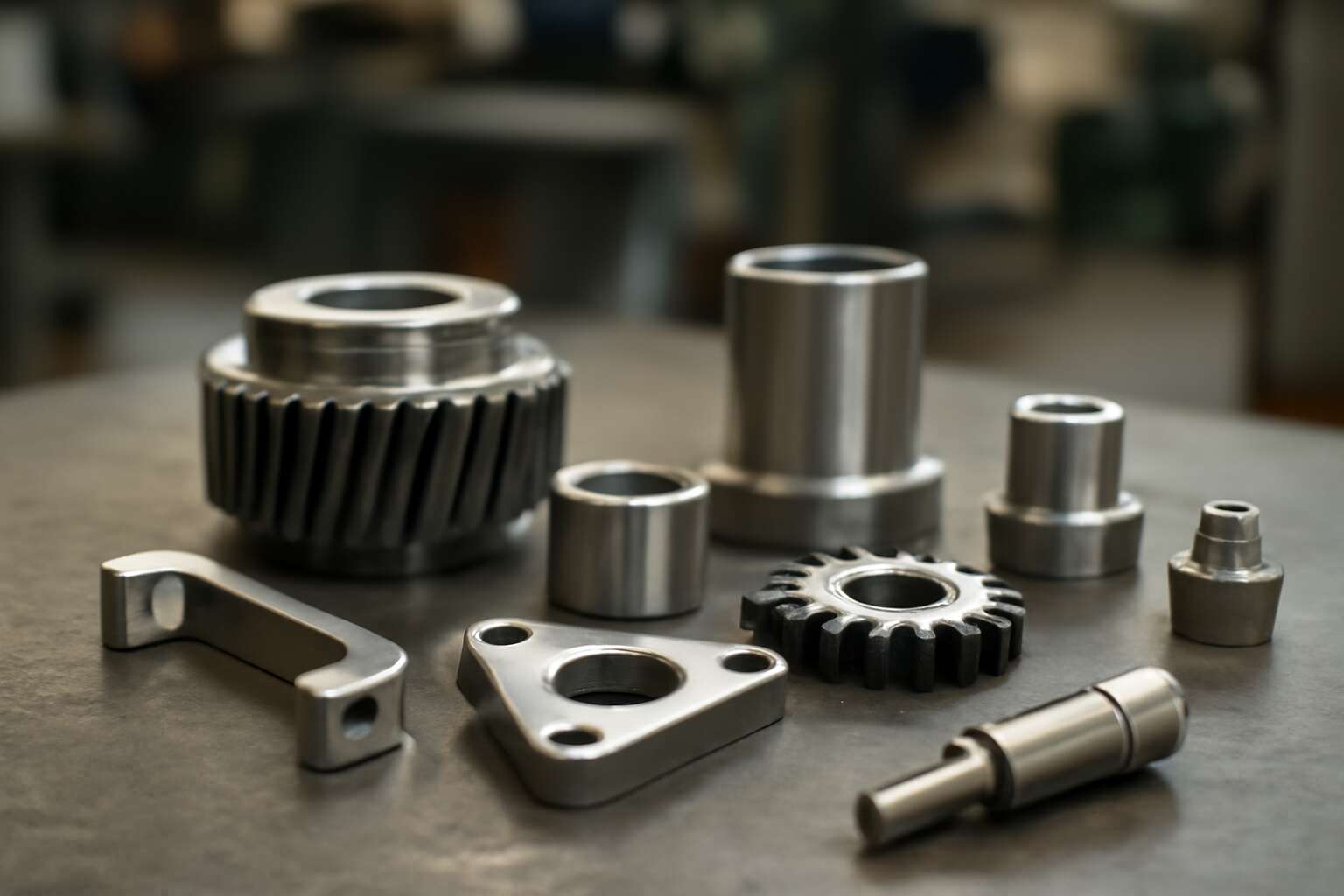
Key Components in Modern Fabrication Projects
Overview of core fabrication components
Across South Africa’s workshop floors, the heartbeat of any project depends on one thing: the right fabrication parts. More than 33% of fabrication projects stall because a component is missing or mismatched, a sobering statistic that keeps engineers alert. The modern landscape fuses precision with pragmatism, where tooling, materials, and control systems quietly decide whether a design becomes a durable product or costly rework—making every component choice meaningful.
Key components in modern fabrication projects include several core areas that travel from concept to completion. Here are essentials:
- Raw materials and alloys aligned to local standards
- Machinery and tooling calibrated for the workflow
- Software and control systems ensuring precision and traceability
- Quality assurance frameworks aligned with South African regulations
I’ve watched projects hinge on the smallest detail; the right fabrication parts unlock momentum and trust.
Structural versus non-structural parts and considerations
Across South Africa’s shop floors, more than 33% of fabrication projects stall because a component is missing or mismatched. The right fabrication parts set a project in motion, turning risk into momentum and doubt into certainty, especially when structural and non-structural decisions live in harmony.
Structural parts carry the weight of intention—frames, supports, and load-bearing members that sculpt safety and longevity. Non-structural elements, by contrast, temper function with form: housings, panels, and aesthetic trims that shield, guide, and communicate with users. Selecting materials, tolerances, and finishes demands a careful eye for service life and corrosion resistance, right here in South Africa’s climate. When selecting fabrication parts for the structure, balance weight against stiffness and fatigue life.
- Structural parts: beams, frames, and supports
- Non-structural parts: enclosures, panels, trims
- Considerations: tolerances, surface finish, corrosion resistance, and supply reliability
In the tapestry of modern fabrication projects, attention to these parts translates into dependable assemblies and smoother progression from concept to product.
Critical tolerances and fit requirements
In the factory floor, tolerances set the tempo. More than 33% of South Africa fabrication projects stall because a part is missing or mismatched—turning risk into momentum when fits are right. Critical tolerances and fit requirements steer how every joint behaves, from bolt holes to edge radii. When fabrication parts align, assemblies move smoothly from concept to product and avoid costly rework.
Listen to the finer points:
- Geometric tolerances and surface continuity to control alignment
- Clearance versus interference fits for moving parts
- Hole patterns, dowels, and datum references for repeatable assembly
- Finish quality and corrosion resistance suited to South Africa’s climate
A disciplined approach to tolerances keeps service life and supply reliability on track, ensuring the project momentum stays intact for years.
Standard sizes, modular options, and scalability
Factories win when design translates to assembly without friction. More than 33% of SA fabrication projects stall because a part is missing or mismatched—standardization changes that momentum. In modern projects, standard sizes, modular options, and scalability govern how quickly a concept becomes a product. The right calls around these elements keep fabrication parts flowing and the line moving!
- Standard sizes speed cutting, drilling, and fit verification
- Modular options enable quick reconfiguration and batch processing
- Scalability supports growth, incremental fabrication, and supplier shifts
When these three components align, projects ride a smoother cadence from blueprint to finished unit, easily absorbing future changes.
Inventory strategies: stock vs. custom parts
In South Africa, roughly one in three fabrication campaigns stalls when a part is missing or mismatched, a painful delay that echoes through timelines and budgets. Inventory strategy becomes the brake or the boost: stock parts for speed, custom parts for fit, all weighed against lead times and supplier reliability. When aligned, the line breathes easier, and fabrication parts flow with intention.
Stock parts anchor routine production, enabling rapid changeovers and consistent quality. Custom parts unlock bespoke configurations when standard items fall short. A hybrid approach blends the best of both worlds, smoothing risk and cost. Consider these anchors:
- Stock parts for predictable demand and fast changeovers
- Custom parts for tight tolerances and unique assemblies
- Hybrid strategies balancing lead times, price, and supplier risk
Smart procurement maps part families to local SA suppliers, aligning procurement cycles with the shop floor cadence. The payoff is a steadier stream of fabrication parts and fewer surprises as projects scale.
Materials, Standards, and Quality for Fabrication Components
Material properties and selection guides
Material choice isn’t a mere detail—it’s the quiet engine that keeps a factory humming. A seasoned foreman often says, “The right alloy writes the success story.” For fabrication parts, properties like tensile strength, ductility, and corrosion resistance decide reliability from the first bolt to long-term service.
- Corrosion resistance for coastal environments
- Machinability and formability for tight tolerances
- Weldability and heat-treatment response
- Consistent chemical composition and reliable lead times in SA supply chains
Choosing the right material for fabrication parts means weighing machinability, weldability, heat treatment response, and supply realities. In South Africa, local availability and supplier certificates matter as much as the spec itself.
Standards and quality—an ISO-aligned framework and local SANS guidelines ensure traceability, testing, and reliable performance. Material certificates, routine inspections, and supplier audits translate to consistent outcomes in fabrication parts, even as projects scale across borders.
Industry standards and certifications
The right material can make or break a project in South Africa’s shops! For coastal plants, corrosion resistance and ductility aren’t luxuries — they’re guard rails. In fabrication parts, a dependable alloy writes the success story from the first bolt to years of service.
Standards aren’t decorative. They anchor consistency and safety in every run of fabrication parts.
- ISO-aligned quality management and local SANS traceability
- Material certificates, routine inspections, and supplier audits
- Predictable weldability and heat‑treatment response for repeatable performance
In South Africa, local availability and certificates matter as much as the spec itself. By aligning with ISO and SANS, you secure testing, traceability, and reliable performance across borders. That reliability is the backbone of fabrication parts.
Quality control processes in fabrication
Quality isn’t an afterthought; it starts with the right material. In South Africa’s shops, disciplined QC cuts downtime and scrap. Plants reporting tight material controls see noticeably fewer defects in fabrication parts—clear proof that good inputs drive durable outputs.
Materials meet standards before they reach the floor. ISO-aligned quality management with local SANS traceability guarantees traceable batches, documented tests, and consistent weldability and heat‑treatment responses for repeatable performance across jobs.
Quality control touchpoints keep projects on track:
- Non-destructive testing for critical joints
- Hardness checks after heat treatment
- Corrosion resistance and surface finish verification
Finish coatings and surface treatments
Across South Africa’s shops, traceable materials slash rework and scrap by up to 40%, a striking reminder that good inputs forge durable fabrication parts. Materials and finishes chosen with care set the stage for reliability and long service life, even under demanding field conditions.
Standards and provenance matter. ISO-aligned quality management with local SANS traceability guarantees batch-level documentation, consistent weldability, and repeatable responses to heat treatment—so every lot yields predictable performance across jobs.
Finish coatings and surface treatments amplify protection and aesthetics. Pretreatment steps, controlled thickness, and adhesion checks safeguard against corrosion and wear, ensuring surface integrity across cycles. I’ve seen components endure harsher climates when these details are respected.
- Powder coating
- Electroplating
- Hot-dip galvanizing
- Anodizing
Testing methods for material integrity
Testing for material integrity threads through every facet of fabrication parts; it is not mere caution but a pledge—one that cuts rework and scrap by up to 40% in South Africa’s shops, long before a weld is laid.
Non-destructive and selective destructive methods illuminate strength, ductility, and microstructure without undoing the part’s purpose. The right mix of tests clarifies performance under heat, fatigue, and corrosion, guiding decisions from alloy selection to final treatment.
- Non-destructive testing: ultrasound, radiography, mag‑particle, and penetrant
- Mechanical testing: hardness, tensile, and impact tests
- Metallography and microstructure analysis (destructive)
- Coating and weld integrity checks as part of finish evaluations
Adherence to ISO-aligned quality management and local SANS provenance ensures traceable documentation, enabling batch-level confidence and predictable outcomes for parts across jobs.
Categories of Fabrication Components and Their Applications
Fasteners, connectors, and joining hardware
Joints are the quiet engines of any project, from Cape Town shipyards to Gauteng factories. A single well-chosen fastener can turn faltering assembly into steady performance. “The torque you can’t see is what keeps the line running,” a veteran fabricator notes, reminding us that reliability starts at the join, a cornerstone of fabrication parts.
Categories of fabrication components span fasteners, connectors, and joining hardware, each with a clear job in the build. Examples include bolts, nuts, rivets, clamps, and brackets, plus welding studs and insert nuts for semi-permanent joins. Key options include:
- Bolts, screws, washers
- Rivets and dowels
- Clamps and brackets
- Welding studs
Applications span structural frames, machine housings, and modular enclosures, where resistance to corrosion and predictable load transfer matter. In SA, galvanised and stainless options address coastal and inland environments, underscoring why choosing the right fabrication parts is a craft of durability.
Bearings, sleeves, and wear parts
Bearings, sleeves, and wear parts lie beneath the surface of every turning machine. In the world of fabrication parts, they curb friction, control alignment, and absorb shocks that could derail production. Think ball bearings, sleeve bearings, bushings, thrust washers, and wear plates as the quiet guardians of motion—selected for fit, lubrication needs, and a long life cycle. Precision here is non negotiable, and the right combination keeps tolerances intact while speed stays steady.
Key subtypes include:
- Bearings: ball, roller, thrust
- Sleeves and bushings: plain bearing options
- Wear parts: wear plates, seals, liners
Applications span conveyors, machine housings, and modular frames. This is a cornerstone of fabrication parts strategy. In South Africa’s coastal plants, stainless steel and bronze sleeves resist seawater and dust; inland operations lean toward hardened alloy bearings and reinforced wear parts. Every selection shapes life cycles, maintenance windows, and the quiet efficiency of the line.
Machined components and turned parts
In South Africa’s bustling workshops, precision is destiny! The tale of fabrication parts unfolds across families—machined components and turned parts, forged elements, stamped profiles—each chosen for fit, surface finish, and durability. When the right combination lands, tolerances stay tight, vibrations fade, and production cycles glide.
Categories and applications in the field include:
- Machined components: shafts, housings, spacers for frames
- Turned parts: bushings, collars, pins for close fits
- Forged components: high-strength links and brackets
- Stamped and formed parts: brackets and panels
- Assemblies and subassemblies: ready-to-install modules
Across South Africa’s landscapes, these components translate into dependable lines—from coastal plants resisting salt to inland sites favoring hardened profiles. The right mix extends life cycles and steadies uptime!
Sheet metal and formed components
Precision travels on light notes—sheet metal and formed components turn raw steel into reliable works of function, shaping South Africa’s workshops. In the realm of fabrication parts, forming adds strength, consistent bends, and a quiet elegance to everyday equipment.
Sheet metal components cover a spectrum from brackets to enclosures, offering stiffness with minimal weight and excellent corrosion resistance. When formed with care, panels and guards protect sensitive assemblies while maintaining airflow and access. The following categories illustrate common sheet metal and formed components:
- Brackets and gussets for frames and assemblies
- Panels, guards, and enclosures for control rooms and machinery housings
- Formed tubes, channels, and braces providing strength without bulk
Across SA’s coastal plants and inland facilities, these sheet metal and formed components extend life cycles, cut downtime, and harmonize with coatings and treatments—completing the broader tapestry of fabrication parts that keep lines flowing.
Weldments and fabricated frames
Across South Africa’s rugged workshops, a single welded frame can outlast years of heavy-use. Weldments and fabricated frames—the quiet, steadfast fabrication parts—form the skeletons that let gear breathe and stay upright under vibration. They cradle motors, support conveyors, and tie together brackets with a farmer’s patience and a craftsman’s pride.
These categories find homes from small-town service yards to coastland refineries. In every setting, strong weldments reduce downtime and reshuffle the work into reliable cycles.
- Structural frames for conveyors and processing lines
- Skid-mounted machinery frames for portable plant use
- Guarded frames and enclosures that improve safety and maintenance access
- Modular platform frames for assembly lines and service bays
Manufacturing Methods for Essential Components
Machining, milling, and turning basics
On the shop floor, precision is currency! In South Africa’s manufacturing landscape, better machining translates to shorter downtime and higher yield—remarkably, shops cut scrap by up to a quarter when essential fabrication parts meet tight tolerances.
Machining basics hinge on choosing the right process for the job, whether a flat surface, a complex contour, or a threaded feature is needed. Milling and turning form the backbone for many fabrication parts.
- Process selection based on geometry and material characteristics
- Chip formation, heat control, and distortion prevention
- Finishing goals aligned with surface quality and tolerance compliance
Beyond the machine, success rests on planning, measurement, and collaboration. When shops align tooling, fixtures, and inspection, fabrication parts emerge with reliable coherence, even as market demands swing from design to delivery in our South African context.
Welding, brazing, and soldering essentials
In SA workshops, joints decide the job’s fate, and a robust weld is the silent workhorse behind fabrication parts. “A solid joint is a quiet performance enhancer,” quips a veteran, and the impact is real—fewer reworks, steadier yields, less scrap.
Manufacturing methods for essential components hinge on heat, metallurgy, and geometry. Here’s the quick tour:
- Welding — fusion of base metals for high-strength, monolithic joints that handle load and vibration.
- Brazing — filler metal melts above 450°C, crowning a bond that can join dissimilar metals with strong, leak-tight seams.
- Soldering — low-temperature bonding ideal for delicate assemblies, electronics, and intricate seams.
Done well, these choices keep fabrication parts reliable as market demands swing from design to delivery in South Africa.
Additive manufacturing and 3D printing for parts
In South Africa’s lean production corridors, a single additive layer can reshape delivery timelines. Additive manufacturing isn’t just about prototypes; it’s a robust method for fabrication parts that scale from one-off to small batches, with cycles measured in days rather than weeks. A veteran shop floor whisper: “If it can be drawn in 3D, it can be built in reality.”
Additive manufacturing and 3D printing create components by depositing material in precise layers, unlocking complex geometries, internal channels, and lighter weight parts without costly tooling. For essential components, this means interchangeable housings, jigs, or custom fixtures can be produced on demand, reducing inventory and scrap while preserving tolerances through calibrated process controls.
Consider these capabilities:
- Rapid iteration and customization
- Geometries that conventional methods can’t realize
- On-demand replacement parts to cut obsolescence risk
CNC tooling, automation, and precision fabrication
In South Africa, CNC tooling and automation can cut production cycle times by up to 40%, turning complex parts into simple, repeatable processes. That efficiency translates directly into fabrication parts that arrive on demand.
Modern precision fabrication hinges on toolpath optimization, multi-axis machining, and robotic automation that handles setup, inspection, and loading with little human touch. The result is consistent tolerances and shorter lead times for fabrication parts.
Consider these capabilities:
- Rapid changeovers and modular fixtures
- Inline inspection and calibrations
- On-demand production to minimize obsolescence
Sourcing and Supplier Considerations for Fabrication Components
Choosing reliable suppliers and lead times
In South Africa’s shifting supply chains, choosing partners matters as much as choosing parts. A single late shipment can derail installation and ripple into months of downtime. When you consider fabrication parts, reliability is as vital as spec compliance—it’s the human side of engineering.
Key sourcing criteria go beyond price: capacity, capabilities, and the supplier’s track record with local certifications. Lead times, material availability, and the ability to respond to design changes keep projects on track. Proximity helps with communication and logistics; verify compliance with South African standards and safety rules. I’ve learned that trust deepens when a supplier shares candid lead-time projections and quality metrics.
- Transparent lead-time communication
- Local support and reliable logistics
- Quality management and traceability
Ultimately, the right supplier network blends technical prowess with steadfast integrity.
Custom fabrication versus off-the-shelf parts
Around South Africa, supply chain volatility turns procurement into a strategic test. A recent industry pulse suggests up to a third of installations stall due to late or unavailable parts. When weighing fabrication parts, the choice between custom fabrication and off-the-shelf components hinges on fit, flexibility, and the project timeline.
- Customization depth and design-for-manufacture collaboration
- Proofs, prototypes, and design-change lead times
- Local support, logistics, and after-sales service
- Documentation, traceability, and adherence to SA standards
Ultimately, selecting the right supplier mix is about verifiable capabilities and a shared commitment to safety and quality. In South Africa’s dynamic market, integrity turns uncertainty into steady performance and reliable production flow.
Cost analysis, budgeting, and total cost of ownership
South Africa’s procurement reality is a tightrope walk: a single delayed shipment can halt a production line. Industry chatter suggests up to a third of installations stall due to late or unavailable fabrication parts, turning budget forecasts into comedy of errors. When budgeting, you trade guesswork for guardrails and pragmatism.
Cost analysis must look beyond sticker price. Total cost of ownership weighs downtime, maintenance, energy, and the risk of obsolescence against the lure of a low upfront bid. Favor local suppliers with transparent pricing, reliable lead times, and responsive after-sales support to keep fabrication parts flowing and budgets believable.
Consider these TCO levers with suppliers:
- Upfront price versus long-term value
- Maintenance, servicing, and downtime costs
- Warranty terms and service level agreements
- Logistics, stock availability, and lead times
In South Africa’s volatile market, the right supplier mix translates uncertainty into predictable throughput.
Logistics, packaging, and shipping considerations
A third of installations stall due to late or unavailable fabrication parts. In South Africa, sourcing is a high-stakes game where every shipment can tip the scales toward downtime or throughput. I’ve seen a single late delivery freeze a line and rewrite the day.
When selecting suppliers for fabrication parts, look for packaging and shipping strategies that survive our road and port realities. Consider packaging designed for dust, humidity, and rough handling; clear labeling and protective interiors; and robust documentation to clear customs swiftly.
- Packaging integrity tailored to South Africa’s logistics corridors
- Lead-time visibility and reliable transit routes
- Traceability through serialized packaging and accurate invoices
Choosing a balanced supplier mix helps convert volatility into steady throughput, keeping fabrication parts moving from factory floor to line—the ghost of delays exorcised.


0 Comments