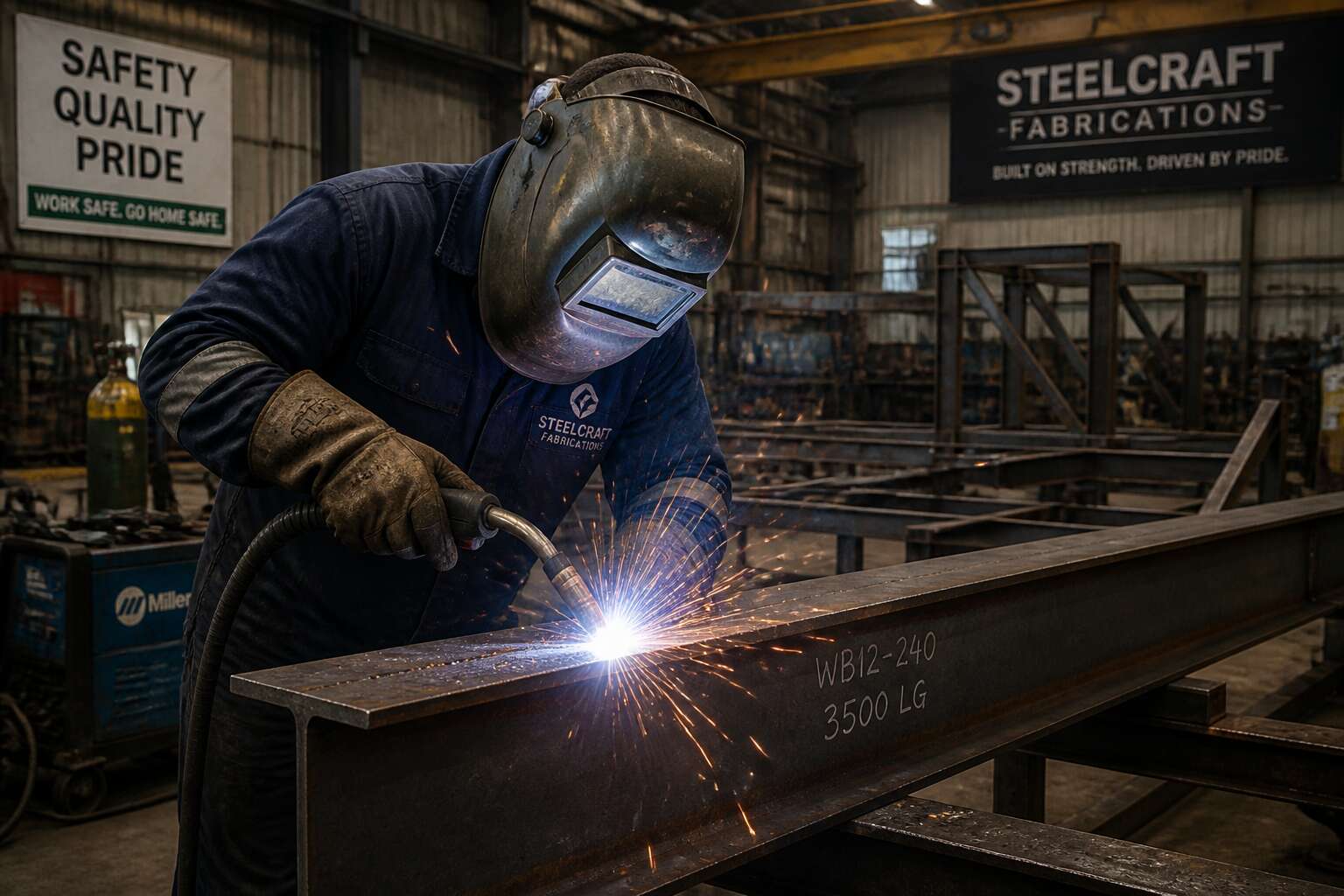
Understanding Gauteng’s Steel Fabrication Landscape
Industrial Hubs and Economic Drivers
Gauteng produces more fabricated steel than any other province, yet the sector remains concentrated in a few strategic corridors. Mining houses require heavy structural components, while urban development projects demand precision-crafted frames and reinforcement. These forces drive a constant need for steel fabrication companies in gauteng that deliver speed and accuracy.
The primary hubs form a loose arc around Johannesburg and Ekurhuleni. Consider these clusters:
- Vereeniging, with its long history of steelmaking and heat treatment
- Alberton, where automotive-focused fabrication thrives
- Germiston, a reloading point for raw and finished product
Each area specializes in different techniques, from plasma cutting to roll forming. This geographic spread means choosing a partner depends less on proximity and more on matching capabilities to project specifications. Steel fabrication companies in gauteng also benefit from freight routes to Durban, reducing lead times for imported consumables.
Key Capabilities and Service Offerings
In the shifting terrain of modern construction, the wizardry of Gauteng’s steel sector lies less in sheer tonnage and more in the quiet precision of its problem solving. The landscape has evolved past brute force. Today, the discerning client looks for a partner who can read a structural drawing with the fluency of a novelist, translating complex architectural intent into an unyielding, physical reality. It is a world where the clang of the workshop floor masks a deeply cerebral process.
The most competent steel fabrication companies in gauteng operate as an extension of your own engineering team. They possess the foresight to flag potential on-site conflicts before a single plate is cut. Their value is often measured in the silence of a perfectly aligned joint and the absence of costly delays.
Key Capabilities and Service Offerings
Most reputable firms offer a spectrum of services that extend far beyond the mere welding of beams. A discerning project manager should look for a suite of competencies that includes:
– Detailed drawing and 3D modeling services to pre-empt construction clashes.
– On-site installation teams that manage the logistics of erection, not just the manufacture.
– Specialized finishing processes, such as hot-dip galvanizing and abrasive blasting.
– A rigorous quality assurance program that adheres to SANS standards.
The best steel fabrication companies in gauteng offer a seamless integration of design, manufacture, and installation, ensuring your project functions as a single, coherent unit. They handle the documentation and compliance with a level of administrative rigor that provides genuine peace of mind. This holistic approach, while less glamorous than the spark of a welder’s torch, is what ultimately distinguishes an asset from a liability.
Primary Demand Sectors and End-User Industries
According to the South African Iron and Steel Institute, the local market consumes over 1.8 million tonnes of fabricated steel annually, with Gauteng acting as the undeniable epicentre of this demand. The province’s appetite is driven by a diverse ecosystem of industries, each presenting unique challenges. When you examine the mining sector, you see a need for robust structural components capable of enduring constant vibration and abrasive conditions. This demand shapes the daily operations of many steel fabrication companies in gauteng, pushing them to prioritise durability and rapid turnaround times to minimise shaft downtime. The commercial construction sector, by contrast, seeks precision-engineered architectural steelwork, often for fast-tracked high-rise projects where tolerances are measured in millimetres. The energy sector, including the expanding renewable segment, requires high-strength lattice structures and support frames that must withstand extreme wind loads. This cross-pollination of requirements means a versatile facility cannot simply specialise in one technique; it must master a broad spectrum of processes to remain relevant to clients across the value chain. The most successful firms are those that have tailored their shop floor logistics to manage the conflicting timelines of a mine shutdown and a building handover. This drive for efficiency filters down to their procurement and stock management, ensuring the right material grade is available when the project demands it. For the client, this equates to a supply chain that is not merely reactive, but anticipatory. Specialised sectors such as conveyor systems and material handling equipment also rely heavily on this local expertise, demanding intricate laser-cut parts and precision rolling. The subtle shift toward locally sourced components has further concentrated this activity within the province’s borders.
Selecting a Reliable Fabrication Partner in the Region
Certifications, Compliance, and Industry Standards
Selecting a fabrication partner begins with a tour of their certificates. That documentation reveals more than skill; it exposes an attitude toward rules. In Gauteng, competition is fierce, and compliance separates the meticulous from the merely busy.
When I assess steel fabrication companies in gauteng, I look past glossy brochures. Certifications like ISO 9001 or SANS 10162 indicate disciplined processes. The insight comes from checking compliance history. Ask about health and safety records. Request quality manuals. Observe how they handle deviations.
Here are three signals of a reliable partner:
- Membership in the Southern African Institute of Steel Construction.
- Regular third-party audits with no corrective actions pending.
- Transparent documentation of welding procedures and material traceability.
These elements form the foundation of trust. The best steel fabrication companies in gauteng treat audits as a necessary routine. Your project’s integrity depends on their willingness to follow every standard, when nobody is watching.
Evaluating Experience Across Diverse Applications
The moment you move past certificates, the real measure of a fabricator surfaces in their history of solving problems. A decade in business means little if those years were spent repeating the same straightforward tasks. I value a portfolio that shows complexity, because complexity forces a team to reveal their true capabilities. When I look at steel fabrication companies in gauteng, I ask about projects that required intricate geometry or tight tolerances. The answers tell me whether they have a culture of thinking, or simply a culture of cutting.
The most revealing conversations happen on the workshop floor, not in the boardroom. Ask a project manager about the last time a beam failed a bend test. Their response, whether it starts with a defensive silence or a detailed account of the corrective action, tells you everything. I have visited numerous steel fabrication companies in gauteng, and the difference between them is not the machinery. It is the depth of their engineering review process. Consider these evaluation points when assessing their experience:
– The range of steel grades they have worked with, from standard structural sections to high-strength quenched and tempered plate.
– Their history with projects in corrosion-prone industries, which demands coatings expertise.
– The variety of welding positions and processes their coded welders actually perform daily.
Experience also shows up in the mundane paperwork of material traceability. A fabricator who has supplied the mining sector for years will track a batch of steel from the mill to the final weld without a gap. That habit is built through countless audits and client demands. For the major mining houses and petrochemical plants in the region, a single undocumented plate is grounds for rejection. This pressure creates an operational rhythm that transfers well to any new client. The firms that survive these industries develop an almost obsessive attention to detail, and that is the experience you want on your side.
Technological Investment and Modern Equipment
The real differentiator among steel fabrication companies in gauteng is often invisible until a project hits a snag. A workshop can look identical on paper, same machines, same floor space, but the reliability only reveals itself under pressure. I look for fabricators who treat technology as a core competency rather than an accessory. The presence of modern CNC plasma tables or automated welding rigs tells me they are investing in precision, which directly impacts the consistency of their output.
Here is what I check when assessing their technological investment:
– Does the quotation process rely on manual takeoffs, or do they use integrated CAD and ERP systems?
– Do they monitor their equipment telemetry to predict maintenance before a breakdown stalls my project?
– Is their quality control digital, or are they still relying on clipboards and intuition?
The advantage of this infrastructure becomes clear when you need revisions or urgent throughput. A partner with modern equipment can often shave days off a schedule, not because they work faster, but because they eliminate rework. The most effective steel fabrication companies in gauteng use this efficiency to manage their overheads, which ultimately reflects in their pricing. You are not paying for the machine; you are paying for the certainty that the part will fit the first time. That certainty is what makes a vendor reliable, and it is a trait worth prioritising over a lower initial quote.
Project Management and Communication Protocols
“The single biggest problem in communication is the illusion that it has taken place,” George Bernard Shaw once mused, a truth that resonates profoundly on any bustling fabrication floor.
When vetting steel fabrication companies in gauteng, the machinery matters less than the conversation surrounding it. I have seen projects falter not on the cutting table, but in the silence between the drawing office and the site manager. A reliable partner treats communication as a deliverable, not an afterthought. They understand that a missed email about a material substitution can cost more than a full day of labour.
The most effective teams operate on a rhythm of structured updates and clear accountability. I look for a defined communication protocol that dictates how information flows, from the initial RFQ to the final delivery docket. Consider the essentials of a robust project management framework:
1. A single point of contact who owns the project timeline and budget.
2. Weekly progress reports, accompanied by photographic evidence of completed stages.
3. A formal change order process that documents any deviation from the original specification.
This level of structure is rare. However, when it exists, it transforms the vendor relationship from a transaction into a partnership. You gain the ability to forecast delays, manage client expectations, and pivot swiftly when site conditions shift. The best steel fabrication companies in gauteng do not just produce steel; they produce peace of mind through meticulous administrative control. That discipline ultimately safeguards your schedule and your reputation.
Verifying References and Reputation in the Marketplace
Reputation is the one asset a fabricator cannot buy. When vetting steel fabrication companies in gauteng, I spend less time in the boardroom and more time on the phone with their former clients. A conversation with a plant manager in Vanderbijlpark reveals more than any glossy brochure.
The marketplace makes it easy to be fooled by a good website. I ask pointed questions about delivery reliability and dispute resolution. The key question: would you hire them again? Hesitation in the answer says more than the words that follow.
I use a few verification practices:
1. Request a list of projects from the last 24 months with contact references.
2. Visit an active site unannounced to observe housekeeping and safety culture.
3. Check their history with the CIPC and any labour tribunal rulings.
These steps separate genuine operators from the rest. The steel fabrication companies in gauteng that survive for decades keep their reputation in balance, every single day.
The Complete Fabrication Workflow and Techniques
From Design Consultation to 3D Modeling and Prototyping
Every magnificent steel structure starts life as a scribble on a napkin, or worse, a blurry photo of a whiteboard. The genuine work begins when steel fabrication companies in gauteng translate those sketches into something mathematically defensible. A design consultation kicks things off, with engineers asking questions clients never anticipate, like “Do you actually need this hole here?” or “Have you considered gravity?”
The project then moves into 3D modeling. Fabricators build a complete digital twin before any plasma cutter wakes up. Clashes get caught, tolerances get interrogated, and bad ideas get retired peacefully.
Prototyping follows for the complicated bits. Testing fitment in the workshop beats discovering problems on site during a deadline.
A typical pre-production workflow includes:
- Verification of drawings and site conditions
- Material selection and stock confirmation
- 3D model review cycles
- Prototype fabrication with dimensional reports
This diligence keeps surprises contained to birthday parties, not factory floors.
Precision Cutting, Bending, and Machining Processes
Somewhere between the third review cycle and the final approval, the digital twin ceases to be a concept and becomes a promise. That is when the real work begins, and the noise starts. Steel fabrication companies in Gauteng do not whisper their way through production. They cut, they bend, they machine, and they do it with a level of precision that turns raw plate into components that fit as though they were grown together. The quiet of the design room gives way to the scream of high definition plasma cutters and the rhythmic thud of hydraulic presses.
Precision cutting forms the backbone of this operation. CNC controlled flame cutting carves through 100mm thick plate with a heat affected zone that gets measured and managed. Plasma tables slice through lighter gauge material at speeds that make the eye struggle to follow. For the jobs that demand near surgical accuracy, waterjet and laser systems take over, holding tolerances that would make a Swiss watchmaker nod in slow approval. The result of this stage is simple. Blanks that match the 3D model within fractions of a millimetre, ready for the next act.
Bending and forming follow, and this is where the machinery earns its keep. A 400 ton press brake does not negotiate. It takes a flat piece of steel and introduces a fold that was mathematically predetermined weeks earlier. Experienced operators read the springback, the material grade, and the grain direction before they commit to the first bend. They have to, because a rejected part at this stage costs time and material, both of which are measured in rands. The process moves through these controlled steps:
– Edge preparation and deburring from the cutting phase
– Alignment and set up on the press brake or rolling machine
– Incremental bending for complex geometries and radius work
– Dimensional checks against the approved prototype report
Machining becomes necessary for the components that demand a finish no flame can provide. Vertical machining centres drill, tap, and bore holes with an accuracy that keeps structural steel assemblies honest. For flanges, base plates, and precision connectors, this step transforms a rough blank into a finished part. The entire workflow, from load to unload, operates as a sequence of controlled events. Each machine talk to the next through documentation, not guesswork. Steel fabrication companies in Gauteng understand that a fabrication workshop is only as good as its weakest operation, which is why quality control checkpoints punctuate every stage of the workflow. The noise continues, but the chaos does not. In this environment, precision is not a feature. It is the product.
Welding Expertise and Specialized Methodologies
The complete fabrication workflow is a choreography of material movement and skill. It begins with traceable stock, moves through fit-up and tacking, and culminates in welding that binds the component into a single coherent structure. Steel fabrication companies in Gauteng treat this sequence as a continuous loop, not isolated stages. Each handoff is documented, each tolerance verified before the next operation begins.
Welding expertise carries the load. Submerged arc welding lays down deep, clean beads on heavy sections. Flux cored arc welding handles structural joints with high deposition rates. TIG appears where aesthetic and cleanliness matter, such as stainless steel handrails. Each method demands a certified welder and an approved procedure. Before any weld passes, the verification steps are non-negotiable:
– Visual inspection for surface discontinuities
– Dye penetrant testing for hairline cracks
– Ultrasonic testing for internal soundness
Steel fabrication companies in Gauteng rely on this discipline to deliver components that behave exactly as the model promised. The workflow does not end with the final bead. It ends when the documentation matches the physical part, and the part matches the intent.
Surface Preparation, Coating, and Corrosion Protection
The final weld bead is often where the untrained eye stops looking, but the true measure of a component’s lifespan lies in what happens next. Surface treatment is the quiet arbiter of longevity. For steel fabrication companies in Gauteng, this stage is not an afterthought; it is the deliberate transfer of a structure from the controlled environment of the workshop into the corrosive reality of the Highveld atmosphere.
The process begins with abrasive blasting to achieve a specified surface profile. This is not merely cleaning; it is the mechanical keying of the substrate, ensuring that the subsequent layers have a physical anchor. Mill scale and rust are removed completely, because any residue trapped beneath a coating will eventually lead to osmotic failure and underfilm corrosion. The bare steel is then inspected for pitting or laminations that the blasting process may have exposed.
Following the profile check, the coating schedule is applied with an unwavering respect for environmental conditions. Humidity and dew point are measured, not estimated, because applying a coating over a damp surface guarantees entrapment. The primer, intermediate coat, and finish are often applied in a specific sequence to build the required dry film thickness. Skilled applicators monitor this with a wet film gauge, understanding that the final DFT is the only real protection against the elements.
The protection strategy itself depends on the operational context of the finished product.
– Zinc-rich primers are standard for structural steel exposed to industrial chemicals.
– Polyurethane topcoats offer superior UV resistance and colour retention for architectural components.
– Epoxy systems provide a dense barrier against moisture ingress and abrasion.
– Specialist intumescent coatings are applied where fire ratings are critical, expanding under heat to insulate the steel.
Each of these systems requires a strict ambient temperature window for curing. As such, steel fabrication companies in Gauteng often schedule their coating operations to align with the morning conditions, avoiding the high ultraviolet load of midday that can cause solvent pop and pinholing. The final result is a component that resists the constant assault of rain, temperature swings, and industrial pollutants, preserving the structural integrity that the welding and cutting processes created.
Assembly, On-Site Installation, and Logistics Management
Fabrication ends where transport begins, and that handover is a fragile moment. The complete workflow depends on how well components survive the journey from workshop to site. Steel fabrication companies in gauteng often build temporary stiffeners into long members before loading, knowing that vibration and heat can distort an unprotected beam. Logistics management addresses the route, the permit requirements, and the crane capacity at both ends.
Assembly on site follows a strict sequence. The trial fitting in the workshop is a necessary step; mismatched holes and weld shrinkage are easier to correct on the ground than at height. The lifting plan governs the installation, accounting for:
– every sling angle and pick point
– the structural capacity of the erected frame
– the wind speed limits for safe hoisting
For steel fabrication companies in gauteng, a single miscalculation in this phase can set the schedule back by days. Good logistics is invisible. When it works, nobody notices. When it fails, everyone blames the steel.
Cost, Timeline, and Sustainability Considerations
Material Procurement and Pricing Structures
In the realm of steel fabrication, the initial quotation often feels like a mere prologue. The true financial narrative unfolds through material procurement, where steel prices in South Africa can shift with global market currents and the strength of the rand. A price quoted today might be a fond memory by the time your project reaches the production floor, so reputable firms often include escalation clauses to protect both parties from volatility. Geopolitical tensions and local logistics interruptions further complicate the ledger, turning a simple material list into a dynamic financial instrument.
Project timelines, similarly, are no longer simple linear progressions. A sagacious fabrication manager plans for the inevitable variances in material delivery, which means the schedule becomes a malleable creature, adapting to the rhythm of suppliers. For businesses weighing these factors, the focus shifts to a company’s ability to forecast and manage these variables. This consideration adds a layer of value to the services provided by the leading steel fabrication companies in Gauteng, who mitigate risk through established supply networks.
Sustainable practices, once a peripheral concern, now influence the cost structure directly. Energy-efficient equipment reduces the carbon footprint but demands capital outlay, an investment that often translates into competitive long-term pricing. Water jet cutting and plasma table operations are being re-evaluated for their energy draw, while waste recycling programs turn scrap into a revenue stream rather than a disposal cost. The modern client finds that a commitment to sustainability is not just an ethical stance, but a mechanism for cost control and operational efficiency.
Estimating Lead Times and Production Scheduling
A polished estimate often masks the messier reality of production. In Gauteng’s fabrication sector, a realistic lead time is not a promise. It is a calculated forecast built on contingency. Firms that fail to account for load-shedding schedules or equipment maintenance find their deadlines evaporating. The savvy client asks about buffer capacity, not just production speed. Robust scheduling departments allocate time for rework, a factor that silently plagues many projects.
A functional production schedule resembles a living document. It absorbs shocks from supplier delays and design revisions. A leading operational team layers tasks intelligently, running cutting operations while welding bays prepare. This parallelization shrinks overall elapsed time. In this environment, efficient scheduling directly reduces cost. Idle machines and waiting staff are expensive ghosts. To guarantee a predictable delivery date, these firms build in structured checkpoints that monitor progress against a fixed reference.
The environmental ledger intersects with scheduling in unexpected ways. Rapid, efficient production cycles often consume less energy per unit. Quicker turnarounds also free facility space, reducing overhead. A responsible company actively manages its material flow to limit offcuts and waste.
– Procurements are timed to precise need dates.
– Cutting patterns are optimized for maximum yield.
– Staff shifts are aligned to energy tariff peaks that are lower.
These actions stabilize both cost and schedule. Ultimately, the best steel fabrication companies in Gauteng present timelines as collaborative tools. They are maps for the work, not anchors of blame. This transparency is a competitive advantage. Successful navigation of process variables transforms a logistical headache into a strategic win. The value lies in this visible control over the process, from first cut to final dispatch.
Quality Assurance Protocols and Inspection Procedures
Quality assurance in steel fabrication is often treated as a final gate, a barrier before dispatch. The most reliable steel fabrication companies in gauteng treat it as a continuous thread woven through every stage. Inspection protocols begin with raw material verification, confirming chemical composition and mill certificates before a single plate is cut. This upstream scrutiny prevents catastrophic downstream failures where the cost of correction multiplies with each subsequent process.
Cost, timeline, and sustainability are intrinsically tied to these protocols. A weld defect discovered during an interim inspection is a minor setback. The same defect found after final assembly is a major budget revision. I have seen firms where a strict layer of checks during tack-up dramatically reduces the man-hours lost to rework in the paint shop. This operational discipline is a direct response to the unpredictable nature of the Gauteng environment, where load-shedding can halt a welding bay for hours. The schedule must breathe, but the quality checks never miss a beat.
Sustainability also follows a clear-eyed audit trail. Waste reduction is a measurable output of precise cutting, but it also extends to the quality of the finish itself. A durable, correctly applied coating system extends the lifecycle of the structure, reducing the embodied energy of future maintenance. A digital traceability matrix underpins this entire process. Some firms now log every dimensional check against the barcode of the specific member.
– Dimensional tolerance checks are logged in real-time during fit-up.
– Torque and weld parameters are verified against the approved WPS.
– Surface profile and ambient conditions are recorded for each coating pass.
This data stream is not nostalgic record-keeping. It builds a valuable history that improves future estimates. The data tells a story of process capability, which is the real foundation of a reliable cost estimate. When a client sees that inspection points are embedded in the project schedule, they are seeing a map of consequences. They are seeing a direct line from a detailed inspection to a predictable timeline. The true cost of a structure is the sum of its quality decisions, and those decisions are made on the shop floor before the sparks fly, not in the boardroom after a failure.
Environmental Compliance and Waste Reduction Practices
The first spark of a cutting torch in a Gauteng workshop is the moment where cost and conscience collide. Scrap metal is not a byproduct; it is a ledger of efficiency. Serious steel fabrication companies in gauteng treat every drop of offcut as inventory, not rubbish. A meticulous nesting strategy on the cutting table can boost material yield by several percentage points, a figure that translates directly to the bottom line on a multi-ton contract.
Environmental compliance in this province is not a paperwork exercise, it is a risk management tool. Waste disposal regulations carry heavy penalties, so a documented tracking system for slag, spent abrasives, and chemical containers is a core operational requirement. The firms that do this well rarely advertise it, but their pricing reflects the saved cost of non-compliance.
A short list of practices shapes this discipline:
– Separation of ferrous and non-ferrous scrap for targeted recycling revenue.
– Reclamation of water used in wash-down and dust suppression systems.
– Sequencing of painting and blasting cycles to minimize energy demand during peak tariff times.
These protocols do more than protect the environment. They compress timelines by reducing material reordering delays and shortening waste removal logistics. The most practical sustainability is the waste that never exists, and that efficiency is the quiet signature of a competent fabrication shop in this region.


0 Comments