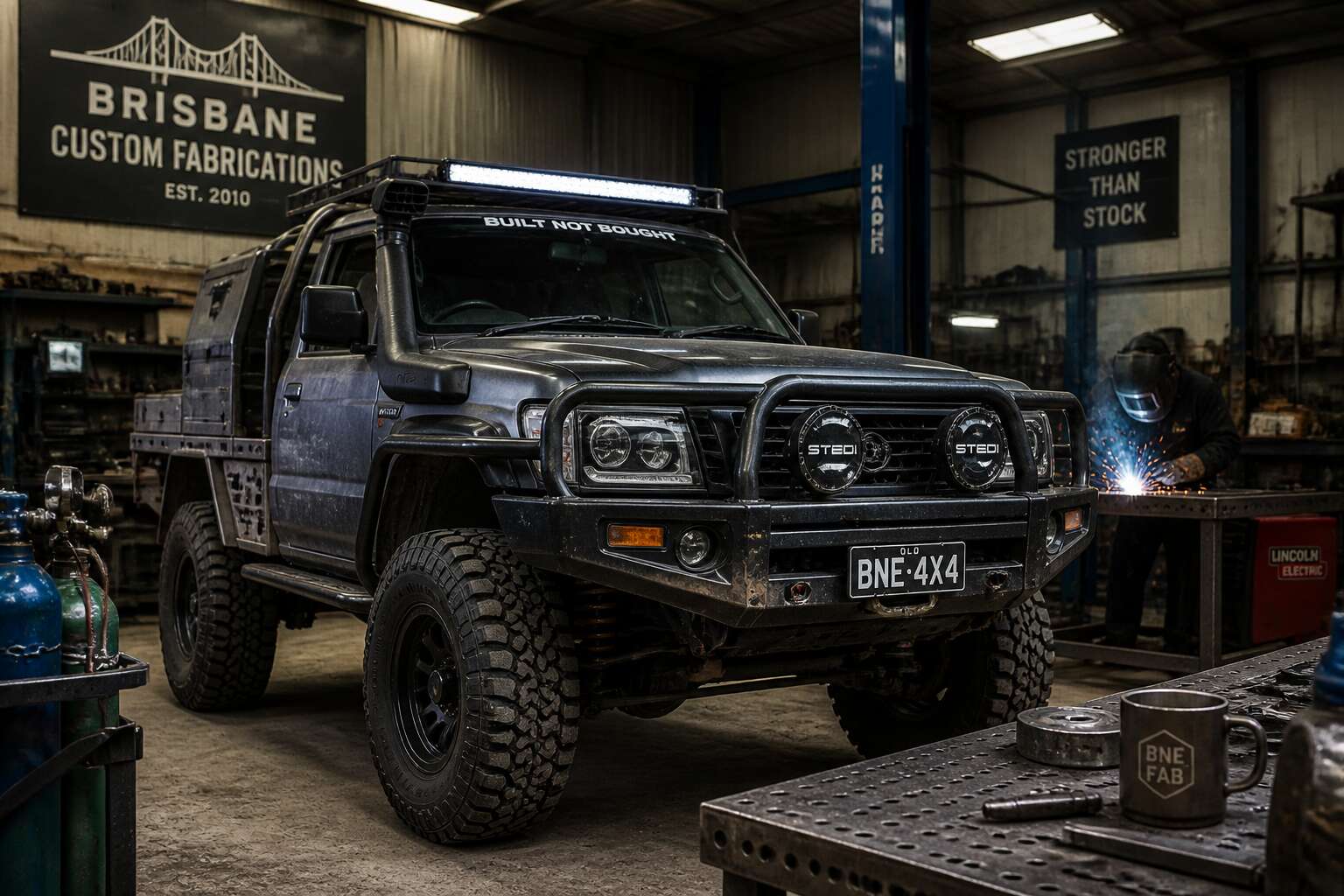
Understanding Custom Off-Road Vehicle Builds
Why Go Custom for Your 4WD?
Roughly 70% of the Australian 4WD market buys a vehicle straight off the showroom floor, yet these factory machines are often a compromise between comfort, cost, and capability. The geometry that keeps a ute stable on the highway is the same geometry that limits its flex on a rocky climb. This is where the decision to pursue custom 4×4 fabrication brisbane begins, not as a desire for vanity, but as a calculated response to the vehicle’s inherent limitations.
When you commission a bespoke build, you are fundamentally altering the vehicle’s relationship with the terrain. Custom fabrication allows you to solve specific engineering challenges that a one-size-fits-all approach cannot address. It is a philosophic shift from driving a generic product to operating a tailored tool, one where the vehicle behaves exactly as you need it to in the environments you frequent.
Consider the specific demands of the local landscape. A standard suspension setup might be adequate for gravel roads, but it fails to control body roll when you are loaded with expedition gear. To correct this, fabricators often reposition shock mounts and adjust spring rates to suit a specific payload. The result is a vehicle that maintains composure where a stock unit would feel unsettled.
– Custom engine tuning to suit high altitude conditions.
– Reinforced chassis mounts for bull bars and winches.
– Rear diff re-gearing for larger tyre diameters.
The decision to go custom is also a recognition that production vehicles are built for the average driver, not the specific owner. By engaging with a fabricator, you are participating in a dialogue about your driving habits. The final product reflects a series of deliberate choices about clearance, protection, and articulation. It is not about adding components; it is about creating a cohesive system where every modification works in concert with the others.
This process shifts the focus from the vehicle’s appearance to its behavior. When you prioritize the utility of the build, you accept that the process is often complex and requires precise engineering. The value lies in the resulting operational efficiency, a machine that performs its function with a level of precision that mass production cannot offer.
Common Customization Types: From Bumpers to Long-Range Fuel Tanks
The requests that arrive at a fabrication shop are never identical, and that is the point. A custom 4×4 fabrication brisbane build begins with an honest inventory of your driving environments, not a shopping list of popular accessories. Bumpers seem straightforward, yet their real function is mass distribution. A winch bar shifts the front axle weight, alters braking dynamics, and changes your approach angle. Fabricators measure these effects to ensure the suspension is engineered to accept the load.
Long-range fuel tanks answer a different question: how far can you trust the vehicle? They lower the centre of gravity by placing weight low and central. The outcome is a machine whose range matches its capability.
– Improved departure angles from reworked rear bars.
– Protected drivelines via custom skid plates.
– Auxiliary systems wired through a central control panel.
Each modification is a deliberate trade, a negotiation between weight, clearance, and durability. The result is a vehicle that serves your specific demands, not a general market statistic.
The Fabrication Workflow: Consultation to Completion
A fabrication project starts with a conversation, not a cutting torch. The workshop floor reveals little until the owner explains where the vehicle struggles: rocky climbs, muddy tracks, or long highway stretches. Custom 4×4 fabrication brisbane shops translate those stories into measurements and material choices.
The workflow moves through distinct phases:
- Vehicle inspection and chassis measurement.
- Design sketches with load calculations.
- Prototype fitting and adjustment.
- Welding, finishing, and final testing.
Each stage demands patience. A rear bar that looks right on paper may interfere with a tow hitch. The fabricator adjusts, repositions, and tests again. We see this iterative process as the core of the craft, and it explains why custom 4×4 fabrication brisbane work takes time. The completion handover includes a full explanation of what changed and why, so the owner understands the machine they drive away.
Key Differences from Factory-Made Accessories
Factory accessories arrive in a box. They promise fitment for a range of vehicles, but that range is the compromise. A bolt-on bull bar from a catalogue is engineered to clear the average bumper on the average chassis. Your vehicle is not average.
Custom 4×4 fabrication brisbane work starts with the actual vehicle in front of the fabricator. The chassis has been loaded, flexed, and measured. I have seen factory parts fail because the mounting points were never meant for real off-road stress. The difference appears in the details:
– Factory brackets use generic mounting points that shift under load.
– Custom mounts are shaped to the specific chassis rails.
– Factory bars reduce approach angles to fit a one-size-fits-all template.
– Custom bars preserve clearance by following the vehicle’s actual dimensions.
The factory part is designed for the showroom floor. Custom 4×4 fabrication brisbane is designed for the terrain you actually drive. One fits a demographic. The other fits you.
Services Offered by Brisbane-Based Metal Fabricators
Chassis Strengthening and Lift Kits
The road does not forgive a weak spine. When the weight of a rooftop tent, drawers, and recovery gear presses down with every rut and rock, the factory chassis begins to complain. It flexes, twists, and fatigues in places you cannot see from the driver’s seat. For those who venture beyond the blacktop, the solution is preemptive reinforcement.
Chassis strengthening is the quiet underpinning of serious off-road capability. A skilled fabricator will plate the rails, stitch critical welds, and box out weak sections to handle the increased payload. This work is not about aesthetics. It is about extending the life of your vehicle’s core structure. Without this, even the most rugged suspension will transfer unwanted stress to the body.
Lift kits, when installed correctly, offer more than just clearance. They alter your vehicle’s geometry to improve articulation and accommodate larger tyres. The common options include:
1. A coilover conversion for better damping on high-speed corrugations
2. A spring-over-shackle setup for a cost-effective height gain
3. Extended shackles and radius arms to correct driveline angles
A professional custom 4×4 fabrication brisbane workshop will tune these components to match your specific load and intended terrain. They ensure the lift works in harmony with the strengthened chassis, providing a solid base for serious adventures.
Custom Bull Bars and Rock Sliders
At the frontier of every overland expedition stands your vehicle’s outermost skin, the first point of contact with the unforgiving landscape. The bull bar and rock sliders are not mere accessories, they are strategic investments in survival. The bush telegraph often buzzes with tales of a cracked radiator caused by a rogue sapling or a punctured sill from a poorly judged crossing. It is in these moments that the decision to visit a custom 4×4 fabrication brisbane specialist transforms from a preference into a necessity.
The bespoke bull bar is a study in precision, engineered to mount seamlessly without compromising your vehicle’s crucial sensors or crumple zones. Mass-produced bars often leave unsightly gaps for airflow, which can cause overheating in slow, crawling conditions. A fabrication expert, however, can shape a bar to your specific winch and lighting setup, ensuring the approach angle is maximized and the aesthetics align with your vehicle’s lines. This is about building a unit that integrates so completely, it looks as though it left the factory that way.
Protection beneath the doors is equally critical. Rock sliders must manage the brutal reality of high-centered descents where the entire vehicle’s weight pivots on a single steel tube. A professional workshop will weld them directly to the chassis for strength, rather than simply bolting them to the thin sheet metal of the body. Furthermore, the best designs incorporate a durable powder coat finish that shrugs off stone chips and rust, keeping your investment looking sharp after a decade of hard use. Consider the range of fabrication options available:
– Custom winch mounts integrated into the bull bar design
– Side steps that double as sliders, aiding entry into a lifted cabin
– Reinforced bash plates that align with the fabricated underbody protection
Ultimately, the goal is to create a suite of armor that works in concert with the strengthened chassis and suspension you have already invested in. The right workshop understands how a few millimeters of perfectly placed steel can mean the difference between a great story and an expensive recovery bill. Their craft ensures that every encounter with the wild leaves the vehicle unscathed and ready for the next horizon.
Roof Racks, Drawers, and Storage Solutions
Around 80% of overlanding damage occurs not from impact, but from the chaotic shifting of unsecured gear inside the cabin. The interior of a touring vehicle is the last frontier of a proper build. The rubber seal on the rear door is a silent witness to the strain of a poorly distributed load. A visit to a custom 4×4 fabrication brisbane workshop often shifts focus from external armor to the quiet efficiency of internal systems. The goal is to transform a hollow cargo bay into a low center of gravity, high density storage unit.
The bespoke roof rack is the first layer of this strategy. Manufactured units often hum with wind noise or fail to clear the antenna. The local fabricator, however, builds a rack that sits low, almost flush with the roofline, to keep the vehicle’s center of gravity stable on cambered tracks. They weld in specific mounts for awnings or Maxtrax, ensuring your recovery gear is never buried under a week’s worth of supplies. It is a grid of purpose, welded to match the exact footprint of your roof.
Below deck, the sliding drawer system is a masterclass in weight management. The 4×4 fabrication brisbane crew will often construct these units from lightweight aluminum chequerplate, sliding on heavy duty runners rated for 200 kilograms. The beauty lies in the integration with the rear door. A 60/40 split drawer system allows access to the fridge slide without unloading the entire vehicle. Consider the design elements that make a trip seamless:
1. A dedicated wing for the dual battery and compressor, wired directly to the alternator.
2. Cutouts for the tie-down points to prevent cargo from becoming a projectile.
3. A flush mount for a 40L water tank in the void under the drawers.
The artisan approach ensures that storage solutions are not just boxes, but extensions of the vehicle’s structural integrity. When you look at a finished drawer system, it should feel as permanent as the chassis itself. These compartments reduce fatigue, allowing you to find the gas bottle or the recovery strap in a matter of seconds. The value is in the build quality of the frame. A solid foundation provides peace of mind that your tools will not rattle themselves to pieces on the corrugations.
It is the final step in creating a vehicle that lives on the road. The precise placement of every bracket and hinge speaks to a level of detail that factory options simply cannot match. This is the quiet achievement of the custom 4×4 fabrication brisbane industry, turning the back of your vehicle into a fortress of preparedness.
Exhaust and Snorkel Fabrication
Exhaust and snorkel fabrication forms the mechanical heartbeat of a touring build. A custom 4×4 fabrication brisbane workshop can craft a stainless steel exhaust that clears the chassis and boosts low-end response. Snorkels are not one-size-fits-all. The fabricator measures your vehicle’s fender line and airbox to position the intake above the dust and water line. They cut, weld, and seal the snorkel to avoid crackles.
Services often include:
- Mandrel-bent pipes for smooth airflow.
- Custom hangers to reduce vibration.
- Pre-cleaning the mounting surface for a durable seal.
Attention to these details prevents a snapped manifold or a drowned engine when you cross a flooded track. A well-executed setup is silent and dependable.
Trailing Arm and Coilover Conversions
A trailing arm conversion rewires how your rear axle follows corrugated dirt. Factory leaf springs twist under load and lose traction on uneven terrain. A custom 4×4 fabrication brisbane workshop converts the rear to a linked setup, positioning the coils and dampers with intent rather than guesswork.
The fabricator measures your chassis rails, diff housing, and shock towers before cutting a single mount. They weld in crossmembers, brace the spring perches, and set the geometry for your loaded touring weight. Coilover conversions then replace bulky leaf packs with adjustable height and damping, which matters when you carry a rooftop tent and 80 litres of water.
- Improved wheel travel over rocky climbs
- Reduced axle hop on corrugated gravel
- Adjustable ride height for varying loads
I have watched a properly executed conversion flex an axle over a ditch that would have lifted a factory wheel clean off the ground. Every weld is ground flat and sealed. The suspension moves without binding, and the vehicle settles into a planted, predictable stance.
Materials, Tools, and Techniques in Professional Fabrication
Steel vs. Aluminium: Pros and Cons
Steel remains the primary material for serious off-road builds. Its tensile strength absorbs impacts that would crack lesser alloys, and welding it requires a MIG unit and steady hands. Aluminium offers a 40 percent weight saving, which improves fuel economy and reduces strain on suspension components. The trade-off appears in repair costs; aluminium demands TIG welding and specialised technique.
- Steel: superior fatigue resistance, forgiving to weld, prone to corrosion without treatment
- Aluminium: lighter, rust-proof, but prone to stress fractures in high-vibration zones
Professional workshops handling custom 4×4 fabrication brisbane prefer steel for structural elements such as chassis reinforcements, while reserving aluminium for panels and storage systems where weight reduction is critical.
Advanced Welding and Cutting Methods
Plasma cutting has revolutionised the fabrication floor. A CNC plasma table slices through 10mm steel with a kerf so narrow that profile distortion becomes a non-issue. For custom 4×4 fabrication brisbane, this means chassis brackets and rock slider mounts fit with millimetre accuracy. Pulsed MIG welding reduces spatter and heat input on thin wall tubing. TIG remains the choice for aluminium, though new AC waveforms have simplified the process.
Jigs are the silent discipline. A poorly aligned jig produces a door that sags after 5000 kays of corrugations. The best shops build dedicated fixtures for each bumper style. This upfront investment pays off in repeatability.
– CNC plasma cutting for complex shapes
– Pulsed MIG for consistent penetration
– AC TIG for aluminium alloys
– Laser cutting for high tolerance mounts
Precision also comes from thermal management. Warpage occurs when heat builds unevenly. Professional workshops use intermittent welding sequences and backstep techniques to control distortion. Every pass gets measured, not assumed.
Use of CAD and CNC Machining
CAD is the first checkpoint. A 3D model of a chassis mount or suspension tower gets tested digitally before any material is cut. For custom 4×4 fabrication brisbane, this eliminates trial and error on expensive steel. Mistakes cost time and money, so simulation matters.
CNC machining then produces the actual components. A 5-axis mill carves intricate axle trusses and diff guards from solid billet. Water jet cutting handles thick plate with zero heat-affected zone. These tools make custom 4×4 fabrication brisbane far more predictable.
Common equipment in this phase includes:
- 3D laser scanners for reverse engineering existing vehicles
- CNC press brakes for precise folding
- Water jet cutters for thick plate
The payoff is consistency. Every bracket leaves the machine identical, so installation becomes a direct fit rather than a grinder fight.
Surface Finishing: Powder Coating and Galvanising
Powder coating and galvanising are the final barriers between steel and the Australian climate. A bumper might survive fabrication, but salt, mud, and stone chips will find any weakness. Powder coating applies a dry electrostatic charge, then bakes it into a tough skin. It resists scratching and UV fade. Galvanising goes further. Hot dip zinc creates a sacrificial layer that keeps corroding instead of the steel underneath.
Surface prep decides everything. Bead blasting removes mill scale and old paint. Acid etching preps the metal for zinc. Skipping these steps guarantees early failure.
- Powder coating in matte black or custom colours
- Hot dip galvanising for chassis and underbody parts
- Two pack epoxy for chemical resistance
For custom 4×4 fabrication brisbane workshops, matching the finish to the component’s location matters more than aesthetics. A roof rack needs UV stable coating. A diff guard needs impact resistant layers. The right finish extends the life of every weld and bend underneath.
How to Choose a Specialist for Your Project
Essential Qualifications and Industry Affiliations
Choosing a specialist for custom 4×4 fabrication Brisbane demands more than a glance at their workshop photos. The gap between a rig that conquers the outback and one that fails at 40 km/h often comes down to credentials buried in paperwork.
Start by verifying trade qualifications. A Certificate III in Engineering Fabrication is the baseline. Welders should hold current AS/NZS 1554 certifications. A clean bead means little if the penetration is shallow.
Industry affiliations hold weight. Fabricators tied to recognised 4WD associations face regular audits, which elevates their accountability. Request their Australian Business Number and public liability certificate, then confirm both with the issuer.
Here is what I recommend checking when evaluating any custom 4×4 fabrication Brisbane workshop:
- Cert III or higher in fabrication or boilermaking
- AS/NZS 1554 welding tickets for structural work
- Third party liability insurance of $20 million or more
- Active membership in a recognised industry association
I once examined a bull bar fitted by an unqualified welder. He used mild steel brackets on a chassis engineered for high tensile loads. The owner paid double to fix that oversight.
Evaluating Past Work and Testimonials
A workshop’s portfolio is the clearest indicator of their standards. When evaluating custom 4×4 fabrication brisbane specialists, I ignore polished marketing shots and request unfinished work. A bare chassis or partially welded bull bar exposes weld spatter, inconsistent heat marks, or gaps in seam preparation.
Testimonials carry weight only when they can be traced. I recently phoned a client whose name appeared on a fabricator’s website. He described how the team rectified a cracked mount within days, no questions asked. That response tells you more than any five star rating!
- Ask to inspect a vehicle currently in the workshop
- Request contact details of at least two past clients
- Look for symmetry and clean fitment on every joint
Take the time to drive a finished rig yourself. Feel how the suspension behaves under load. That experience separates a genuine custom 4×4 fabrication brisbane job from a cosmetic imitation.
Understanding Quotes: What’s Included and What’s Not
A quote for custom 4×4 fabrication brisbane work can be a dense document, or it can be a single vague number. Both should raise questions. The ambiguity is where your budget quietly disappears. A professional workshop will itemise labour, materials, and consumables. They will specify the grade of steel and the type of weld. If a quote lacks this detail, ask why. That absence often signals a plan to adjust costs later, or worse, a plan to cut corners.
Line items tell a story. A fair quote breaks down the hours for design, cutting, jigging, and finishing. It separates the cost of the raw product from the skill required to shape it. Watch for terms like “miscellaneous” or “sundries”. A small amount is normal. A large lump sum is a red flag. You are paying for engineering, not guesswork.
– Does the quote include surface preparation and a corrosion barrier?
– Are fittings and fasteners specified, or are they left to the fabricator’s discretion?
– What is the quoted timeline, and is there a penalty for exceeding it?
– Is the final payment tied to your inspection and approval?
A detailed quote protects you and the fabricator. It forces a conversation about the scope before steel is cut. When you see a clear breakdown, you understand where your money goes. When you see a single figure, you are gambling. For custom 4×4 fabrication brisbane, clarity in the quote is the first test of the workshop’s professionalism. That document should give you the confidence to proceed, not leave you guessing about what comes next.
Turnaround Times and Project Management
If you believe the arrival date on a workshop’s estimate, I have a bridge to sell you, and it comes with a free snorkel. Punctuality is a dying art form, especially in the world of custom 4×4 fabrication brisbane. A vague promise of “six weeks, mate” is not a project plan. It is a guess, and your vehicle is the hostage of that guess. You need a detailed schedule, a timeline that accounts for parts sourcing delays, hours on the jig, and the inevitable interruption when a more urgent job slides in.
A specialist worth their salt has a process. They know that a suspension lift might take a day, but a full chassis redesign takes a week of pure concentration. Ask them directly how they handle bottlenecks. Do they have a dedicated project manager, or is it just the fabricator chatting to you while welding with one hand? A single point of contact who updates you on progress, without you having to send smoke signals, is worth every rand.
– Who is my direct contact for daily updates?
– How does the fabrication schedule handle unexpected weather or material shortages?
– Is there a daily or weekly progress report, or do I have to chase you down?
Realistic turnaround times are a sign of confidence. A shop that quotes you three months for a simple job might be hedging, but a shop that tells you three weeks and delivers on time is a unicorn. Treat them well. Communication during the build is not just about killing time. It is about making crucial decisions regarding steering geometry or drawer layouts while the metal is still hot. Waiting for the final reveal without updates is like waiting for a kettle to boil with a hangover. The silence is painful, and you are sure the water will never be ready. Choose a workshop that manages your project and your expectations, or you will be left staring at an empty workshop floor, wondering where your 4×4 and your patience went.
Costs, Legalities, and Safety Considerations in QLD
Estimating the Total Investment for Custom Work
It’s a common misconception that the final price tag is the only number that matters. A cheaper quote for a lift kit or a set of sliders can quickly become a liability if the engineering isn’t certified. When you commission custom 4×4 fabrication Brisbane workshops, you are paying for their liability and their reputation. A thorough workshop will not just quote the steel and labour. They will factor in the time for CAD modelling, the cost of specialised welding consumables, and the pre and post production checks that prevent a failure on the tracks.
Queensland has specific rules on vehicle modifications under the Australian Design Rules, and these are not flexible. Any change to your suspension or chassis requires an engineering certificate, and some modifications are outright illegal without a full certification process. The legalities are a crucial part of the investment. The figure you initially receive should always include the paperwork, the compliance testing, and the sign off from a certified engineer. If a workshop tells you they can bend the rules or skip the certification, walk away. That shortcut will void your insurance and make your vehicle unroadworthy.
Safety considerations should dictate every design choice, which is why an informed consumer looks beyond the bottom line. Consider the structural integrity of your chassis when adding a bull bar or a winch cradle. The forces involved are immense, and a poorly integrated mount can tear the body or impede the airbag sensors. The real cost calculation must include safety compliance, because a failure here is catastrophic. Here is how a professional approach should break down the financial landscape:
- The cost of the materials, which varies significantly between high tensile steel and marine grade aluminium.
- The workshop hourly rate, which reflects the skill level of the fabricator and the quality of their equipment.
- The engineering certification fees, which are non negotiable for any chassis or suspension modification.
A significant expense that many owners overlook is the downtime on the vehicle. This is not just about the fabrication time but also the potential for hidden issues, such as corroded bolts or fatigue cracks, that are only discovered once the work begins. A proper workshop should quote a realistic turnaround that includes a buffer for these discoveries. If they underquote the time, they are likely cutting corners on the safety checks. Ultimately, the true value of custom 4×4 fabrication Brisbane relies on a transparent process where every dollar spent is tied to a tangible improvement in capability and safety, not just aesthetics.
Navigating Queensland’s Vehicle Modification Regulations
Queensland’s modification landscape is governed by the National Code of Practice for Light Vehicle Modifications, and the rules shift depending on your vehicle’s build date and body style. Engaging custom 4×4 fabrication Brisbane companies that specialise in this compliance work protects you from a costly mistake: a modification that passes the eye test but fails an inspection.
The legal pathway demands more than a final certificate. You need an Approved Person to assess the work, a modification plate fitted to the chassis, and a registration update lodged with the Department of Transport. The costs accumulate across these steps:
- Approved Person assessment and certification, typically between $300 and $1,500
- Modification plate fabrication and fitting, around $50 to $150
- Registration amendment fees and potential insurance premium adjustments
Safety considerations justify every one of those expenses. Without correct certification, your insurer can deny a claim outright, and a single component failure can write off the vehicle. Compliant fabrication is not a suggestion in this state; it is the only legal path forward. Any workshop that claims otherwise is selling you a liability.
Engineering Approval and Certification Process
That final engineering certificate is not a stamp of approval; it is a financial settlement for the risk you are introducing to the road. The total spend for QLD engineering approval and certification rarely stops at the workshop invoice. You are paying for the fabricator’s skill, but you are also paying for the engineer’s liability. When you secure custom 4×4 fabrication brisbane, the quote often excludes the certification stage, so prepare for a separate bill that arrives later.
The cost structure is layered, and it is wise to see it coming before you commit to the build. You are not simply buying a bracket or a suspension component. You are buying the right to operate that vehicle legally, and that right has a price. The expenses generally break down like this:
1. The Approved Person’s inspection and sign-off, which can range from a few hundred dollars for a simple accessory to over a thousand for suspension geometry changes.
2. The fabrication of the modification plate itself and the labour to permanently affix it to the chassis.
3. The administrative fees at the Department of Transport to update your vehicle’s registration records, which is not optional.
The legalities here are cut and dry. The National Code of Practice for Light Vehicle Modifications is the only rulebook that counts, and it does not care about your opinion. If your suspension lift exceeds the prescribed limits, or your bull bar obscures a compliance plate, the vehicle is unregistered in the eyes of the law. A workshop that tells you “it will be fine” is not your friend. The Approved Person on the certificate is taking personal responsibility for the structural integrity of your car. If they get it wrong, they lose their licence, which is why they will scrutinise your custom 4×4 fabrication brisbane work with a level of detail that surprises most owners.
Safety considerations are the final payout on this investment. An engineered vehicle is not just about clearing a police inspection. It is about what happens when you are 400 kilometres from the nearest town, loaded to the gunnels, and the front end hits a washout. A certified weld holds. A certified bracket does not fatigue and snap. Without that certificate, your insurer will deny a claim for a cracked chassis, and you will be towing the wreck home at your own expense. The modification plate is the physical proof that a qualified engineer has done the maths on your specific vehicle, so the cost is not a tax. It is the price of coming home.
Insurance and Resale Value Impacts
One denied claim can erase the entire financial logic of a build. If you have engineered your suspension or chassis and never paid the certification fee, the insurance assessor will treat the modification as the cause of any structural failure. That classification voids your comprehensive policy and leaves the recovery costs on your shoulders. The price of custom 4×4 fabrication brisbane becomes irrelevant when the insurer labels your vehicle a statutory write-off.
Resale value behaves differently when the modification plate is present. Buyers in Queensland will pay a premium for documented legality, as it removes their own risk of rejection at registration renewal or roadside inspection. The market values certainty over performance claims, and protected investment means the paperwork is worth more than the weld in many cases.
- A certified build typically retains 70 to 80 percent of its modification cost.
- An uncertified build loses most of its accessory value at trade-in.
- The engineering certificate transfers with the vehicle, simplifying private sales.
That residual value difference is the quiet driver behind most resale decisions, urging owners to complete the compliance paperwork even after the workshop invoice is settled, and the reward is a vehicle that moves on the market without the stigma of questionable provenance.
On-Road Safety and Off-Road Performance After Modifications
Queensland law draws a sharp line between off-road capability and on-road legality. A suspension lift that performs brilliantly in the Glasshouse Mountains can fail a roadworthy inspection if the engineer’s certificate is not in the glovebox. The cost of that certificate is annoying, but the fine for driving without it is worse.
Safety considerations go beyond the workshop. A modified 4WD with a raised centre of gravity handles differently in an emergency swerve. Off-road performance gains can create on-road hazards if the steering geometry and brake lines were not updated. The same modifications that conquer a rocky climb can unsettle the vehicle at highway speed.
- Budget for the compliance paperwork before the suspension work begins
- Confirm the workshop’s work meets QLD codes for on-road use
- Test the vehicle’s on-road behaviour after any off-road focused build
Custom 4×4 fabrication brisbane shops often quote the shiny parts first, but the real cost is in making those parts legal. That distinction separates a weekend toy from a daily driver.


0 Comments