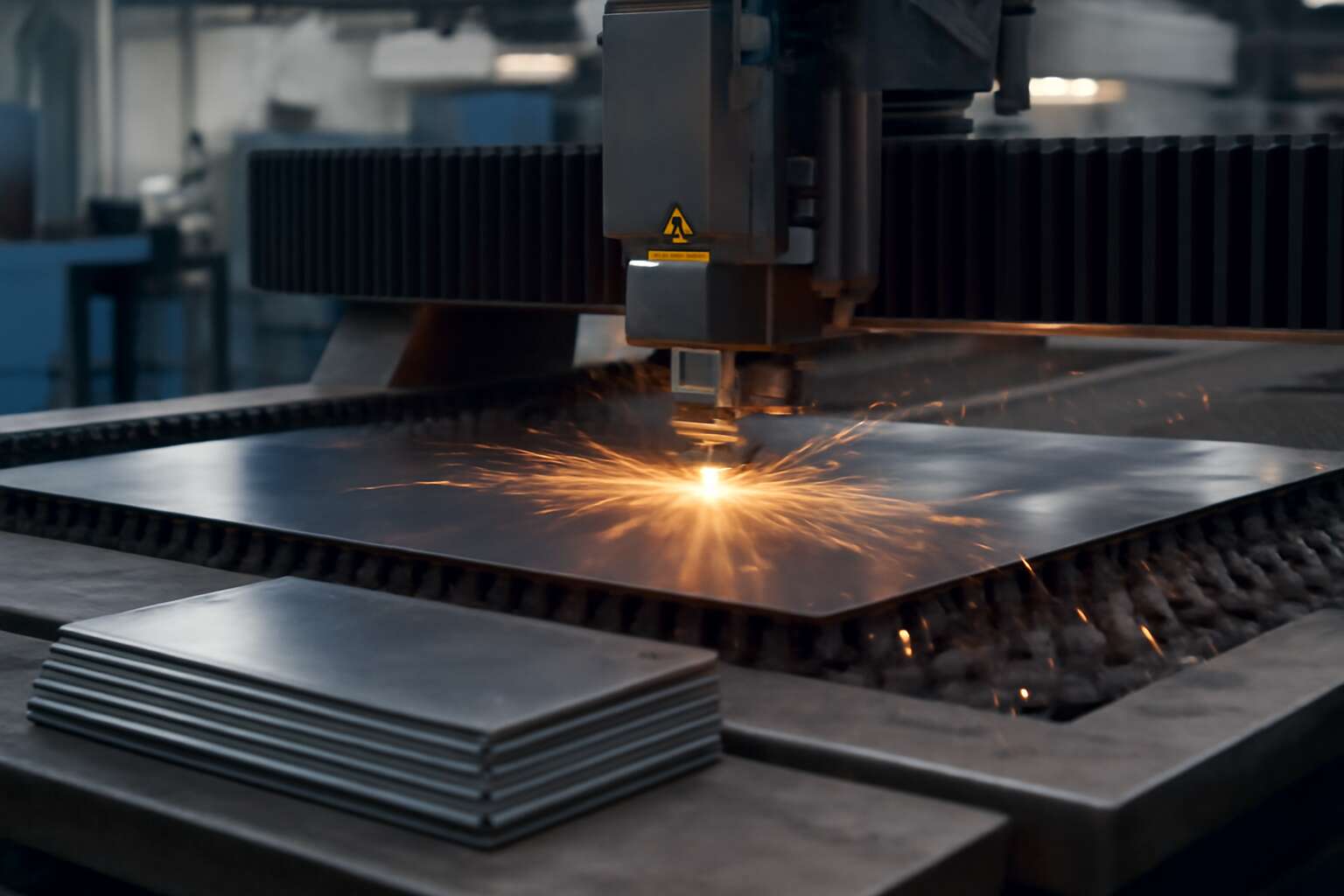
Overview of sheet metal fabrication basics
What is sheet metal fabrication and why it matters
Even a 0.1 mm tolerance shift can ripple through a build and add weeks to production. In sheet metal fabrication 101, the aim is reliable parts that fit from the first cut, whether you’re supplying local SA manufacturers or national OEMs.
- Cutting to size
- Bending and forming
- Finishing and deburring
These basics keep parts consistent, reduce waste, and align with practical shop floor realities in South Africa. Selecting appropriate sheet metal, tolerances, and tooling strategies translates into better yields and smoother project timelines.
Key processes in sheet metal fabrication
In sheet metal fabrication 101, tolerances are commitments, not afterthoughts. A 0.1 mm shift can ripple through a build and push weeks of production into the queue. In South Africa, reliable parts from the first cut translate into on-time deliveries and calmer project timelines.
Overview of the basics and the daily craft: material choice, thickness, coatings, and surface finish shape cost and performance. The core processes—cutting, forming, and finishing—are a choreography, where each step feeds the next with precision and care.
- Cutting to size with tight tolerances and clean edges
- Bending and forming that produce repeatable radii
- Finishing and deburring for a smooth, paint-ready surface
From workshop floors in Gauteng to factories along the coast, these choices echo in yields and timelines. The dance between material, tooling, and shop-floor realities shapes whether a job slides onto schedule or drifts into quiet, costly delays.
Common materials and alloys used in fabrication
That 0.1 mm whisper can derail a schedule, a hook etched in steel. This is sheet metal fabrication 101 in practice. The basics hinge on material choice, thickness, coatings, and surface finishes that sculpt cost and performance.
Common materials and alloys are chosen for their balance of formability, strength, and corrosion resistance. In South Africa, suppliers offer:
- Mild steel (DC01, hot-rolled equivalents)
- Stainless steel (304, 316) for corrosion resistance
- Aluminum alloys (5052, 6061) for lightness and forming ease
- Galvanized steel for budget-friendly durability
- Copper and brass for conductivity or aesthetic touches
Each alloy tells its own story—tight radii, clean edges, and paint-ready finishes depend on the metal’s nature and the processing that follows.
Historical context and evolution of fabrication technologies
Sheet metal fabrication has always been a dialogue between possibility and constraint. This is sheet metal fabrication 101 in practice, tracing the arc from hand tools to laser-cut precision. “The caliper never lies,” a veteran foreman likes to remind us, and the shop floor answers with crisp edges and repeatable bends. In South Africa, workshops juggle lead times, coating choices, and local supply chains, all while striving for durability and aesthetic clarity.
- Hand shaping with simple tools to establish basic geometry
- Power presses, brake bending, and controlled forming
- Punching, stamping, and shearing for repeatable profiles
- Computer-controlled cutting and automation: CNC punching, laser, and waterjet
Yet the history hides in plain sight: from blacksmith-like handwork to CNC-driven production, the evolution traded raw force for precision and material efficiency. In this historical arc, South Africa’s suppliers and artisans adapt old skill to modern tolerances, honoring tradition while embracing digital fabrication’s promise.
Core processes in sheet metal fabrication
Cutting and shearing methods
In sheet metal fabrication 101, the cut is the opening act—an edge that sets tolerance, finish, and fit. In South African workshops, precision cuts save time, material, and morale, turning ambitious ideas into reliable parts. A seasoned operator often murmurs, “Cut clean, finish fast,” and the metal seems to respond with a neat, ready edge.
Core cutting and shearing methods cover several approaches, each tuned to material and thickness. They include:
- Laser cutting
- Plasma cutting
- Waterjet cutting
- Mechanical shearing
Beyond speed, kerf width and edge quality matter: narrow kerf minimizes waste; consistent shear angles prevent distortion. In practice, operators balance tool wear, rack time, and coolant management to keep tolerances tight and the workflow smooth.
Forming processes including bending and stamping
In sheet metal fabrication 101, turning a flat sheet into a precise, purposeful form is the heart’s ignition. Bending and stamping become the sculptor’s chisel, shaping panels with grace and grit. In South Africa’s workshops, steel remembers its destiny as it bends to meet spec and service!
- Bending: creates gentle curves and tight corners with controlled pliability
- Stamping: mass-forming sheet metal through dies for speed
- Deep drawing: pulling the metal into hollow forms with flange control
Depth arrives through calibrated pressure and patient hands; I hear the metal whisper back as springback is tamed, and tool life stretches with the rhythm of lubrication. The forming family—bending, stamping, and their cousins—demands a measured tempo, a harmony of pressure and precision that makes complex assemblies sing.
Joining techniques such as welding and fasteners
Joints are where the magic happens in sheet metal fabrication 101. The way parts are bound—welded, bolted, or glued—decides whether a product stays tight or leaks like a sieve. In South Africa’s workshops, the right joining method balances strength, cost, and service life from the factory floor to field repairs.
- Welding (MIG/TIG): solid seams with fatigue resistance for high-strength assemblies
- Mechanical fasteners: bolts, nuts, and screws for easy disassembly and service
- Riveting: a heat-friendly option that avoids distortion in sensitive joints
- Brazing and soldering: precise, cosmetic joins using filler metals
These choices shape the assembly’s resilience, balancing heat input, distortion risk, and material compatibility without venturing into how-to territory.
Finishing and surface treatment
Finishing and surface treatment are the final polish in sheet metal fabrication 101. They seal, protect, and define the look of a part, and a slick finish can extend service life in tough African environments. In South Africa, outdoor and coastal components demand corrosion resistance and UV stability from the start. The right coating choices balance appearance, budget, and maintenance needs.
Common finish options include:
- Powder coating for durable color and corrosion resistance
- Galvanizing or zinc-rich primers for outdoor use
- Anodizing for aluminum alloys, providing wear resistance and cosmetic appeal
- Primer and enamel or powder overcoat for precise industrial aesthetics
These treatments are selected to minimize distortion, manage heat input during curing, and keep components serviceable in factory floors to field repairs.
Materials, tolerances, and quality control
Material selection and grade considerations
In sheet metal fabrication 101, the material you choose is the first hinge of a successful build. ‘Quality is not an act, it is a habit,’ a quiet reminder echoed by veterans on the shop floor and in design rooms alike. The right metal aligns with function and finish, shaping everything from bend radii to surface texture. That choice sets tolerances, cost, and lead times—critical in South Africa’s market!
In material selection and grade considerations, think about how the metal behaves under stress, heat, and corrosion. The balance of chemistry, strength, and formability determines how cleanly a part can be produced and how it holds up in service.
- Grade and chemical composition
- Corrosion resistance and environment suitability
- Availability and supplier support
Quality control follows. Tolerances are set early and verified with precise measurements—calipers and gauges. First articles establish the standard, and inspection stays with the run to keep scrap down and parts true.
Tolerance and fit guidelines for sheet metal parts
On the shop floor, a 0.2 mm drift can derail a whole assembly. In this field, tolerances are the quiet compass guiding every bend and joint, shaping whether a panel sits flush or fights its neighbors. Calipers and gauges become the line’s heartbeat, and first articles set the standard for the finish that follows in South Africa’s workshops!
- External and feature tolerances: general targets around ±0.25–0.5 mm for typical gauge
- Bend radii and springback: allowances that preserve flatness and fit
- Hole patterns and fastener alignment: concentricity and positional tolerances to prevent misfit
Quality control continues through the run to catch drift early, keeping sheet metal parts aligned with their intended function and finish in sheet metal fabrication 101.
Quality control strategies and inspection methods
Precision is a quiet force that turns rough metal into reliable parts. In South Africa’s workshops, a drift of 0.2 mm can derail an entire assembly, turning perfect bends into misaligned neighbors.
Materials frame this saga—air between yield strength, formability, and coatings. The right alloy reduces springback and preserves flatness across runs. In sheet metal fabrication 101, materials and tolerances are not abstractions but compass points guiding every bend.
Quality control strategies and inspection methods keep the line honest. The plan blends first article validation, in-process checks, and end-of-line verification. See below for core tools:
- First article inspection (FAI) for baseline geometry
- Go/no-go gauges and digital calipers
- Coordinate measuring machine (CMM) verification data
- Surface finish and roughness audits
These measures catch drift early, ensuring parts align with intended function and finish—on the shop floor and beyond.
Common defects and how to prevent them
Like a quiet chorus, materials set the rhythm of every bend. In sheet metal fabrication 101, tolerances become a living compass that guides each crease and flake of coating. The right alloy reduces springback and preserves flatness across runs, turning rough edges into reliable surfaces you can trust in production lines across South Africa.
Quality control and inspection play the role of steadfast gatekeepers. Here are common defects and how to prevent them:
- Warp or springback — a consequence of material stability and forming geometry.
- Burrs and sharp edges — often arise from edge conditions and tooling behavior.
- Dimensional drift — mirrors fixture fidelity and process stability over runs.
- Surface roughness and scuffing — linked to handling and protection of fresh edges.
Design for manufacturability in sheet metal
Design guidelines and best practices
Design for manufacturability shapes every quote and deadline on the workshop floor. In sheet metal fabrication 101, DFM is less about clever tricks and more about aligning geometry with what the shop can reliably produce. A few deliberate choices can trim lead times, reduce scrap, and keep finishes pristine—without blowing the budget.
Key guidelines include:
- Favor generous bend radii to minimize springback and cracking.
- Place holes and cutouts on flat sections away from bends to simplify punching and deburring.
- Use simple, repeatable shapes and standard sheet sizes to reduce setup time.
- Plan parts to nest efficiently, minimizing waste and tool changes.
With thoughtful layout and a touch of pragmatism, manufacturability becomes a built-in feature rather than an afterthought.
DFM considerations for sheet thickness and bend radii
In sheet metal fabrication 101, thickness and bend radii are not afterthoughts—they shape throughput, cost, and finish. The chosen sheet thickness influences stiffness, weight, and tooling compatibility, while bend radii govern springback and the risk of cracking at corners. Alignment between geometry and the shop’s capabilities keeps lead times predictable and scrap low.
Across South Africa, designers and fabricators see how small changes in thickness and radii ripple through the process. Thicker stock raises springback unless radii are generous; generous radii reduce cracking and maintain a cleaner edge after shearing. The net effect is a part that behaves predictably in forming and finishing.
A single design choice can convert a complex bend into a smooth transition, turning manufacturability into a built-in advantage.
Estimating cost and lead times early in the design process
In sheet metal fabrication 101, early cost and lead-time estimates shape the entire project. A veteran South African estimator often says, “the cheapest part is the one you never cut,” and that mindset pushes DFM into the sketch pad from day one.
Estimating early means weighing thickness, tooling setups, and potential delays against the project timeline. Engaging fabricators in the design phase helps set targets you can trust. Consider these cost and lead-time drivers:
- Material cost and stock availability
- Tooling, setup, and changeover time
- Welding, coating, and handling requirements
Applications, industries, and choosing a fabrication partner
Industries that rely on sheet metal fabrication
Sheet metal fabrication 101 shows up everywhere—from the humming HVAC rooms of Cape Town to rugged mining enclosures in Limpopo. A seasoned fabricator once said, “Precision is the quiet engine of progress.” In South Africa, turning flat sheets into reliable components can shorten lead times and fortify local supply chains.
Applications and industries rely on this craft in surprising ways. Here are core sectors you’ll see frequently:
- Construction and architectural metalwork
- Automotive components and panels
- Electrical enclosures and control housings
- HVAC equipment and industrial machinery
- Mining and agricultural machinery
When selecting a partner for sheet metal fabrication 101 journeys, prioritise breadth of capability, on-time delivery, and clear communication. Seek a local supplier with ISO-grade quality systems, scalable capacity, and supportive design feedback to keep projects moving smoothly.
How to select a fabrication partner or shop
sheet metal fabrication 101 is the backbone of everyday infrastructure, turning flat sheets into dependable components. In South Africa, it underpins projects from Cape Town’s construction zones to Limpopo’s rugged mining enclosures, shaping efficiency and resilience across industry.
- Construction and architectural metalwork
- Automotive components and panels
- Electrical enclosures and control housings
- HVAC equipment and industrial machinery
- Mining and agricultural machinery
Beyond parts, sheet metal fabrication 101 touches the rhythm of operations—the reliability of electrical enclosures, the efficiency of HVAC units, and the ruggedness of mining and agricultural machinery.
When selecting a partner for sheet metal fabrication 101 journeys, prioritise breadth of capability, on-time delivery, and clear communication. Seek a local supplier with ISO-grade quality systems, scalable capacity, and constructive design feedback to keep projects moving smoothly.
Cost considerations and budgeting for projects
In sheet metal fabrication 101, every bend narrates efficiency and durability. The work underpins infrastructure, turning flat stock into components that keep assets running. In South Africa, this precision travels from Cape Town to Limpopo’s sites, where reliability and speed matter. “Precision buys time,” says an engineer.
Applications span protective housings for electronics, rugged frames for industrial equipment, and accents that shape spaces. sheet metal fabrication 101 blends material behavior with design, delivering parts that resist corrosion, endure vibration, and meet tight tolerances.
Choosing a fabrication partner comes down to capability, delivery reliability, and clear communication. Look for local providers with ISO-grade quality systems, scalable capacity, and constructive design feedback to keep projects moving. That is the heart of sheet metal fabrication 101 when budgeting and partner selection intersect.
- Material cost and yield
- Complexity, tolerances, and setup costs
- Volume, lead times, and logistics
- Waste, recycling, and total cost of ownership
Sustainability and waste reduction in sheet metal work
“Precision buys time,” an engineer once said, and that line sticks when we talk sheet metal fabrication 101. In South Africa, every bend is a choice between speed, durability, and waste minimization, turning flat stock into dependable assets on sites from Cape Town to Limpopo.
Applications flow through energy infrastructure, agricultural equipment, and architectural metalwork, adapting to SA’s varied environments. These sectors demand parts that resist corrosion, survive vibration, and stay within tight tolerances.
- Mining equipment components
- Electrical enclosures and switchgear
- Agricultural machinery parts
- Architectural metals and façade elements
Choosing a fabrication partner hinges on capability, delivery reliability, and clear communication. Sustainability and waste reduction drive total cost of ownership. Local shops with ISO-quality systems, lean nesting, and robust recycling programs keep projects moving with less scrap and lower energy use.


0 Comments