Overview of fabrication strategies in construction
Types of fabrication used in construction
In South Africa’s changing skyline, fabrication work in construction acts as the quiet engine turning bold concepts into deliverable steel, panel systems, and concrete forms. A sharp stat anchors the scene: projects that embrace off-site fabrication finish up to 25% faster on site, cut weather-related delays, and coax quality from controlled environments.
From design-for-fabrication to modular assemblies and precision on-site finishing, the strategy hinges on early collaboration, digital planning, and rigorous QA. When teams coordinate geometry, material behavior, and sequencing, the build flows with fewer detours and a truer fit, delivering installations that endure!
- Shop fabrication and prefabrication of components
- Modular construction panels and pod systems
- On-site assembly and finishing for final connections
Adopting these strategies means craftspeople and engineers move as a single rhythm, where expertise meets standard, and every joint speaks of resilience and craft.
On-site vs prefabrication workflows
South Africa’s changing skyline demonstrates that strategy matters as much as steel. Off-site fabrication can trim install time and weather-related disruptions, a shift that turns workshops into primary construction spaces. This is the essence of fabrication work in construction—turning bold ideas into precise assemblies under controlled conditions. On-site and prefabrication workflows operate with different cadences, yet the goal remains the same: fit, finish, and fortitude!
In practice, the contrast between on-site flow and prefabrication rhythm reveals three defining advantages.
- Factory-controlled production reduces weather exposure and material variability.
- Modular panels and ready-to-connect components shorten on-site assembly time.
- Early sequencing and QA coordination cut rework and punch-list fatigue.
I’ve watched teams weave these threads with early planning and digital coordination, and projects unfold with fewer detours, truer fits, and a quiet confidence that travels from workshop to site.
Impact of fabrication on project timelines
A recent industry snapshot shows weather downtime dropping by up to 40% when critical assemblies move from site to controlled workshops. This is the heartbeat of fabrication work in construction.
Across South Africa, the chain from design to fabrication tightens through precise strategies: factory discipline, modular interfaces, and digitally coordinated sequencing that bridge design intent and shop realities.
- Digital coordination aligns design intent with shop drawings and fabrication tolerances
- Interchangeable modular interfaces standardize connections and simplify procurement
- Dedicated shop-floor sequencing minimizes on-site surprises and weather exposure
Viewed through the lens of timelines, this approach yields accelerated procurement cycles, smoother site integration, and a more predictable rhythm across the project corridor. The economy of repetition and precision travels from workshop to site, quietly reshaping skyline and schedule.
Key standards and codes guiding fabrication
Cities across South Africa are entering a new era of precision, where sketches become secure, stitch-by-stitch reality. “Design breathes when fabrication takes the stage,” a veteran fabricator likes to remind us, and the workshop becomes a forge of reliable connections.
Design-for-fabrication translates complex drawings into shop-friendly components, while modular assemblies create repeatable units that travel smoothly from workshop to site. Digital twins and BIM workflows align intent with shop drawings, tightening tolerances and reducing rework. This is how fabrication work in construction quietly reshapes city blocks.
Key standards and codes guiding fabrication ensure quality and safety travel from design to delivery.
- ISO 9001 — Quality management systems
- ISO 3834 — Welding quality requirements
- ISO 1090 — Structural steel conformity and execution
- SANS/SABS standards — Local fabrication and compliance
Materials and methods in construction fabrication
Metal fabrication techniques including welding and cutting
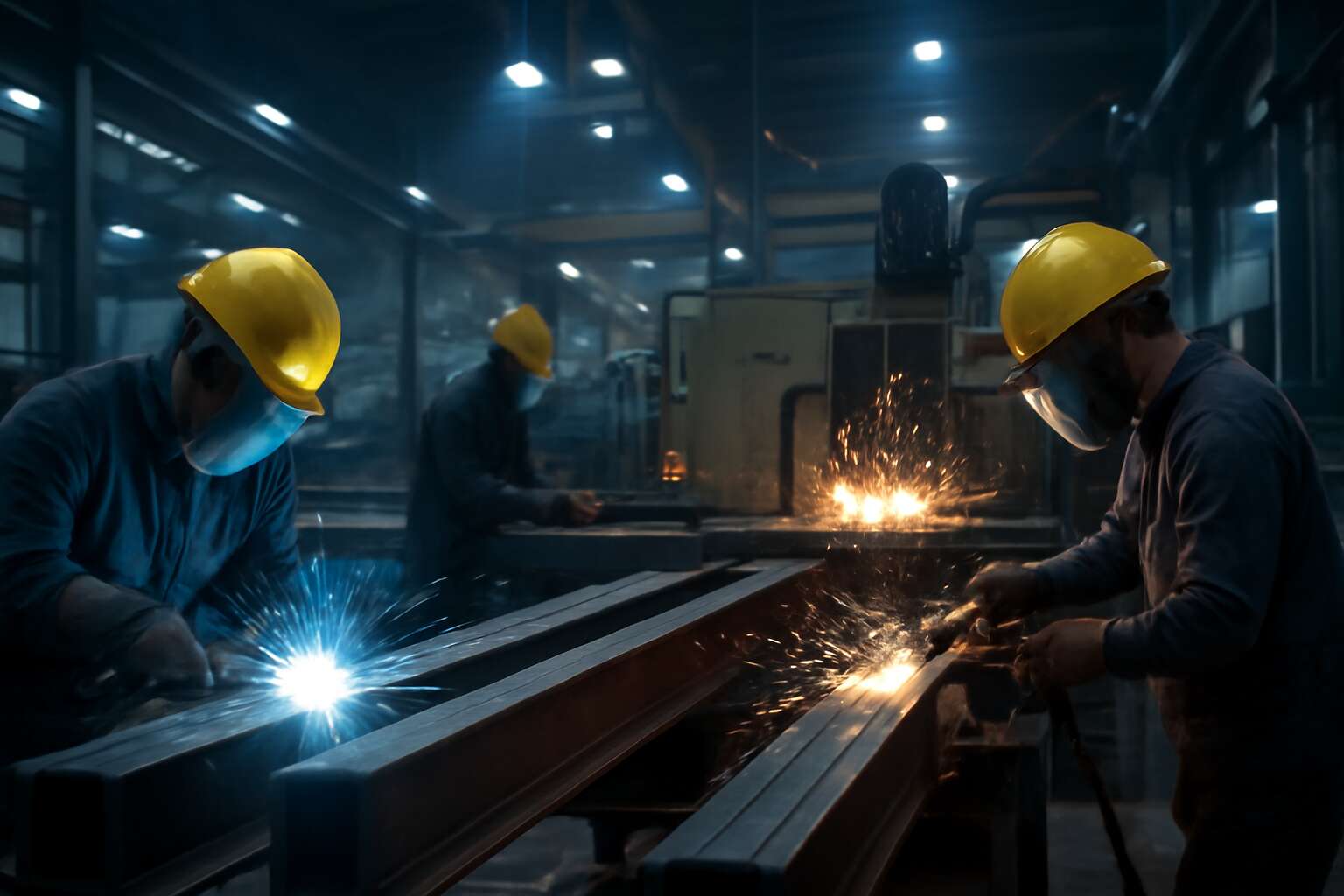
In the workshop’s dim glow, fabrication work in construction takes form as steel sighs and sparks dream beneath the hood. Metal learns to listen to heat, bending to the architect’s quiet demand while the building’s shadow grows tall.
Materials and methods dictate the soul of the craft. In South Africa, hot-rolled steel, corrosion-resistant stainless, and alloyed aluminium populate workshops, with coatings guarding against time. For metal fabrication, welding and cutting become the heartbeat of shaping, joining, and revealing structure.
- MIG welding
- TIG welding
- plasma cutting
- oxy-fuel flame cutting
- precision bending
- grinding and finishing
Care lies in alignment, fit-up, and strict tolerances, with protective coatings sealing the moment of contact between metal and environment. The craft rests, patient and vigilant, as the form rises from raw sheet and plate.
Structural steel versus aluminum fabrication: considerations
Frames that rise faster and last longer start with a choice: structural steel or aluminum. ‘Light, strong, and ruthless about weight,’ a veteran foreman once told me, and that rings true on South African sites. Structural steel offers bulk strength and cost efficiency; aluminum cuts dead load and resists corrosion in humid climates. This balance defines fabrication work in construction from design intent to final assembly.
Structural steel tolerates rugged fabrication and straightforward joining, while aluminum shines in complex profiles and lighter lift needs. Both demand careful detailing to meet tight tolerances and pair with coatings suited to SA’s exposure—coats guarding against weathering and salt spray where relevant.
- Weight and craneability
- Corrosion resistance in coastal or humid zones
- Coating compatibility and lifecycle costs
Project needs and supply chains guide the final call. The right mix preserves robustness, speeds erection, and keeps costs predictable across a South African skyline—fabrication work in construction shaping every profile.
Concrete fabrication: formwork, reinforcement, and curing
Across South Africa’s skylines, up to 60% of on-site time hinges on formwork decisions. “The first pour speaks the loudest,” a veteran foreman once whispered, and the cadence of those pours defines fabrication work in construction.
Concrete fabrication unfolds in three acts: formwork shapes every line; reinforcement ties the skeleton; curing seals the strength. The craft depends on precise alignment, adequate cover for rebar, and controlled moisture to avoid cracks.
- Formwork design and alignment
- Reinforcement placement and protective measures
- Curing conditions and timeframes
As I walk the site, I hear the hum of concrete meeting steel and water seeping through the mold—reminding me that fabrication work in construction is a quiet engine behind every profile.
Wood and composite fabrication in modern builds
South Africa’s skylines whisper a timber tale. In projects across the country, engineered wood components are accelerating frame assembly, shaving weeks off schedules and cutting waste. A recent note from on-site crews hints that frame erection can be up to 30% faster with wood and composites. This is a notable facet of fabrication work in construction!
Wood and composites deliver precision without the cold glare of conventional steel. Cross-laminated timber (CLT) panels, glued laminated timber (glulam) beams, and LVL components create strong, light frames with fewer joints. Moisture management, adhesive choices, and corrosion-resistant connectors are the quiet engines that keep these systems honest and long-lasting.
- Cross-laminated timber (CLT) panels
- Glued laminated timber (glulam) beams
- LVL and other engineered wood products
The approach feels almost atmospheric—an artful balance of design intent and material science—where the wood, with its living grain, lends warmth to modern builds while meeting exacting structural demands.
Quality control and safety in fabrication processes
Inspection and testing protocols for fabricated components
Quality isn’t a luxury—it’s the scaffold of every project. In fabrication work in construction, quality control and safety are not afterthoughts but the rhythm that keeps beams straight and welds true. A meticulous eye on tolerances, materials, and workmanship saves time and money on site.
Inspection and testing protocols for fabricated components guard against defects before they leave the workshop. From dimensional checks to non-destructive testing, every element is measured for fit, alignment, and integrity, with traceability records linking mill to site.
- Dimensional verification against shop drawings
- Visual weld inspection and non-destructive testing where indicated
- Material traceability and certification documentation
In practice, safety culture and diligence—risk assessments, clear communication, and ongoing training—keep crews protected and projects progressing smoothly, underscoring how this craft sustains both safety and structural confidence.
Quality assurance documentation and traceability
When you talk about fabrication work in construction, quality isn’t an afterthought but the scaffold of every project. In South Africa, missteps at the workshop contribute to about 28% of on-site rework and delays.
Quality control and safety in fabrication processes keep beams true and crews upright. Rigorous quality assurance documentation and traceability from mill to site ensure every component—plates, bolts, and welds—meets spec before it leaves the shop.
Key elements include:
- Quality assurance documentation
- Traceability records from mill to site
- Material certification and compliance documentation
Safety culture, ongoing training, and clear risk assessments turn good practice into habit—protecting crews and keeping projects progressing with fewer surprises.
Health, safety, and compliance considerations
In South Africa, missteps at the workshop ripple into 28% of on-site rework and delays. In fabrication work in construction, health, safety, and compliance are the gravity that keeps every joint honest. A culture of safety—ongoing training, clear risk assessments, and vigilant supervision—transforms good practice into daily habit.
From lifting to welding, every action must align with standards and local regulations. Teams that embed safety into planning protect crews and preserve momentum on site. Consider these facets:
- Health and safety management systems
- Training records and competency
- Incident reporting and corrective action
Such alignment underpins safety, health, and compliance on South African projects, helping keep timelines intact and teams unscathed.
Non-destructive testing methods used in fabrication
Quality control in fabrication work in construction isn’t a ritual; it’s the quiet anchor that keeps certainties intact as metal sings to the welds. In South Africa’s projects, disciplined checks sharpen both safety and schedule, turning each component into a trusted link in the chain. Every measurement, every record, mirrors a respect for standards and for people on site.
Non-destructive testing methods used in fabrication help verify integrity without sacrificing a part’s usefulness, allowing teams to spot flaws early while keeping production swift.
- Visual inspection for surface quality and alignment
- Ultrasonic testing to gauge thickness and internal echoes
- Radiographic or X-ray testing for hidden discontinuities
- Magnetic particle or liquid penetrant tests for surface and subsurface defects
With strict traceability and competent personnel, these checks reinforce safety while maintaining momentum in fabrication work in construction.
Waste minimization and environmental controls during fabrication
On bustling sites, even a small waste spike can swallow margins. A recent estimate puts material inefficiencies at a significant cost risk when schedules tighten. Quality control and safety in fabrication processes are not bureaucratic boxes; they’re the weatherproofing of a project, guiding every weld and fit! In fabrication work in construction, disciplined checks keep teams productive and components reliable.
Waste minimization and environmental controls during fabrication protect the budget and the surroundings.
- Cutting optimization and nesting to reduce offcuts
- Scrap collection and recycling of metal
- Dust, noise, and emissions controls on site
- Proper chemical handling and spill prevention
With strict adherence to local environmental standards, these measures quiet the project’s footprint while protecting workers. The payoff is steadier momentum and cleaner compliance in fabrication work in construction.
Technology and efficiency in fabrication for construction
Digital tools and BIM integration with fabrication
In today’s high-stakes builds, precision is the unspoken currency. In South Africa, recent industry data hints BIM-led workflows cut on-site rework by as much as 40%, turning chaos into coherent sequence. This is the backbone of fabrication work in construction.
Digital tools reshape every click at the fabricator’s desk; design intent flows straight into factory flow, reducing waste and speeding assembly. BIM integration with fabrication aligns shop floors and site crews, letting teams predict clashes before steel touches paint. We witness a quiet revolution where data becomes the map and fabrication becomes choreography.
- Integrated BIM-to-fabrication workflows
- Real-time data syncing across site and shop
- Digital quality checks and traceability
As the human element remains essential—skilled hands translating precise models into durable reality—we stay vigilant about accuracy, speed, and safety.
Automation, robotics, and AI in fabrication processes
In South Africa, automation has slashed on-site rework by up to 40% in some projects, turning chaos into cadence. Automation, robotics, and AI now choreograph fabrication work in construction with the precision of a conductor, translating models into flawless parts.
- Automation speeds cutting, bending, and assembly with repeatable accuracy
- Robotics take on hazardous or monotonous tasks, boosting safety
- AI-driven analytics optimize throughput and trigger proactive maintenance
Real-time data streams knit design intent to production, closing the loop between virtual models and tangible components. The result is safer, faster, and more predictable workflows that honor the craft while pushing efficiency to new heights.
Lean principles for fabrication workflow optimization
On South African sites, digital threads turn chaos into cadence, with lean fabrication driving smoother handoffs between design and shop floor. Technology doesn’t just speed work; it choreographs the rhythm of assembly.
This is the fabric: fabrication work in construction becomes a craft of precision, where value streams flow and waste thins to nothing.
Lean principles for fabrication workflow optimization anchor performance to flow and quality, with real-time data guiding every cut and curve.
- Value-stream mapping
- Standardized work
- Pull scheduling
This alchemy is not mere spectacle; in South Africa, fabricators harness AI-informed analytics to anticipate maintenance and keep throughput singing. The craftsman’s lines stand resilient, where safety and precision walk hand in hand.
Additive manufacturing and 3D printing in construction
Across South Africa, additive manufacturing is reshaping fabrication work in construction, slashing lead times by up to 30% and cutting waste. Digital threads link design to shop floor with crisp precision, turning CAD into ready-to-assemble parts at scale.
3D printing is not just for prototypes. It produces formwork, brackets, and bespoke fixtures on demand, reducing tooling costs and letting teams adapt on site without delays. The tolerances come from the file, not a series of manual adjustments, which keeps projects on track.
- On-demand formwork minimizes storage and waste
- Complex geometries become practical without costly molds
- Local production strengthens the supply chain and project timelines
This approach keeps the craft of fabrication on a sharper edge—clean lines, fewer reworks, and safer operations. Overall, this technology aligns with South Africa’s push for efficiency in fabrication work in construction, delivering predictable throughput.
Cost, scheduling, and case studies in fabrication projects
Budgeting and cost drivers in fabrication projects
Across South Africa, budget overruns haunt fabrication work in construction, with projects overshooting by an average of 12%. It’s the unglamorous math behind glinting steel and exacting formwork. A veteran project manager quips that a schedule is a promise you intend to keep—if you can, with a calculator as your witness.
Scheduling rests on upfront buy-in: fixed lead times, controlled sequencing, and staged deliveries aligned to the critical path. When you lock these down, waste dries up and cash flows stay friendly.
- Materials and feedstock prices
- Labor productivity and wage rates
- Logistics and site access
- Design changes and change orders
Case studies from a Cape Town hospital and a Durban warehouse show disciplined budgeting and cost-driver awareness can restore margin without sacrificing quality. These examples in fabrication work in construction prove small revisions early pay dividends.
Lead times, procurement, and coordination with trades
In budgeting for fabrication work in construction, cost visibility hinges on upfront scheduling and reliable lead times. A project thrives when procurement channels are tuned and coordination with trades is seamless, especially in the South African logistics terrain where delays can loom unexpectedly.
Lead times anchor the tempo! A disciplined procurement plan reduces change orders and keeps cash flowing. Stage deliveries to meet the critical path and loop trades in early so steel, formwork, and fittings arrive in order rather than as a disorderly pile on site.
- Lead times: predictable windows and contingency planning
- Procurement: supplier reliability and stock management
- Coordination with trades: integration of sequencing and on-site workflow
Case studies from a Cape Town hospital and a Durban warehouse illustrate how disciplined budgeting and cost-driver awareness can restore margins without compromising quality in fabrication work in construction.
Real-world case studies illustrating fabrication integration
Across South Africa’s evolving build sites, a single week of delay can erode margins faster than a rusted beam. In this shared work, cost visibility hinges on upfront planning for fabrication work in construction.
Thoughtful scheduling turns risk into rhythm, the heartbeat of a site. By aligning deliveries with the critical path and looping in steel, formwork, and fittings early, teams avoid piles of material on site and sudden change orders.
Case studies from a Cape Town hospital and a Durban warehouse show real outcomes of disciplined budgeting and cost-driver awareness.
- Cape Town hospital: disciplined budgeting and early fabrication integration reduced waste and protected margins without compromising quality.
- Durban warehouse: reliable procurement and on-site sequencing kept the critical path clear, avoiding idle time and costly delays.


0 Comments