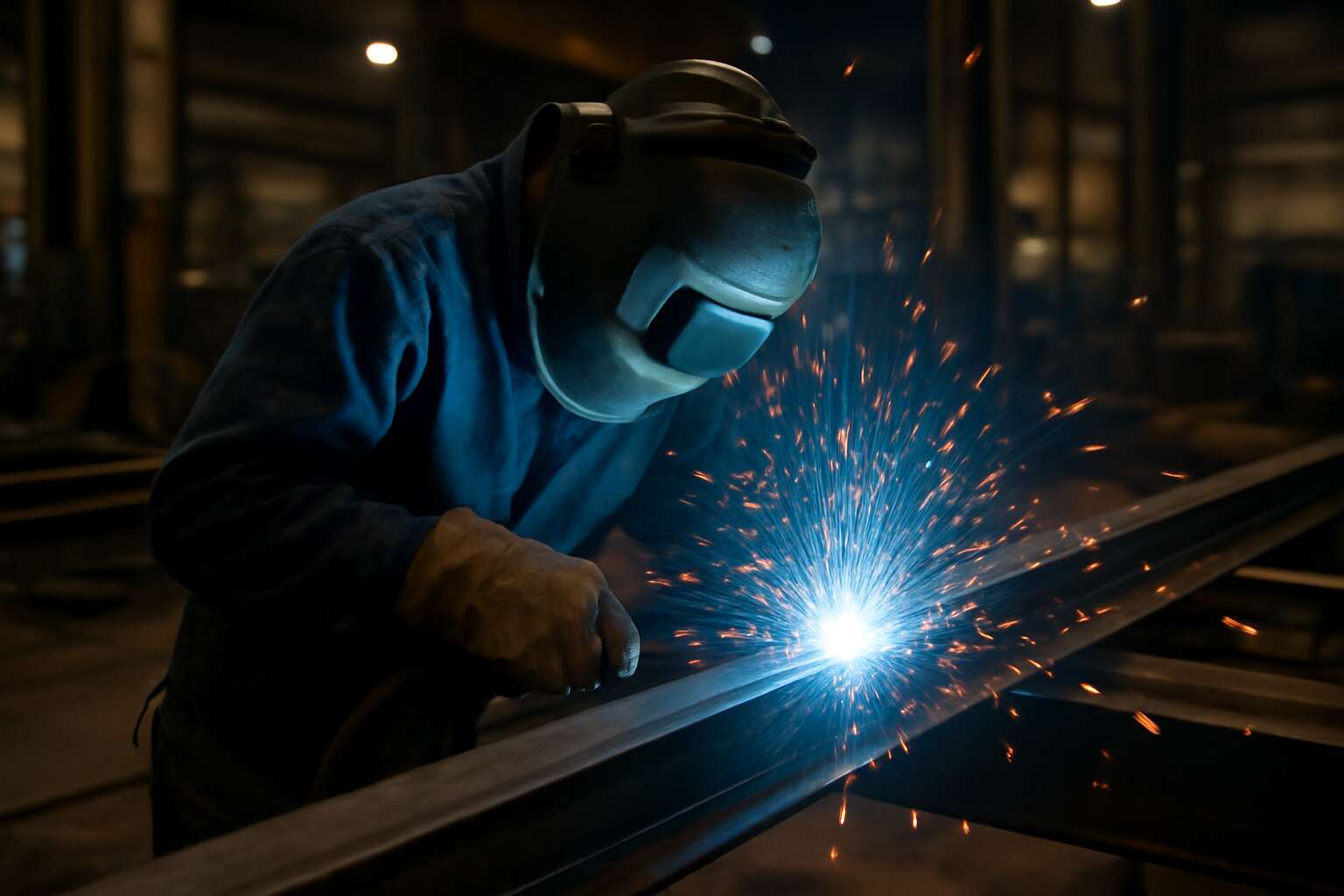
Welding’s Role in Modern Metal Fabrication
Introduction to welding in fabrication
In South Africa’s metal workshops, welding is the quiet engine of modern fabrication. It binds ideas to iron, turning sketches into structures and frames into futures. Welding isn’t merely a skill; it’s a language that translates design intent into durable reality. When the arc meets metal, possibilities crystallize and builders trust a beam will bear what it must!
Within this discipline, a few forces shape efficiency and safety.
- fabrication with welding supports rapid iteration and customization.
- It strengthens joints through bonding and material behavior.
- It enables on-site assembly, cutting downtime on large projects.
From factory floors to rural workshops, welding shapes the social fabric of industries, while SA’s skilled trades keep buildings standing and futures flexible.
Key welding processes in fabrication
Across South Africa’s metal workshops, a single arc reshapes skylines. Industry observers note that when welding processes are aligned with design intent, project timelines tighten by as much as 30%. Welding becomes not just technique but a strategic lever of delivery.
In modern fabrication with welding, the craft hinges on a handful of robust processes that bend metal to will and will to form. The principal processes include:
- MIG/MAG (GMAW)
- TIG (GTAW)
- SMAW (Stick)
- FCAW (Flux-Cored Arc Welding)
From factory floors to rural workshops, these methods do more than forge frames; they shape the social fabric of industries. On-site assembly, meticulous heat control, and disciplined sequencing keep safety standards high and flexibility constant, a resilience South Africa relies on as cities grow and infrastructure stretches.
Benefits of integrated welding in fabrication workflows
In South Africa’s bustling workshops, a quiet statistic cuts through the noise: when welding aligns with design intent, project timelines tighten by as much as 30%.
This is the essence of fabrication with welding, where the craft meets a strategic workflow.
Integrated welding in fabrication workflows unlocks reliability, safety, and speed. On a factory floor or a rural site, the process becomes a connective tissue—binding design to delivery with predictability.
- Enhanced weld integrity and repeatability across batches
- Controlled heat input reduces distortion and rework
- Scarce resources allocated smoothly thanks to better sequencing
Adopting robust welding processes during fabrication brings resilience to South Africa’s infrastructure push, enabling on-site assembly with fewer delays and safer operations.
Ultimately, the craft reads like a suspenseful blueprint come to life—each arc a sentence, each joint a turning point.
Common materials and tolerances in welded fabrication
In South Africa’s bustling workshops, welding is more than a step in the process—it’s the hinge that keeps projects aligned with budgets and deadlines. Fabrication with welding translates design intent into joints that read as one cohesive structure rather than a patchwork.
Common materials shape how welds perform and inspectability. The usual suspects are mild steel, stainless steel, and aluminium. The choice dictates heat input, order of operations, and inspection hurdles.
- Mild steel: affordable, forgiving for structural frames
- Stainless steel: corrosion resistance, tougher to weld but reliable
- Aluminium: lightweight and conductive, requires careful heat control
Tolerances in fabrication with welding vary with thickness and geometry. Expect tighter control on thin gauges and looser allowances on thick plates; cleaner fit-up helps minimize distortion and rework.
On a factory floor or remote site in SA, these realities push reliability, safety, and speed—each weld a point of accountability in the broader fabrication narrative.
Common Welding Techniques Used in Fabrication
MIG and TIG welding for precision fabrications
Welding isn’t magic; it’s metallurgy with attitude. In fabrication with welding, precision matters more than swagger, and the right technique can slash rework costs. “The weld is only as good as the fit-up,” a veteran welder likes to remind us.
MIG welding is the workhorse for steel and aluminum, delivering fast beads and solid deposition. It thrives in production lines and rough shop conditions.
- Fast deposition for production runs
- Good tolerance for painted or dirty surfaces
TIG welding offers control and a clean finish for thin materials and cosmetic joints—stainless, aluminum, and precision components are its sweet spot. In fabrication with welding contexts, TIG shines where aesthetics matter.
Combined, MIG and TIG equip South Africa’s workshops to tackle diverse projects with confidence.
Stick welding for versatility in heavy fabrication
In heavy fabrication, stick welding (SMAW) remains a rugged staple in fabrication with welding contexts. It thrives on windy sites and in-field repairs where power is scarce and metal is stubborn, a scenario common on South Africa’s workshop floors. A simple electrode, a sturdy clamp, and a practiced wrist can lay down dependable beads on plate and structural shapes alike. Stick welding is surprisingly forgiving!
- Portability: power packs and handheld operation reach where cranes cannot
- Versatility with dirty, painted, or rusty surfaces
- Wide material compatibility from low-carbon to heavy steel
- Affordable equipment and straightforward training
For teams tackling complex assemblies, stick welding supports thick-walled joints and positional work, a cornerstone of fabrication with welding in challenging environments.
Flux-cored and submerged arc welding for thicker sections
In the world of fabrication with welding, flux-cored and submerged arc welding stand as two steadfast giants for thicker sections. FCAW delivers a high deposition rate and resilience against wind and grime, making it a favourite for outdoor builds and busy shop floors. SAW cleanly carves deep roots into thick plates, delivering robust welds and impressive productivity when joint fit-up is favorable.
Key distinctions include:
- FCAW offers portability and tolerance for painted or dirty surfaces.
- SAW delivers deep penetration on thick plates with high deposition in flat positions.
In South Africa, these techniques keep critical structures standing against harsh sites and power constraints.
Robotic welding applications in fabrication environments
In South Africa’s bustling fabrication yards, robotic welding is more than a gimmick—it’s a productivity accelerator. When paired with smart fixturing and rigorous QA, fabrication with welding becomes predictable, repeatable, and surprisingly friendly to busy shop floors. Automation turns volts into velocity!
- Spot welding for high-volume sheet metal with fast cycles
- Laser welding for precision joints and minimal heat distortion
- Friction stir welding for strong aluminum joints and exotic alloys
Robotic systems adapt to fit-up tolerances and varied joint geometries, turning challenging assemblies into consistent welds. In the SA context, this means steady production on windy days or power-limited sites, keeping critical fabrications on track without drama.
Welding consumables and joint fit-up considerations
In South Africa’s busy fabrication yards, misfit joints steal time and margins. A recent industry pulse shows rework driven by fit-up choices cutting production by a quarter. Mastering common welding techniques with the right consumables keeps lines predictable and safe—fabrication with welding becomes a measured, almost ritual craft, a quiet alchemy.
- Right filler metal and electrode selection matched to base metals
- Shielding gas options and arc stability for the process
- Clean joints, controlled gaps, and effective fixturing
Joints demand attention to bevels, gaps, and alignment—the trio that governs heat input and distortion. On windy SA sites and with limited power, steady joint prep and fixtures keep welds coherent and on spec.
Materials and Equipment Essentials for Welded Fabrication
Choosing base metals and compatible fillers
In the workshop of salt air and iron, the first choice in fabrication with welding dictates the arc’s fate. Selecting base metals sets the tone for strength, corrosion resistance, and cost, especially here in South Africa where weathering steels and stainless options find favour in coastal projects. The right filler metal is the quiet partner that ensures harmony across joints, thicknesses, and heat cycles.
- Base metals: carbon steel, stainless steel, aluminum—each guides filler selection and welding technique
- Compatible fillers: matching alloy grades, compatible coatings, and shielding requirements
- Joint fit-up and surface preparation: clean, aligned, and tacked for consistent welds
Beyond materials, essential equipment—power sources, filler materials, appropriate PPE, clamps, and measurement tools—keeps the arc steady and the fabrications precise, turning rough plates into reliable forms.
Welding power sources and settings optimization
In the workshop, mastering fabrication with welding hinges on the right power source and the settings dialed to perfection. The arc becomes a reliably rhythmic heartbeat that makes stubborn metal yield. This is especially true along South Africa’s coast, where salt-laden air tests every weld and the results must endure.
Power sources range from rugged transformers to agile inverters. For precision work, an inverter with stable arc control matters; for heavy sections, a transformer’s durability wins. Optimization means dialing amperage for fusion without burn-through, adjusting voltage for arc length, and syncing wire feed with travel speed for consistent beads.
Beyond the welder, a compact kit of clamps, measuring tools, PPE, and alignment aids keeps every joint honest.
- Clamps and fixtures for precise fit-up
- Measuring tools (calipers, square)
- PPE (helmet, gloves, jacket)
- Consumables and shielding gas
- Power cables and safe connectors
Gases, shielding, and material handling in fabrication welds
Coastal workshops in South Africa know this: shielding integrity is the backbone of a solid weld. In fabrication with welding, gas purity and steady flow cut porosity and leaks, delivering joints that stand up to salt air and sun. A crisp arc starts with clean gas and a well-set regulator!
Materials and equipment essentials for gases, shielding, and handling keep every joint honest.
- Shielding gas cylinders and purity controls
- Regulators, hoses, and flow meters
- Ventilation or fume extraction systems
- Gas cylinder storage racks and secure handling gear
- Lifting aids and safe transport solutions
From storage to handling, these elements support durable results in metalwork for SA shops.
Quality, Safety, and Certification in Welding Fabrication
Quality control methods for welded joints
Welding defects derail schedules and drain budgets in fabrication with welding. A single unchecked weld can derail a project and bleed thousands from the budget. Quality hinges on a robust welding quality control plan for welded joints, with clear procedures, traceable welders, and consistent inspection at every stage.
Safety and certification go hand in hand with quality. PPE, proper ventilation, and safe handling of gases are non-negotiable in workshop environments. Certifications such as ISO 3834 and ASME mark welders and processes to meet customer and regulatory demands, while detailed welding procedure specifications and welder qualification records ensure traceability.
Quality control methods for welded joints rely on fit-up discipline and validated procedures. In South Africa’s market, certification standards up the reliability bar and help win bids for fabrication with welding. The result is safer work, fewer reworks, and stronger client confidence.
Non-destructive testing options in fabrication welding
Quality isn’t a cost—it’s the warranty on every joint,” a seasoned SA fabricator says, and in fabrication with welding the safest path is rigorous inspection. A sharp eye on fit-up and weld geometry prevents surprises, turning fragile moments into lasting steel stories.
Safety and certification walk hand in hand with quality. PPE, ventilation, and safe gas handling guard the workshop, while formal credentials like ISO 3834 and ASME mark processes as reliable and traceable, earning client confidence before a single weld is poured.
Non-destructive testing options keep welded structures honest under service pressure. NDT methods are chosen by geometry and load, not by trend.
- Visual and dimensional inspection
- Penetrant testing (PT)
- Magnetic particle testing (MT)
- Ultrasonic testing (UT)
- Radiography (RT)
Safety protocols and PPE for welding and fabrication teams
‘Safety is the warranty on every joint,’ a seasoned SA fabricator says. In the craft of fabrication with welding, quality grows from disciplined practice and reverent attention to fit-up. Every careful weld becomes a stanza in a steel story of reliability!
Safety protocols begin with PPE and disciplined workflows. These measures keep teams aligned from dawn to late shift, with ventilation, heat control, and safe gas handling as daily rhythm.
- PPE: welding helmet with proper shade, flame-resistant jacket, and gloves
- Respiratory protection and fume control
- Safety boots and hearing protection
- Fire safety equipment and clear emergency procedures
ISO 3834 and ASME mark the process as reliable and traceable, earning client confidence before a single weld is poured.
Safety, certification, and craftsmanship—fabrication with welding becomes a tangible promise of strength and accountability.
Welding codes, standards, and certifications in fabrication projects
Quality in fabrication with welding is the quiet engine behind durable structures, where every joint earns its reliability through traceable lineage and disciplined practice. Fit-up becomes poetry, and shortcuts vanish in the daylight of inspection.
Safety and certification stand as the twin keystones. ISO 3834 and ASME marks signal reliable, repeatable processes and traceability that clients feel before the first bead is laid, a reassurance for South African projects from workshop to site.
- ISO 3834 certification and the quality-management expectations it embodies
- ASME marks and AWS standards guiding welding procedures and inspection
- Traceability through weld maps, material records, and qualification records
Certification is a narrative of craftsmanship, safety, and accountability—an authentic promise that this practice will endure through Cape Town’s docks and KwaZulu-Natal’s wind-swept sites.
Inspection, documentation, and traceability in welded fabrication
Quality is the quiet engine behind durable structures. In South Africa, projects with complete documentation report up to 40% fewer reworks. In fabrication with welding, the journey from blueprint to bead rests on traceable practice—no shortcuts, no guesswork. ISO 3834 alignment and well-kept procedure records turn every joint into a verifiable element.
Safety and certification stand as the twin keystones. ISO 3834 certification and the ASME marks signal reliable, repeatable processes and traceability that clients feel before the first bead is laid.
- Weld maps
- Material records
- Qualification records
Certification is a narrative of craftsmanship, safety, and accountability—an authentic promise that this practice will endure from Cape Town’s docks to KwaZulu-Natal’s wind-swept sites. The traceability chain keeps every lot honest and every weld accountable.
Common defects and remediation strategies in welded fabrications
Quality is the quiet engine behind durable structures, and in fabrication with welding it runs truer than a clock in a South African workshop. The discipline from material prep to joint fit-up shortens rework and lengthens service life. Traceability—from blueprint to bead—keeps every step honest.
Common defects can threaten that reliability, but clear remediation keeps projects on track. Consider the four typical culprits and their fixes:
- Porosity and gas entrapment — ensure dry materials, clean joints, and proper shielding.
- Lack of fusion or penetration — verify joint design, prep, and heat input.
- Cracking (hot or hydrogen) — manage hydrogen exposure, preheat, and controlled cooling.
- Distortion and misalignment — use fixtures, weld sequencing, and restrained heat input.
Certification and safety are not mere badges; they are lived practice. ISO 3834 and ASME marks signal repeatable processes and robust traceability that clients feel before the first bead. Weld maps, material records, and qualification records keep the chain honest from Cape Town to KwaZulu-Natal.
Industry Applications and Case Studies in Welded Fabrication
Structural and architectural fabrication with welding
Across South Africa, nearly three-quarters of major infrastructure projects lean on welded fabrications for speed and strength. This is where fabrication with welding earns its stripes: precision joints, quicker lead times, and adaptability under coastal and mining conditions. In practice, welded systems support everything from stadium grids to wind-turbine towers, delivering reliability when it matters most.
Industry applications span structural frames, architectural façades, and transport-ready assemblies that survive SA’s harsh environments. Case studies highlight a high-rise spine that balances aesthetics with rigidity, and a coastal canopy that uses welded joints to resist salt spray while ushering pedestrians safely beneath.
- Structural frames for stadiums and towers
- Architectural façades and canopies
- Mining, rail, and port infrastructure components
Manufacturing equipment and machinery frames
“Reliability in the factory line begins with the frame,” a SA plant manager says. In fabrication with welding, engineers craft rigid, vibration-averse skeletons that shrug off coastal humidity and rugged mining belts. Precision joints, consistent tolerances, and quicker lead times translate into equipment frames and machinery bases that keep lines moving under high throughput.
Industry applications include:
- Industrial machinery frames for packaging lines and automated equipment
- Conveyors and supports for high-speed manufacturing
- Mining, rail, and port frames designed for harsh environments
Case studies from SA manufacturers illustrate the difference: a sugar-milling line replaced bolt-together frames with welded skeletons, cutting downtime and boosting throughput. A packaging plant reported smoother cycles and easier maintenance—proof of fabrication with welding as a reliable backbone for industry.
Pipeline and pressure vessel fabrication considerations
Downtime isn’t just inconvenient—it can gouge thousands from the bottom line in South Africa’s fast-moving plants. Industry applications for welded structures span pipelines, pressure vessels, and rugged machinery frames that shrug off coastal humidity and mining vibrations. When joints stay true and tolerances hold, lines keep moving at high throughput. Fabrication with welding becomes the backbone of reliability in the field.
Case studies from SA manufacturers illustrate the payoff. A sugar-milling line swapped bolt-together frames for welded skeletons, cutting downtime and boosting throughput. A packaging plant reported smoother cycles and easier maintenance—proof of the approach’s dependability for industry.
- Pipeline and pressure vessel integrity
- Access for inspection and maintenance
- Resilience in harsh environments
These stories show that a well‑considered welded solution aligns design intent with on-site realities, lifting reliability without sacrificing speed.
Aerospace and automotive components welded fabrication insights
Across South Africa’s manufacturing floors, uptime translates to money. Throughput gains of up to 30% have been reported where fabrication with welding keeps joints true and tolerances tight. In aerospace subassemblies and rugged automotive frames, welded fabrication delivers compact, corrosion-resistant assemblies that endure coastal humidity and vibration while keeping production lines humming.
Industry applications in the SA context show welded solutions shaping high-performance components:
- Aerospace airframe subassemblies and brackets
- Automotive chassis rails and crash structures
- Precision fixtures and mounting hardware for assembly lines
Case studies from SA manufacturers illustrate the payoff: reliability forged in the weld, downtime reduced, and throughput lifted across critical sectors. These narratives emphasize how a deliberate welding strategy aligns design intent with on-site realities, lifting reliability without sacrificing speed.


0 Comments