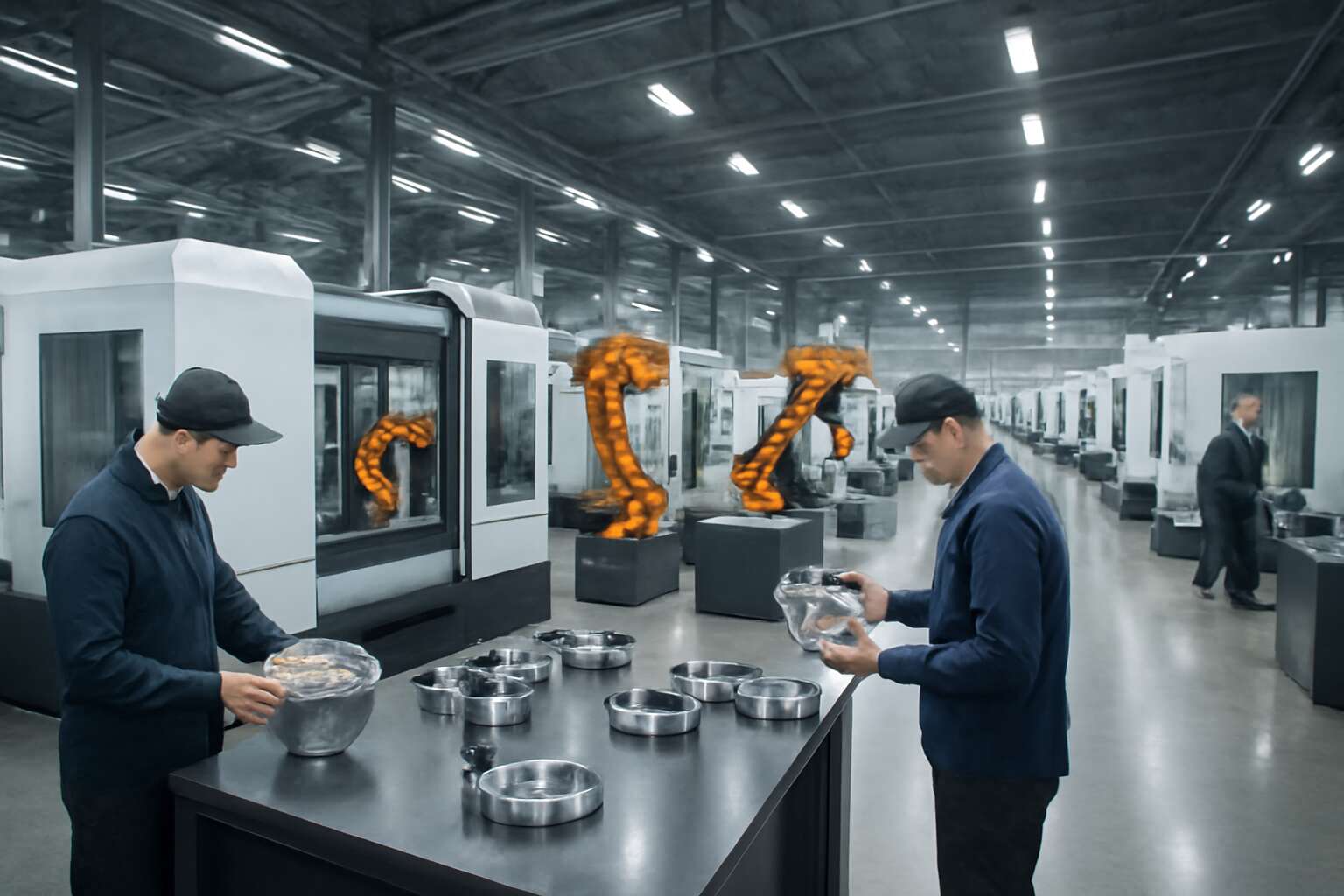
Overview of Fabrication: Methods, Materials, and Outcomes
What fabrication encompasses and why it matters
“Fabrication is the silent engine of progress,” a veteran engineer once said. In South Africa’s vibrant manufacturing scene, which fabrication choices turn ideas into durable, market-ready parts. This overview covers methods, materials, and outcomes, and how they shape projects without locking you into a single path.
Different methods drive different outcomes: welding and machining for metal frames, casting for complex shapes, and additive manufacturing for rapid prototyping. Materials span metals, polymers, and composites, each bringing strength, weight, and cost profiles that matter on site. I’ve seen how a small change in method can save weeks on a build.
- Welding, forming, and joining
- Casting, forging, and machining
- Additive manufacturing and rapid prototyping
Outcomes include cost, lead times, durability, and performance. In a country like South Africa, supply-chain resilience and local capability shape choices that pay off in the long term. The best path blends reliability with adaptability and avoids overengineering.
Key fabrication processes and categories explained
In South Africa’s bustling workshops, a decision can tilt a project toward timely delivery or delays. As one veteran engineer put it, “Fabrication is the quiet architect of momentum”—and that momentum begins with how you approach methods and materials.
Overview of methods unfolds like a finely tuned instrument: welding and joining knit metal frames into structures, casting and forging shape the unexpected, and additive manufacturing accelerates ideas from sketch to test part.
- Welding and joining for metal frames
- Casting and forging for complex shapes
- Additive manufacturing for rapid prototyping
Materials range from steels and aluminum to polymers and composites, each offering a mix of strength, weight, and cost. In a country where supply chains must be resilient, fabrication shapes timelines and durability on site. The question of which fabrication path to pursue is answered by balancing reliability with adaptability, avoiding overengineering while leaving room for on-site adjustments.
Industries relying on fabrication and typical outputs
In South Africa’s bustling workshops, momentum is forged where heat meets precision and planning. This overview of fabrication methods and materials reveals how choices ripple through reliability, timelines, and on-site adaptability.
Welding and joining knit metal frames; casting and forging shape complex forms; additive manufacturing accelerates ideas from sketch to test part. The question which fabrication path best fits reliability and adaptability frames every decision.
Materials span steels and aluminium to polymers and composites, balancing strength, weight, and cost. Industries—from mining to infrastructure to consumer goods—depend on these processes for outputs that range from sturdy frames to functional prototypes.
- Structural frames and assemblies for construction and energy
- Precision components for transportation and mining
- Prototypes and end-use parts produced rapidly via additive methods
Distinguishing fabrication from manufacturing and prototyping
South Africa’s workshop floors run on heat, grit, and a dash of plan-first hustle. A recent industry pulse shows nearly 60% of big projects lean on fabrication to turn rough sketches into parts you can actually rely on.
Three core methods stand out in the overview:
- Welding and joining knit metal frames
- Casting and forging shape complex forms
- Additive manufacturing speeds ideas from sketch to test part
Materials span steels and aluminium to polymers and composites, balancing strength, weight, and cost. Industries—from mining to infrastructure to consumer goods—depend on these choices for outputs that range from sturdy frames to functional prototypes. So, which fabrication—path, method, or material—fits reliability and adaptability best?
Outcomes are tangible: structural frames and assemblies, precision components, and rapidly produced prototypes that test-fit on site and on schedule.
Metal Fabrication Techniques: Cutting, Forming, and Joining
Overview of metal fabrication processes
In metal shops across South Africa, precision and waste control decide the bottom line. Waste reductions of up to 25% are common when teams optimize cutting and joining. When you choose which fabrication path to apply, you reduce scraps, tighten tolerances, and ship parts faster—outcomes that matter from gates to guard rails.
Cutting, forming, and joining are the three core families. The methods vary in speed, finish, and material compatibility.
- Cutting: laser, plasma, waterjet, sawing
- Forming: bending, rolling, deep drawing
- Joining: welding, brazing, riveting, mechanical fastening
In practice, laser cutting shines on thin sheets; plasma handles thicker sections. Forming reshapes metal without removing material, while joining binds pieces for strength in service environments where energy costs and supplier networks shape decisions in South Africa.
Understanding these groups helps teams align cost, timeline, and quality with which fabrication is being pursued.
Cutting methods including laser, plasma, and waterjet
In South Africa’s metal shops, a crisp cut and a precise join shape more than metal—they shape a bottom line. Waste reductions of up to 25% are common when teams optimize cutting and joining, proving that selecting which fabrication path matters for cost and schedule.
Cutting begins the dance: laser shines on thin sheets, plasma cuts through thicker sections, and waterjet breathes life into unusual geometries.
- laser
- plasma
- waterjet
Forming reshapes metal without removal— bending, rolling, and deep drawing forge the curve of a part, converting flat stock into complex forms with graceful efficiency.
Joining binds pieces for lasting service: welding, brazing, riveting, and mechanical fastening meet energy costs and supplier networks that steer decisions in South Africa.
Forming techniques such as bending, stamping, and forging
Metalwork isn’t just stock and flare—forming techniques bend, stamp, and forge metal into the finished silhouette. These tools turn flat sheets into curves and contours with precision and a bit of swagger.
For teams asking which fabrication delivers the best balance of speed and strength, the answer depends on form and function.
- Bending: predictable radii and springback control for fairing edges and flanges.
- Stamping: high-volume shaping with repeatable accuracy and fast cycle times.
- Forging: superior strength and impact resistance through mass, high-pressure deformation.
When this forming artistry meets cutting and joining decisions, shops in South Africa align on timelines, tooling needs, and cost—without losing sight of what the part was meant to do.
Joining methods including welding and brazing
Factories hum like a harvest wind—every cut and weld carries the promise of a hard-working life. In this craft, which fabrication path you choose—cutting, forming, or joining—defines speed, strength, and the service life of the part. On the shop floor, you balance material, tolerance, and expected loads, chasing consistent results without bending the schedule. The beauty lies in how these steps weave into one resilient whole.
Joining is where discipline meets durability, turning individual pieces into something steadier than the sum of its parts:
- Welding
- Brazing
- Riveting
From the rural workshops of South Africa to city factories, these techniques tell a story of skill, patience, and stubborn pride in a job well done.
Quality control and testing in metal fabrication
On the shop floor, one tolerance out of place can turn a dependable component into a risk. This is where the craft of metal fabrication meets discipline! The choice of which fabrication path—cutting, forming, or joining—sets the pace for strength, cost, and long-term service life.
Quality control and testing are the quiet engines behind every part. They chase consistency through each step—cut, form, and join—and catch drift before it becomes failure.
- Visual inspection and dimensional checks
- Non-destructive testing (UT, PT, dye-penetrant)
- Surface finish and fit verification
In South Africa, compliance with ISO standards and local specifications keeps production reliable and projects on track.
Plastic and Composite Fabrication Methods
Molding and extrusion fundamentals for plastics
Plastic and composite fabrication isn’t just shaping material; it’s translating heat, pressure, and patience into reliable performance. I’ve watched the melt decide its fate in seconds. The number is a quiet indictment of the choices you make about which fabrication path you choose. In today’s South African workshops, understanding molding and extrusion fundamentals unlocks efficiency, waste reduction, and predictable cycles.
- Injection molding: melts thermoplastic resin, fills a cooled mold, and produces precise parts at high speed.
- Extrusion: forces molten polymer through a die for continuous profiles, with temperature control guiding quality.
- Composite molding basics: resin transfer or prepregs blend fibers with plastics for strong, lightweight components.
These basics map which fabrication options suit your product, budget, and timeline in a market hungry for lightweight, durable solutions.
Additive manufacturing and plastic 3D printing options
Heat, speed, and choice shape the fate of a part in seconds. In South Africa’s workshops, the question isn’t only what to make, but which fabrication will translate intent into dependable performance. The melt doesn’t lie; it tallies the cost of each path in quiet, revealing waste and cycle time. Additive manufacturing introduces a new grammar for plastic and composite fabrication.
Plastic and composite fabrication now embrace additive methods that map to budget, scale, and lifecycle.
- FDM for robust thermoplastics and rapid prototyping
- SLS for functional, durable parts
- SLA/DLP for high-detail prototypes
From lightweight lattices to rugged field components, 3D printing reshapes expectations around performance and responsibility. The ongoing challenge is selecting a pathway that balances material behavior with printability—one that aligns with proven methods to deliver consistent, certified results in a South African industrial landscape.
Composite layup, curing, and fabrication workflows
Composite layup isn’t just art; it’s a science dressed in resin and real-world restraint. In South Africa’s workshops, layup quality translates to performance and lifecycle costs. Resin chemistry, fiber orientation, and ambient conditions all dance together, deciding stiffness, weight, and resilience under real loads.
Curing isn’t a ritual; it’s a thermostat on a productivity line. Vacuum bagging, controlled dwell times, and post-cure temps lock in properties and minimize anomalies. A solid workflow records ply schedules, cure cycles, and inspection checkpoints so every part behaves predictably in service.
The choice of which fabrication path you choose depends on scale and spec.
- Prep and material selection
- Layup and consolidation
- Controlled curing and post-cure
Finishing, painting, and surface treatment
Across South Africa’s workshops, surface finishes influence up to 40% of lifecycle costs. That influence isn’t cosmetic; it’s resilience against coastal humidity, salt spray, and sun.
In plastic and composite fabrication, finishing choices range from painting to specialty coatings. The aim is color fidelity, chemical resistance, and weathering performance, all while keeping weight and cost in check.
- Primer systems engineered for adherence on plastics and composites
- Pigmented or clear topcoats with UV stabilizers
- Powder coatings designed for low-temperature cycles
- Post-paint treatments for gloss, hardness, and scratch resistance
The question often comes down to which fabrication path will permit the right finish to endure salt spray and sun.
These steps align with SA-grade reliability, delivering beauty that lasts through climate and time.
Material selection: plastics vs composites and when to choose
In South Africa’s workshops, the right material choice can trim lifecycle costs by up to 35%, a statistic that keeps executives awake and guides real-world decisions on the shop floor, from small-town workshops to coastal yards. The choice isn’t merely plastics versus composites; it’s which fabrication path will endure sun, humidity, and salt spray. Plastics excel where tooling cost and formability matter, while composites shine with stiffness, fatigue resistance, and long-term weathering—qualities prized by coastal deployments.
Choosing which fabrication matters for your project is a practical balancing act. Consider these contrasts:
- Plastics: low tooling costs, easy formability, and good chemical resistance for moderate loads
- Composites: high strength-to-weight, superb fatigue life, and outstanding UV stability in exposed environments
Fabrication Materials and Their Suitability
Material properties that influence fabrication decisions
Across South Africa’s workshops, material waste can quietly seize budget—up to 12% in busy shops. Material choice sets the tempo for which fabrication path will sing. A material’s temperament—strength, ductility, heat tolerance—shapes speed, cost, and finish. This helps determine the best fabrication path.
Key properties to weigh include tensile strength and elongation, hardness, corrosion resistance, and thermal behavior. Formability and weldability matter for metals; surface clarity matters for plastics. These traits drive tooling choices, downtime, and long-term performance.
- Availability and cost in South Africa’s markets
- Fabrication ease and waste potential
- Thermal expansion and heat management
- Lifecycle, recyclability, and end-of-life handling
From mild steel to aluminium and HDPE to composites, each material tells a different story at the forge and finish. The magic lies in matching temperament to service, not chasing the cheapest option.
Common metals, polymers, ceramics, and composites overview
In South Africa’s busy workshops, material waste can quietly siphon up to 12% of a project’s budget—an unsettling whisper, hinting at which fabrication path to choose. It’s about how a substance behaves under heat, load, and time.
Common metals offer a spectrum: mild steel and aluminum balance formability with strength, while stainless resists corrosion. Polymers like HDPE keep parts light and inexpensive, yet PEEK withstands demanding temps. Ceramics bring hardness and wear resistance; composites promise weight savings with tailored stiffness. Availability and cost in SA markets also guide pathways.
- Metals: formability, weldability, and cost profiles vary by alloy.
- Polymers: lightweight, chemical resistance, and rapid prototyping options.
- Ceramics: hardness and high-temperature stability, but brittle.
- Composites: high strength-to-weight with tailored layups, yet processing nuances.
This is where which fabrication meets service—and the story remains uniquely South African.
Material selection workflow for a project
Across South Africa’s workshops, material misfits quietly siphon up to 12% of a project budget—a harsh whisper that reframes which fabrication path fits best. It’s not only about strength; it’s about how substances behave under heat, load, and time, and how that behavior plays out within SA’s market and manufacturing ecosystems.
Adopting a material selection workflow means weighing property clusters—density, stability, corrosion resistance—against local availability and total lifecycle costs. The focus remains on fit rather than fad; the aim is a harmonious balance between performance and practicality.
- Availability and lead times in South Africa
- Thermal and chemical stability
- Lifecycle cost and recyclability
That balance guides which fabrication approach serves the project well, long after the last piece is welded or cured.
Cost and availability considerations across materials
Materials speak in a language of longevity, and which fabrication path you choose will choreograph the budget’s final arc. In South Africa, price alone rarely sings; availability, lead times, and the afterlife of the product matter just as much for us. This is the moment to weigh how substances behave under heat and load, and how local ecosystems respond to a shifting market.
Availability and cost aren’t abstract; they’re born at the mill and on the dock, where currency, freight, and duty letters decide who delivers when.
- Availability and lead times
- Lifecycle cost and recyclability
- Thermal and chemical stability
- Local supplier diversity and logistical footprint
Material choice becomes a narrative of risk and reward, aligning performance with practicality so that the project breathes long after the last piece is cured.
Sustainability and recyclability impact on material choice
Material choices in which fabrication decide whether a project endures or ends up as a cautionary tale. In South Africa, the real price often hides in the afterlife—disposal, recyclability, and freight add chapters to the ledger long after the first weld spark.
This is which fabrication: a balance of performance and recyclability that respects our local supply chains.
- Lifecycle longevity and end-of-life recyclability
- Local supplier diversity and transport footprint
- Thermal and chemical stability across operating conditions
That balance guides material choice with practicality and a touch of wit, ensuring the story breathes long after the last piece is cured.
How to Select the Right Fabrication Method
Defining requirements: tolerances, volume, and finish
Fabrication decisions shape cost, speed, and performance. In practice, up to 40% of rework comes from choosing the wrong method, so defining requirements up front is essential! If you’re trying to decide which fabrication fits your part, start with three pillars: tolerances, volume, and finish.
- Tolerances: how tight and how consistent across batches
- Volume: annual demand, batch size, and ramp-up needs
- Finish: surface quality, coatings, and post-processing steps
With these anchors, you compare processes that meet the constraints—weighing cost, availability, and lead times. The result is a natural fit between design intent and manufacturing reality, especially in South Africa where local capacity and logistics influence choice.
Assessing cost, lead time, and tooling needs
A telling statistic: 25% of project delays stem from choosing the wrong fabrication method. That makes the moment you decide which fabrication aligns with your goals pivotal. Assessing cost, lead time, and tooling needs up front sets the tone for performance and value.
To navigate this, consider three lenses: cost efficiency across the full life cycle, realistic lead times given local capacity, and tooling demands for setup and changeover.
- Cost per part and total lifecycle cost
- Lead time and supplier capacity
- Tooling setup, maintenance, and changeover implications
These factors don’t just live on a chart; in South Africa they interact with logistics and supplier networks, shaping outcomes as surely as the part’s tolerances. So, that balancing act demands patience and a broad perspective on how work will flow from design to delivery.
Risk management and evaluating suppliers
One in four projects trips on the wrong fabrication, a statistic that should come with a warning label. When deciding which fabrication to use, risk management starts with mapping uncertainties before the first cut is made. You’re weighing material behavior, lead times, and the stability of a supplier network, all while keeping tolerances in mind.
To navigate this with confidence, evaluate suppliers on a few sure-fire criteria:
- Capability and equipment alignment with your part’s complexity
- Capacity and lead-time predictability under realistic demand
- Quality management, traceability, and response to nonconformances
In South Africa, the flow from design to delivery hinges on logistics plus local supplier networks, so risk-aware decisions pay dividends across the lifecycle.
Prototyping versus production planning
Choosing the right fabrication method is the compass from sketch to shelf. Prototyping speeds discovery; production planning yields repeatable precision. One in four projects trips on the wrong fabrication, a warning label you can’t ignore. When you ask which fabrication fits your mission, you weigh nimble experimentation against scalable certainty, guided by material behavior, tolerances, and a supplier network that breathes life into the final part.
Consider these guiding cues:
- Capability and equipment alignment with your part’s complexity
- Capacity and lead-time predictability under realistic demand
- Quality management, traceability, and response to nonconformances
In South Africa, the flow from design to delivery hinges on logistics and local supplier networks, so risk-aware decisions pay dividends across the lifecycle. The question at stake guides the project’s journey from concept to steel and resin.
Regulatory, safety, and sustainability considerations
One in four projects stalls at the fabrication stage because the method choice isn’t aligned with reality. That misstep can cascade into delays, cost overruns, and quality gaps that haunt the product’s life cycle. When you ask which fabrication fits your mission, safety, regulatory compliance, and sustainability must steer the wheel.
Regulatory and safety considerations aren’t afterthoughts; they’re constraints that protect people and the planet. In South Africa, this means aligning with OHSA guidelines, SABS standards, and NEMA provisions from first sketch to last weld.
- Regulatory alignment: OHSA, SABS, and NEMA compliance to avoid rework and penalties
- Safety measures: guarding, lockout/tagout, training, PPE, incident reporting
- Sustainability focus: lifecycle thinking, recyclability, energy and water efficiency, and responsible waste handling
In our South African market, the choice must navigate the whirl of logistics with a steady compass—the supplier networks that keep cycles tight and risk manageable, almost supernatural in its precision.
Future Trends and Digital Fabrication
Automation, AI, and optimization in fabrication
In South Africa, automation adoption in fabrication has surged by 42% over five years, turning workshops into hubs of precision and possibility. This momentum is not merely about faster outputs; it’s a catalyst for resilience and beauty—the moment when which fabrication becomes a craft of intent, not guesswork!
Future trends lean on AI, digital twins, and optimization. Machines learn from sensor chatter, adjusting tools and sequences in real time, while digital models simulate outcomes before a single cut is made. The payoff is fewer surprises and a steadier flow!
- AI-driven quality gates that catch defects early
- Digital twins that test changes virtually before production
- Cloud analytics for continuous improvement across shifts
Operators and engineers collaborate with code and copper, a modern covenant that elevates craft without erasing human judgment. In markets across the country, this blend promises leaner cycles, greener footprints, and a future where every fabrication carries deliberate precision!
Industry 4.0, connectivity, and smart manufacturing
In South Africa, automation adoption in fabrication has surged 42% over five years, turning workshops into precision halls. Industry 4.0 is no longer a buzzword; it’s a framework where connectivity knits machines, humans, and suppliers into a single, intelligent network. Fabrication becomes a deliberate act of insight, not improvisation.
Smart manufacturing in this context means edge and cloud working in harmony—data streams synchronize, maintenance shifts from reactive to predictive, and production scales with demand without chaos. Local firms can reimagine workflows as modular ecosystems, where decisions flow from real-time signals and shared standards.
- Resilience through continuous operations
- Waste reduction via data-driven tuning
- Personalized batches with rapid changeovers
The human element remains central; code and copper co-create, guiding which fabrication toward responsible efficiency and creative rigor. This is how fabrication evolves—crafted, connected, and conscious.
Evolution of additive manufacturing and hybrid processes
South Africa’s workshops are getting smarter. Automation adoption surged 42% over five years, turning shops into precision halls. Industry 4.0 stops being a slogan and becomes a working framework where machines, people, and suppliers share one intelligent network. Additive manufacturing matures with new materials and faster cycles, while hybrid processes fuse additive with subtractive in compact, multi-function cells.
Future trends lean on edge and cloud working in harmony. Real‑time data, AI‑driven maintenance, and digital twins cut downtime and raise consistency. We’re moving toward modular ecosystems where decisions emerge from signals, not guesswork.
- Hybrid production cells that blend additive and subtractive in the same footprint
- Edge‑to‑cloud analytics that tune processes in near real time
- Sustainable materials and recycling loops embedded in design and manufacturing
The question of which fabrication path best fits a project is decided by speed, finish, and responsibility. The trend leans toward traceable, low-waste workflows and clear material provenance. The field remains human-centered—codes and copper co-create, guiding the craft toward responsible efficiency and creative rigor.
Remote monitoring, traceability, and quality assurance
Edge-to-cloud analytics are turning factory floors into living systems. Real‑time data feeds AI‑driven maintenance and digital twins, slashing downtime and tightening consistency. In South Africa, this convergence of people, sensors, and software keeps pace with ambitious projects and demanding clients alike, proving that remote monitoring can be both practical and poetic!
- Hybrid production cells in the same footprint
- Edge-to-cloud analytics for near real time control
- Sustainable materials and recycling loops
The question of which fabrication path fits a project is decided by speed, finish, and responsibility. Traceability and low-waste workflows are becoming the norm, while material provenance guides every design choice.
Sustainability, circular economy, and responsible fabrication
In South Africa, the factory of tomorrow is already here—digital fabrication and sustainability go hand in hand. A growing share of projects pursue closed material loops, and studies suggest circular design can cut waste by up to 20%. The approach is practical and poetic, blending edge-to-cloud analytics with resilient supply chains and a culture of accountability. The question of which fabrication path fits a project remains the compass.
- Design for disassembly to reclaim value at end of life
- Digital twins and near real-time analytics for smarter reuse and maintenance
- Local recycling loops and sustainable material choices that reduce transport emissions
Future trends point to near real-time traceability, AI-driven optimization, and energy-conscious processes that extend equipment life. In South Africa, sustainable materials and recycling loops are becoming the norm, making responsible fabrication both prudent and aspirational!


0 Comments