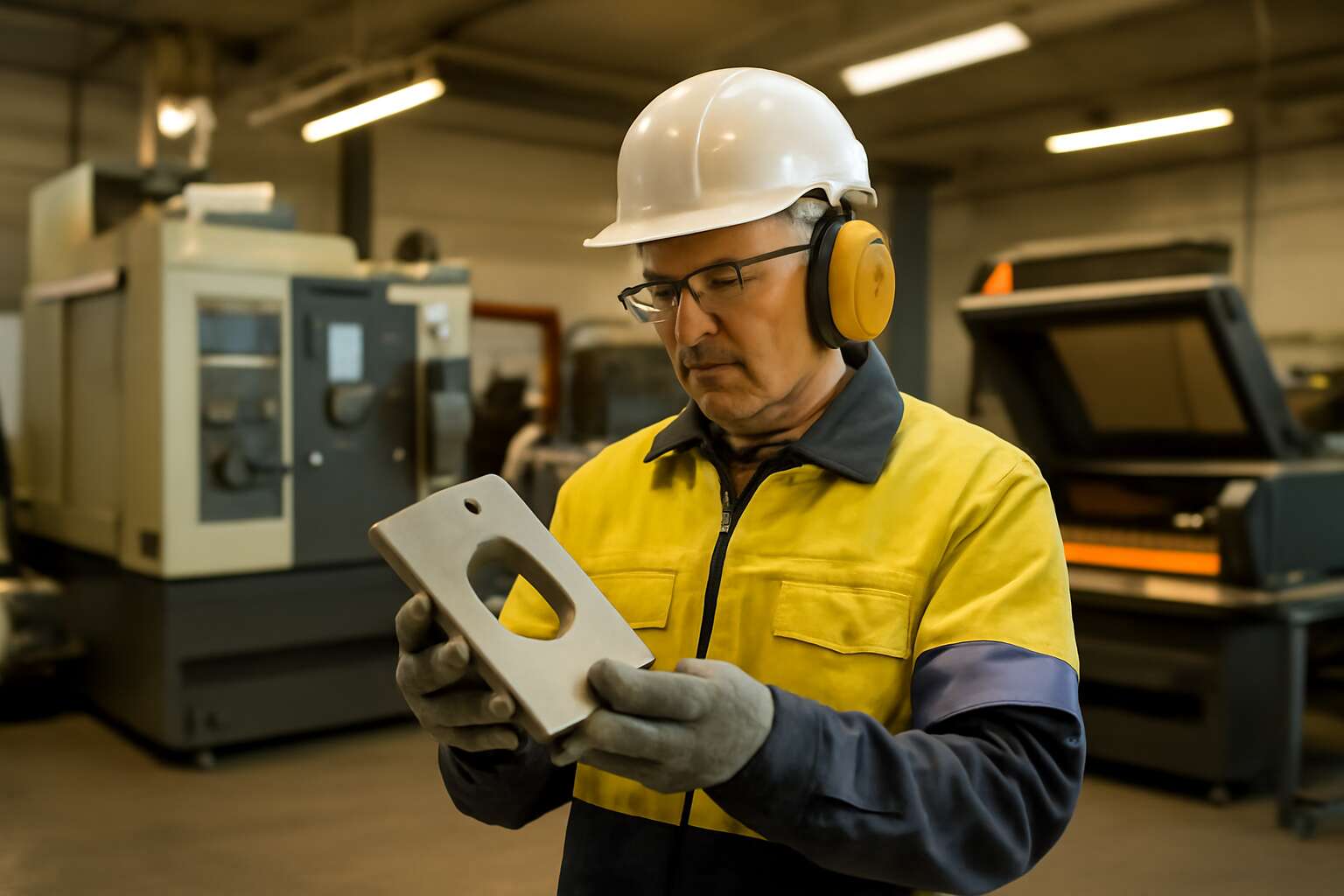
Understanding Modern Manufacturing Workflows
Definition and scope of fabrication teams
The backbone of modern manufacturing isn’t machines alone—it’s the choreography of every handoff. Understanding modern manufacturing workflows means mapping how a fabrication department coordinates design, sourcing, production, and final inspection to keep value moving smoothly, even in South Africa’s busy factories!
Core elements of these workflows include clear planning, material flow, consistent quality checks, and precise documentation.
- Planning and design alignment across teams
- Material flow and capacity planning
- In-process quality checks and traceability
- Handoffs and change management
When these elements are aligned, teams operate with less waste and more predictability. The scope of fabrication teams is to bridge design intent and shop-floor reality, weaving people, parts, and processes into a reliable cadence.
Key roles and responsibilities within metal fabrication
A striking stat for South Africa’s ships-and-sparks economy: roughly 15% of production time gets eaten by misaligned handoffs across teams!
Understanding modern manufacturing workflows means the fabrication department orchestrates how design intentions, materials, and inspections move as one choral line from concept to concrete part.
Within metal fabrication, the heart of the workflow lies in clear roles that keep value moving. This is where people translate designs into workable steps, sequence the flow of metal, and uphold daily checks that show traceability.
- Design-to-Production Liaison
- Process Engineer
- Shop Floor Supervisor
- Quality Controller
- Materials and Procurement Coordinator
When these hands and minds coordinate, the fabrication department breathes with a reliable cadence, turning blueprints into sturdy realities that stand up to South Africa’s demanding markets.
Differences between fabrication shops and other departments
South Africa’s factories hum with ambition, and a surprising truth keeps them honest: misaligned handoffs gnaw at up to 15% of production time. Understanding modern manufacturing workflows reveals why the fabrication department acts as a conductor, turning scattered intentions into a coherent, marching plan from concept to concrete.
Difference girds the shop floor from other departments: while planning and procurement often dwell in separate rooms, the shop floor breathes in real time—materials arrive, setups are tuned, and inspections happen in cadence. This cadence turns rough drafts into confident reality; the result is a seamless chord rather than a string of static gaps.
- Immediate feedback loops between design intent and on-press realities
- Direct material sequencing and tool readiness on the line
- Integrated quality checks woven into daily cycles
On the shop floor, discipline outpaces drama. In South Africa, steady cadence keeps value flowing when power or supply falters.
Common materials used in fabrication projects
In South Africa’s factories, misaligned handoffs chew up to 15% of production time. Understanding modern manufacturing workflows reveals why the fabrication department acts as a conductor—turning scattered intentions into a reliable, on-time plan from concept to concrete. When design intent and on-press realities share a cadence, setups are faster, material runs smoother, and quality checks blend into daily cycles!
- Structural steel (mild)
- Stainless steel
- Aluminium
- Copper and brass
- Plastics (HDPE, PVC)
- Fibreglass and composites
- Titanium alloys
These materials shape how jobs are planned, tools are readied, and lines are calibrated within the department. From heat input to finishing, material choice guides every step of the workflow toward predictable, repeatable outcomes.
Typical production cycles and lead times
Factories across South Africa juggle design, material flow, and real-world constraints, with up to 15% of production time wasted on misaligned handoffs. The fabrication department often acts as a conductor, turning scattered intentions into a reliable plan that travels from concept to concrete. When design intent and on-press realities share a steady cadence, setups shrink, runs stay smooth, and quality checks become daily rituals rather than surprises.
Typical steps include:
- Planning aligns with procurement cycles
- Production scheduling links setup and run times
- In-process inspections keep rework to a minimum
- Dispatch readiness drives packaging and transport timing
Understanding modern workflows means recognizing typical production cycles and lead times, moving from planning and procurement to manufacturing, finishing, and dispatch.
Core Processes in Metal and Custom Fabrication
Cutting, welding, and assembly workflows
The core processes of the fabrication department pulse like a forge-lit heartbeat: cutting, welding, and assembly. In South Africa’s vibrant engineering landscape, these workflows power precision, with an industry whisper that when harmony reigns among the processes, throughput can rise by up to a third.
Core processes in metal fabrication begin with cutting, where laser, plasma, or mechanical methods carve the raw silhouette with exact tolerances. Then welding binds the pieces in steadfast unity, while clever fixturing preserves alignment through every heat cycle. Finally, assembly braids the elements into a finished form, ready for inspection.
- Cutting: laser or plasma precision, tight tolerances
- Welding: MIG/TIG techniques, heat control, seam integrity
- Assembly: precise fixturing, bolting, final alignment
Each stage feeds the next, creating a seamless chain that reflects the craft of metalwork—a mix of science and art that keeps local industries marching forward with resilience and ingenuity.
Forming, bending, and machining integration
Core Processes in Metal and Custom Fabrication form the spine of the industry—an audacious blend of art and physics. In practice, integrating forming, bending, and precision machining can lift throughput by a striking margin, with industry whispers citing gains up to a third. Within South Africa’s vibrant fabrication department, these disciplines converge to shape components that meet exacting tolerances while staying adaptable to evolving designs.
Forming and bending craft the outer silhouette; I’ve witnessed machining add faithful precision on internal features, threads, and pockets. The flow requires sturdy fixturing and process planning to maintain alignment through every pass. Key integration pillars include:
- Forming and bending optimize material yield and geometry
- Machining delivers tight tolerances after forming
- Integrated process planning ensures traceability and setup efficiency
The result is a seamless chain that respects the metal’s behavior under heat and pressure, offering reliable, repeatable production and readied prototyping for evolving orders.
Surface finishing and treatment steps
Surface finishing isn’t cosmetics; it’s the final arbiter of strength and seal. “The finish tells the story of every heat, every grit, every pass,” a veteran supervisor whispered. In the fabrication department, finishing and treatment steps sculpt performance, turning raw metal into components ready for harsh environments.
- degreasing and cleaning
- deburring and mechanical finishing
- descaling and pickling
- blast cleaning or polishing
- passivation or plating
- powder coating or painting
- quality sealing and curing
Each step is evaluated for adhesion, corrosion resistance, and coating compatibility, ensuring traceability and standards compliance across South Africa.
Process selection by material and product type
Metal has its own opinions, and this fabrication department is where you translate intention into hardware. A striking stat from the shop floor: 30% of project delays trace back to early material and process decisions. “Form follows function, but material follows purpose,” a veteran supervisor likes to remind us. Core processes in metal and custom fabrication are not mere steps, but strategic choices that set performance in harsh environments.
Selection pivots on product type and service life. The route—whether cutting, forming, welding, or machining—must align with material behavior and expected loads. In practice, the core processes flow as a deliberate map, not a sprint, with traceability woven into every decision across South Africa. The fabrication department mindset? A short list of critical decisions:
- Material and environment fit
- Process routing and sequencing
- Heat treatment and property targets
- Joining, assembly, and finish plan
In-process quality checks during fabrication stages
A single misread spec can derail a project, but the shop floor fights back with in-process quality checks that catch drift before it becomes delay. Thirty percent of delays trace back to early material and process decisions, and the cadence of checks keeps the line honest. In the fabrication department, every joint earns its truth through measurement, inspection, and disciplined record-keeping, turning risk into certainty.
At each stage, a deliberate checklist underpins performance and traceability.
- Incoming material certification and traceability
- Dimensional inspection and gauging
- Weld and joint integrity checks
- Surface finish and coating acceptance
Equipment, Tools, and Technology in a Fabrication Environment
CNC machines, plasma cutters, and laser systems
Power, precision, and a pinch of swagger—that’s what the fabrication department runs on today. A recent industry survey shows shops upgrading to CNC machines, plasma cutters, and laser systems enjoy double-digit productivity gains and tighter first-pass quality. In South Africa, that translates into fewer interruptions and more on-time deliveries—proof that smarter fixtures and digital tracking pay off.
- CNC machines and milling centers that automate drilling, tapping, and contour cutting
- Plasma cutters for fast, clean edges on steel and alloys
- Laser systems for complex profiles, tight tolerances, minimal distortion
Beyond the hardware, integration matters. CAD/CAM workflows, tool-management, and real-time monitoring keep orders moving with predictability. With this technology stack, the fabrication department can chase consistency, traceability, and on-time delivery without breaking a sweat.
Automation and robotics in fabrication workflows
In the fabrication department, automation hums like a forge of modern myth; in South Africa’s shops, double-digit productivity gains await as robotic cells and interconnected tooling turn steel into precise, predictable parts with a touch of swagger! Real-time data streams from sensors keep the workflow smooth and the delivery clock honest.
- Robotic welding and assembly cells that adapt to batch sizes
- Automated deburring, finishing, and surface-smoothing stations
- Vision-guided inline inspection and metrology for first-pass confidence
Beyond the hardware, it’s the integration that turns capability into reliability: smart workflows, tool-management, and real-time monitoring in these facilities keep orders flowing with predictability. With digital tracking and continuous improvement, teams deliver consistent performance while maintaining cadence and traceability.
Software platforms for planning and scheduling
Compact, witty, and relentlessly accurate—the fabrication department in South Africa thrives when planning software keeps pace with the forge. Lead times can drop by up to 28 percent where digital scheduling weaves job tickets into predictable workflows. Software platforms for planning and scheduling turn demand into capacity, exposing bottlenecks before they sting and letting teams choreograph material flow with calm, confident rhythm.
- ERP and MES integration for end-to-end visibility
- Digital twins and cloud-based scheduling dashboards
- Mobile access and real-time alerts on the shop floor
Equipment, Tools, and Technology in a Fabrication Environment: modular machines, adaptive tooling, and smart probes that talk to the central planner. When hardware pairs with robust scheduling software, maintenance risks surface early and parts stay on cadence. In this symphony, the fabrication department keeps cadence, traceability, and pride in its precise, purposeful output.
Tooling management, maintenance, and uptime strategies
Uptime is the heartbeat of South Africa’s metal shops. In the fabrication department, tooling management is more than keeping bits sharp—it’s orchestrating moments of contact between machine, material, and memory. When tools stay calibrated and ready, throughput climbs and surprises shrink.
These pillars keep tooling honest on the floor, aligning people and machines without drama.
- Tooling lifecycle visibility and standardization
- Predictive wear monitoring and calibration history
- Standardized tool libraries and quick-change capabilities
In the field, smart tooling meets human expertise! Vibration sensors, wear data, and calibration histories fuse into a single narrative, guiding the shop’s tempo. I’ve seen shops where a single worn gauge derails a week; data-driven tooling steadies the tempo. With real-time alerts and mobile access, teams stay aligned even on the other side of the bay.
Safety, PPE, and compliance equipment
Safety gear isn’t a cost—it’s uptime insurance in the fabrication department. In South Africa’s metal shops, the right PPE choices translate to fewer interruptions and safer crews!
Equipment and tools on the floor blend rugged reliability with smart safety tech: dust extractors, welding respirators, and compliance monitors that flag damaged filters or expired tags. Safe PPE becomes part of the workflow, not a sidebar.
Here are essential items and practices to keep the area compliant:
- Safety glasses and face shields
- Hearing protection (earplugs or earmuffs)
- Welding respirators and masks
- Cut‑resistant gloves and grip aids
- Steel-toe boots and high‑visibility clothing
- Hard hats with chin straps
Quality Assurance and Compliance for Fabrication Operations
Quality control plans and industry standards
Quality control is the quiet backbone of every fabrication department. When checks are skipped, waste climbs and schedule slippage follows. We anchor our work to ISO 9001 and ISO 3834-2, plus SANS standards for local compliance. The result is predictable performance, traceable materials, and confident delivery to clients across South Africa. That discipline saves time and money!
Our quality assurance plan covers every rung of the process, from incoming materials to the finished piece. It emphasizes documentation, traceability, and defect containment so problems are found fast and corrected decisively. The following essentials shape our approach:
- Material traceability and welding procedures
- Dimensional inspection and non-conformance handling
- Internal audits and corrective actions
Compliance goes beyond checks. We train teams, maintain calibrated tools, and record audit trails that satisfy both global standards and South African regulatory expectations. By anchoring the program in the fabrication department, we reduce rework, extend uptime, and protect reputations in a competitive market.
Non-conformance management and corrective actions
Quality is the quiet heartbeat of the fabrication department, where non-conformances are not disasters but invitations to refine. When a defect slips through, containment is swift and the route to resolution becomes a map rather than a misstep. A robust CAPA discipline—root-cause analysis, corrective actions, and verification—anchors this effort in ISO 9001 and ISO 3834-2, while aligning with South African regulatory expectations.
A focused non-conformance process follows these essential steps:
- Contain and segregate affected materials or processes
- Investigate to identify root cause using structured methods
- Implement corrective actions with clear owners and timelines
- Verify effectiveness and prevent recurrence
Documentation, audit trails, and calibrated tools keep the system transparent, empowering audits and continuous improvement. In this way, the fabrication department turns missteps into milestones, earning trust across South Africa’s marketplace.
Regulatory certifications and audit readiness
Quality is the quiet engine of the fabrication department, turning strict standards into everyday habit. In South Africa’s regulator-laden landscape, audit readiness becomes a compass rather than a burden. A veteran QA mentor likes to say, “Audit readiness is a habit, not a quarterly checkbox.”
Quality Assurance and Compliance in fabrication operations hinge on a disciplined quality management system aligned with ISO 9001 and ISO 3834-2. We anchor regulatory expectations—often shaped by South African authorities—through robust CAPA, clear evidence of root cause, corrective actions, and verification. Documentation, calibration, and traceability remain the backbone, with supplier qualification and training records reinforcing confidence for internal and external audits.
- Document control and retention
- Calibration and tool verification
- Material conformity and supplier qualification
- Management review and continuous improvement
These pillars create a transparent audit trail that supports every client engagement and regulatory check.
Inspection techniques and nondestructive testing basics
Quality isn’t loud; it hums through the fabrication department, turning bold ideas into bend-tested, certifiable parts. In South Africa’s regulator-laden landscape, you don’t chase quality—you bake it into every weld, every checklist, every handover. ISO 9001 and ISO 3834-2 provide the framework, but inspection techniques and nondestructive testing basics keep the surprises off the final bill.
Quality assurance and compliance hinge on disciplined documentation, calibration, and traceability. In the fabrication department, a few core nondestructive testing modalities quietly protect signatures and service life:
- Visual and dimensional inspection
- Dye penetrant and magnetic particle testing
- Ultrasonic and radiographic testing
Documentation and traceability systems in fabrication
In the fabrication department, accuracy isn’t a buzzword—it’s a bottom-line driver. Audits show flawless documentation can cut rework by up to 40% and smooth handovers across shifts.
Quality assurance rests on disciplined documentation, calibration, and traceability. A robust system captures every change, every inspection, and every sign-off, aligning with ISO 9001 and ISO 3834-2 as backbone. Key elements include:
- Document control policies and versioning
- Calibration schedules and equipment history
- Material certificates and batch/lot numbering
- Nonconformance and corrective-action records
- Traceability from receipt to final handover
Digital platforms, barcoding, and ERP integration turn paper trails into real-time insight—allowing managers to trace signature validity and service life at a moment’s notice in the fabrication department.
Optimization and Performance in Fabrication Workflows
Lean manufacturing principles for fabrication
Optimization in the fabrication department isn’t fantasy; it’s a concrete, charismatic force that makes metal sing! On a crowded shop floor, even a small improvement in throughput can sharpen schedules and lift morale. We measure performance not by bravado, but by flow: how smoothly parts move from cutting through finishing to final assembly, and how quickly problems fade back into the background!
Lean manufacturing principles guide every move:
- Flow optimization to minimize work-in-progress
- Pull scheduling and takt time alignment
- Standardized work and visual controls
- Quality at source and swift corrective actions
Across South Africa, from Johannesburg to Cape Town, the fabrication department thrives when performance is measured, not mystified. I watch teams harness lean discipline, turn data into clarity, and celebrate the quiet power of steady improvement.
Maintenance strategies to maximize uptime
In the fabrication department, uptime is the quiet engine behind every deadline. A recent stat shows predictive maintenance can cut downtime by up to 20%—enough to turn a lagging shift into a steady cadence. Across South Africa, from Johannesburg to Cape Town, I’ve watched teams treat performance as measurable flow, not mystique, letting throughput glide with fewer interruptions.
Maintenance strategies to maximize uptime hinge on visibility, discipline, and rapid corrective action. The following concepts keep metal moving and machines talking to each other:
- Predictive maintenance concepts and sensor data
- Lubrication concepts and calibrated routines
- Autonomous maintenance as a cultural practice
- Spare parts strategy and changeover readiness
I’ve seen this thinking translate into tangible gains: predictive analytics, disciplined changeovers, and calibrated maintenance standards act as performance levers. When data guide decisions, the fabrication department operates like a single, cohesive organism—flow improves, problems recede, and schedules stay intact.
Continuous improvement and Kaizen in fabrication
A brisk current runs through modern fabrication: continuous improvement isn’t a footnote but the engine. In plants that embrace Kaizen, throughput climbs by up to 12% within a year, turning stubborn bottlenecks into a predictable rhythm. The wisdom is simple: small, deliberate adjustments compound into meaningful performance.
In the fabrication department, optimization thrives on visibility, cadence, and the humane discipline of daily reflection. It’s not a grand gesture but a culture where every hand adds a note to the workflow’s score and every delay is a chance to learn.
- daily stand-ups
- visual performance boards
- standard work alignment
When minds and machines speak the same language, cycle times shorten, quality stabilizes, and schedules glide—an elegant harmony echoing through South Africa’s workshops from Johannesburg to Cape Town.
Supplier collaboration and materials optimization
Throughput climbs by up to 12% within a year when Kaizen takes root, and in the fabrication department that rhythm translates to shorter cycle times and steadier output. Optimization thrives on visibility, cadence, and the humane discipline of daily reflection.
Supplier collaboration and materials optimization unlock a smoother flow. By synchronising procurement with production calendars and standardising material specs, we cut delays and rework, weaving reliability into every order and every weld.
When minds and machines speak the same language, schedules glide and quality stabilises, echoing across SA workshops from Johannesburg to Cape Town.
In this cadence, small adjustments accumulate into meaningful performance, turning the workshop into a living score where people and tooling move in closer harmony.
Key performance indicators for fabrication teams
On the shop floors from Johannesburg to Cape Town, efficiency writes a modern American Dream in steel and light. A single metric can tilt the axis: throughput per shift, tracked with calm dashboards and daily reflection, reshapes what’s possible. This is the fabrication department—a place where visibility, cadence, and disciplined reflection fuse to turn minutes into meaningful momentum.
Key performance indicators guide the optimization dance on the shop floor’s workflows. They reveal bottlenecks, align teams, and reward steady improvement.
- Cycle time per part
- Throughput per shift
- First-pass yield
- On-time delivery
- Equipment uptime
- Scrap rate and rework
In this rhythm, people and tooling move toward harmony, turning the grit of fabrication into a refined, enduring craft!


0 Comments