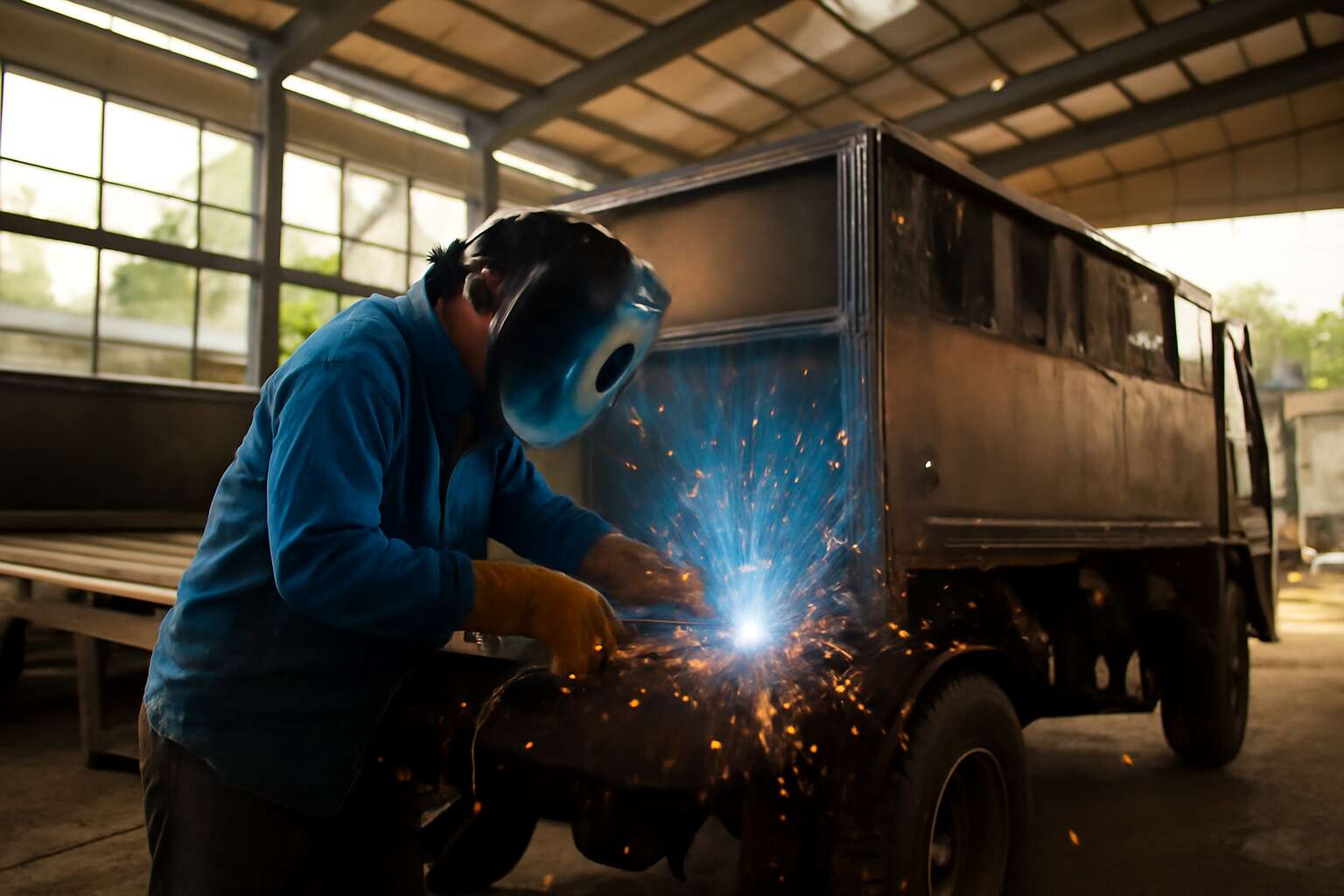
Market landscape and demand for truck bodies in the Philippines
Rising demand in logistics and construction sectors
“Sturdy truck bodies are the quiet backbone of growth,” says a veteran fleet manager, and he isn’t far off. In the Philippines, market dynamics are reshaping how fleets survive the daily grind, with demand leaning toward reliable cab-chassis and bodies.
Rising demand in logistics and construction is pushing manufacturers to rethink payload efficiency, durability, and ease of maintenance. For truck body fabrication philippines, this means modular, corrosion-resistant shells and faster turnaround times.
- Growing e-commerce and last-mile networks
- Increased infrastructure projects and fleet renewal
- Regulatory emphasis on safety and payload standards
To SA readers eyeing Philippine suppliers to broaden their fleets, staying ahead means blending local insight with global best practices. The market rewards quality, serviceability, and the ability to tailor truck bodies that endure the long haul and the occasional flood season.
Key materials and fabrication techniques commonly used in Philippine workshops
Fleets thrive on the shell that keeps wheels turning. Downtime is money lost, and in the Philippine market, the trend is clear: durable truck bodies survive humid coastlines and heavy urban routes, delivering steady service. A 25% reduction in downtime is cited when bodies are built for longevity. For South African buyers, truck body fabrication philippines isn’t just metal—it’s resilience in every mile.
SA buyers eyeing Philippine suppliers should note that local workshops blend hands-on craft with global standards—this is where the craft shines.
Key materials and fabrication techniques commonly used in Philippine workshops include:
- Marine-grade aluminum and galvanized steel for corrosion resistance
- Mild steel with powder-coated finishes
- Hot-dip galvanizing for long-term protection
- Laser cutting and plasma finishing for precision
- MIG and TIG welding for durability
- Modular bolted connections for easier maintenance
Together, they keep cargo moving through floods and long hauls.
Climate, road quality, and their impact on truck body design
Around Philippine logistics, weather and road conditions dictate delivery timelines. Flood-prone routes and humid coastal corridors demand a truck body that withstands salt air, heavy rain, and constant vibration. In this market, resilience isn’t optional; it keeps fleets moving.
Market demand in the Philippines follows climate realities and uneven road quality. Operators seek bodies that resist corrosion, absorb shocks, and allow quick field maintenance in remote towns. For South African buyers, the lesson is clear: design must travel well across diverse climates and infrastructures.
- Urban distribution with frequent stops and potholes
- Coastal and flood-prone corridors
- Rural highways serving construction and agriculture
Ultimately, modular connections, drainage, and accessible service points shape local demand. That is why truck body fabrication philippines matters for cross-border fleets.
Design considerations for commercial vehicle bodies in the Philippines
Chassis compatibility and load rating optimization
In the Philippines, the right truck body fit means fewer breakdowns and more on-time deliveries. A sharp hook: mismatched chassis and bodies drive downtime across fleets. Get the pairing right, and the road rewards you with steadier performance and longer service life!
Chassis compatibility anchors design. The body should respect frame width, rail spacing, and mounting points, while the load rating matches expected payload and distribution. Alignment minimizes stress, improves ride quality, and extends component life—crucial for busy corridors from Cebu to Metro Manila.
- Chassis compatibility: wheelbase, frame height, and mounting pattern
- Load rating: gross vehicle weight and payload distribution
- Future-proofing: modular mounting and upgrade paths
Designed with care, this approach matters for SA fleets importing from the region. For readers curious about the broader market, truck body fabrication philippines is a durable benchmark for reliability and performance.
Aerodynamics, weight reduction, and fuel efficiency
In the Philippines, every kilometer carries a story of fuel and time. Aerodynamics isn’t a luxury; it’s a lever that trims drag where the road is rough and the air is unkind.
A lean silhouette begins at the bumper and softens along the roof, guiding air to kiss the cab and wander away from the cargo box. A modest 2–3% drag reduction can translate into meaningful savings across a fleet plying Cebu to Metro Manila.
Weight reduction is a quiet ally, not a shortcut. Consider these tactful adjustments:
- Streamlined cab-to-body joints
- Use of lightweight alloys and composites
- Fewer protrusions and simplified racks
Design choices here shape uptime and efficiency—fuel savings become a steady companion in truck body fabrication philippines.
Safety features, standards, and regulatory compliance
In a land of long hauls and shifting weather, truck body fabrication philippines is more than metal—it’s a shield for cargo and crew. For readers in South Africa, the same discipline travels across continents, turning rough roads into reliability. Every joint, seal, and weld must endure the road’s whim.
- Reinforced cab-to-body joints that resist flex and fatigue
- Secure tie-down anchors and non-slip flooring for safe loading
- Underrun protection and compliant lighting for roadside safety
- Corrosion-resistant coatings for harsh tropical climates
Design must align with Philippine National Standards and DOTr/LTO roadworthiness checks. Compliance shapes maintenance cycles, insurance, and uptime. This regulatory compass ensures every truck body stands up to daily tests and long journeys.
Industry-specific customization options for fleets
“The road writes its own laws,” a veteran hullwright once whispered. In the Philippines, truck body fabrication philippines becomes a saga of design where every line respects climate, load, and landscape, turning rough routes into reliable journeys. A body must harmonize with the chassis and with a fleet’s mission—from city deliveries to long-haul distributions—so every mile feels earned.
Industry-specific customization options for fleets emerge as a palimpsest of needs: modular interiors, specialized fittings, and tailored payload profiles, all crafted to maximize uptime and efficiency.
- Refrigerated bodies for perishables
- Flatbeds with integrated tie-downs and toolboxes
- Leak- and corrosion-resistant cargo modules for tropical climates
From tropical corrosion resistance to modular interiors, design choices should anticipate service networks and maintenance windows, ensuring fleets stay on the move across South Africa’s roads and continents.
Durability, corrosion protection, and maintenance planning
Across tropical lanes, resilience is the first requirement of a working truck. In the Philippines, humidity, salt spray, and ceaseless rain test every seam and skin. A telling reality: corrosion-related downtime can rise by up to 25% within five years. In truck body fabrication philippines, these truths guide the blueprint from chassis interfaces to the last rivet.
Durability and corrosion protection are design axioms. Heavy skins, galvanised chassis components, and weather-sealed joints meet with marine-grade coatings that resist tropical assault. Maintenance-friendly geometry—drainage, accessible fasteners, modular panels—lets field crews keep fleets rolling without drama.
- Corrosion-resistant coatings and compatible fasteners
- Drainage-aware panel layouts and sealed joints
- Modular, replaceable skin panels for rapid service
Maintenance planning transforms risk into routine. Strategic access panels, clearly labeled service points, and a parts-network map reduce downtime even in remote corridors. For South Africa’s operators eyeing Philippines-built rigs, further discipline enters the design of truck body fabrication philippines.
Materials, fabrication methods, and technology in the Philippine market
Common materials: steel, aluminum, and composites
In the Philippines, well-crafted truck bodies translate to uptime and payload stability. The takeaway: design for urban stop-and-go and rural rutted stretches, and the numbers follow—up to 12% less downtime with modular, service-friendly bodies. This is the heart of truck body fabrication philippines.
Common materials shaping these bodies are steel, aluminum, and composites, each with a distinct temperament:
- Steel: rugged, repair-friendly, cost-effective in bulk, ideal for payload-dense designs.
- Aluminum: lighter, corrosion-resistant, suited for refrigerated or perimeter-body builds.
- Composites: high strength-to-weight, external skins and long-term maintenance benefits but higher upfront costs.
In Philippine workshops, fabrication methods center on precision and modularity: MIG/TIG welding for robust joints, laser cutting for clean edges, CNC bending for consistent radii.
Technology in this sector leans on digital design, CAD/CAM, and automated coatings that extend life in tough climates; even small fleets rely on data-driven planning and traceable fabrication records to meet regulatory and client specs.
Fabrication processes: cutting, bending, welding, and assembly
In the Philippines, a well-tuned truck body keeps fleets humming, with modular designs trimming downtime by up to 12%. Material choices set the rhythm: steel for rugged duty, aluminum for lighter payloads, composites where strength wears lightly. This is the heart of truck body fabrication philippines!
Fabrication methods in Philippine workshops favor precision and modularity. MIG and TIG welding forge sturdy joints; laser cutting yields clean edges; CNC bending delivers repeatable radii. Quick assembly and easier maintenance follow.
- Cutting: laser or plasma to tight tolerances
- Bending: CNC brakes for consistent curves
- Welding: MIG/TIG for durable joints
Technology guides this craft with digital design, CAD/CAM, and automated coatings built to brave humid climates. Data-driven planning and traceable fabrication records help fleets meet specs and clients’ wishes. For South African operators, these Philippine workflows translate smoothly.
Finishing, coating, and corrosion protection techniques
Humidity isn’t a mere climate—it’s a silent competitor. In the Philippines, finishes decide whether a chassis survives years of rain, grit, and heavy duty. This is the edge of truck body fabrication philippines: sealing every weld, guarding every seam.
Finishing choices, from zinc-rich primers to epoxy-polyurethane topcoats and powder finishes, shape longevity and downtime. The market harnesses automated lines, controlled bake cycles, and humidity-managed paint booths. You’ll feel the difference in maintenance when coatings stay intact.
- zinc-rich primers
- epoxy-polyurethane topcoats
- powder coatings
Corrosion protection stitches design to durability: galvanizing, sealants for seams, closed-scribe channels, and protective wax or ceramic shields. All backed by traceable records, ensuring South Africa-bound fleets receive consistent protection from Philippine suppliers.
Quality control, standards, and certifications in local shops
In the Philippines, truck body fabrication philippines is where humidity meets high-tech—clouds outside, precision inside. The hum of the line gives way to a foreman’s whisper: “The weld is the final handshake with weather.” Shops blend carbon steel, aluminum, and anti-corrosion composites using laser cutting, robotic welding, and automated bending to keep pace with demand.
Quality control runs on traceable records, ISO-aligned management, and skilled welders who practice nondestructive testing and dimensional checks. Local workshops pursue ISO 9001 and welding certifications, ensuring every seam, gap, and datum line speaks a language fleet managers understand—consistency, safety, and longevity for South African clients.
Everything from material provenance to finish is logged, so the Philippines-based supply chain can stand up to international scrutiny; this is how the ecosystem earns its quiet reputation in global fleets.
Regulatory landscape and compliance for truck bodies in the Philippines
Permits, registrations, and certifications for fabrication and installation
Compliance isn’t optional; it’s the fuel that keeps a fleet moving through the regulatory maze of the Philippines. When you embark on truck body fabrication philippines, you’ll stitch together permits, registrations, and certificates that shield you from bloopers and fines.
South African operators eyeing Philippine capabilities will find the pattern familiar: national bodies like DTI–BPS, LTO for vehicle modifications, and BFP for fire safety. Local permits add another layer.
- Mayor’s permit (local business clearance)
- DTI business name or SEC registration
- BIR registration and VAT compliance
- PS or equivalent quality marks for fabrication
- LTO approval for body modification and vehicle inspection
- BFP fire safety clearance for workshops
- Importer/exporter permits if components are sourced overseas
These are baseline hurdles that keep operations compliant and customers confident. Beyond that, many shops pursue ISO 9001 for quality management to bolster credibility in truck body fabrication philippines.
Roadworthiness, inspection, and homologation requirements
Compliance isn’t optional; it’s the fuel that keeps a fleet moving. Roadworthiness, inspections, and homologation govern how truck bodies are built and used. In the Philippines, every modification—from cargo racks to mounting brackets—must clear a regulatory gauntlet designed to protect people and assets. For truck body fabrication philippines, the path runs from national bodies to local codes: LTO handles vehicle modifications and roadworthiness checks, BFP oversees fire safety, and local authorities issue permits that keep workshops legitimate.
Key touchpoints include:
- Mayor’s permit (local business clearance)
- LTO approval for body modification and vehicle inspection
- BFP fire safety clearance
- DTI or SEC registration and VAT compliance
This framework translates into safer roads and more predictable outcomes for truck body fabrication philippines.
Environmental, labor, and safety regulations affecting fabrication
Compliance isn’t optional; it’s the fuel that keeps a fleet moving. The regulatory landscape for truck body fabrication philippines sits at the crossroads of environmental, labor, and safety rules that decide how metal becomes transport. LTO handles vehicle modifications and roadworthiness checks, BFP oversees fire safety, and local authorities issue permits that keep workshops legitimate. Environmental and labor standards—from waste disposal to worker safety—shape every weld and bolt in a plant with national and local oversight.
- Mayor’s permit (local business clearance)
- LTO approval for body modification and vehicle inspection
- BFP fire safety clearance
- DTI or SEC registration and VAT compliance
These touchpoints create safer roads and more predictable outcomes for the sector, ensuring that truck bodies meet community expectations and regulatory thresholds without devolving into bureaucratic farce.
Cost optimization, ROI, and supplier strategies for Philippine fleets
Local versus imported components and sourcing considerations
Fleets chasing efficiency discover a robust truth: well-chosen parts pay for themselves faster than you expect. In truck body fabrication philippines, standardizing the core modules can reduce total cost of ownership by as much as 15–20% within a year. The magic is not mystery; it’s disciplined planning, smart vendor selection, and thoughtful design that travels well across borders.
ROI hinges on how you source and service components. Local components shorten lead times and simplify warranty cycles; imported parts can trim upfront costs but invite longer replenishment times and currency risk.
- Local versus imported components: weigh lead times, warranties, and after-sales support
- Sourcing strategies: bulk procurement, stable suppliers, and quality audits
- Supply chain flexibility: adaptable sourcing to shifting demand
For South African fleets evaluating overseas supply chains, the insights from truck body fabrication philippines help balance cost, risk, and reliability.
Cost-saving fabrication practices without compromising safety
Fleets trimming total cost of ownership can shave 15–20% in a year by standardizing core modules. In truck body fabrication philippines, disciplined planning and smart vendor selection make durable designs travel across borders, even when lead times and currencies misbehave.
ROI hinges on sourcing and service. Local parts shorten lead times and simplify warranties; imported parts can lower upfront costs but bring longer replenishment cycles and currency risk.
- Bulk procurement of standard modules to stabilize prices
- Stable suppliers with documented quality audits
- Clear warranty, service commitments, and predictable after-sales support
For South African fleets evaluating overseas supply chains, these Philippine patterns show cost, risk, and reliability can align when buyers mix local resilience with offshore price opportunities.
Vendor evaluation, service guarantees, and after-sales support
Smart cost optimization in truck body fabrication philippines comes down to more than price tags—it’s about predictable performance. When fleets balance local sourcing with offshore price opportunities, ROI gains show up as reliable uptime and longer service intervals. Local parts shorten lead times; disciplined vendor evaluation and well-defined after-sales support turn bids into durable, long-haul assets.
- Clear service guarantees with measurable SLAs on parts availability and repair times
- Structured vendor evaluation criteria, including quality audits, traceability, and kickoff performance
- Dedicated after-sales support featuring remote diagnostics and rapid on-site response
For South African fleets weighing overseas supply chains, a measured mix of local resilience and offshore price opportunities keeps chassis steady and budgets sane.
Lifecycle cost analysis and maintenance planning for long-term ROI
Cost optimization in fleets is less about price and more about lifecycle discipline. For Philippine operations, ROI hinges on lifecycle cost analysis that accounts for uptime, maintenance scheduling, and spare parts. Two-thirds of ROI is driven by maintenance discipline rather than price. When procurement favors reliable supplier strategies over offshore sticker prices, asset returns rise in miles and years. For South African fleets weighing overseas supply chains, the same logic applies: local resilience paired with offshore price opportunities keeps budgets sane. In this frame, truck body fabrication philippines becomes a strategic lever.
- Lifecycle cost analysis drives total ownership decisions.
- Maintenance planning reduces unexpected downtime and extends asset life.
- Supplier strategies enable predictable parts supply and quality control.
Balancing local resilience with offshore price opportunities lends steadiness to budgets and credibility to long horizons.


0 Comments