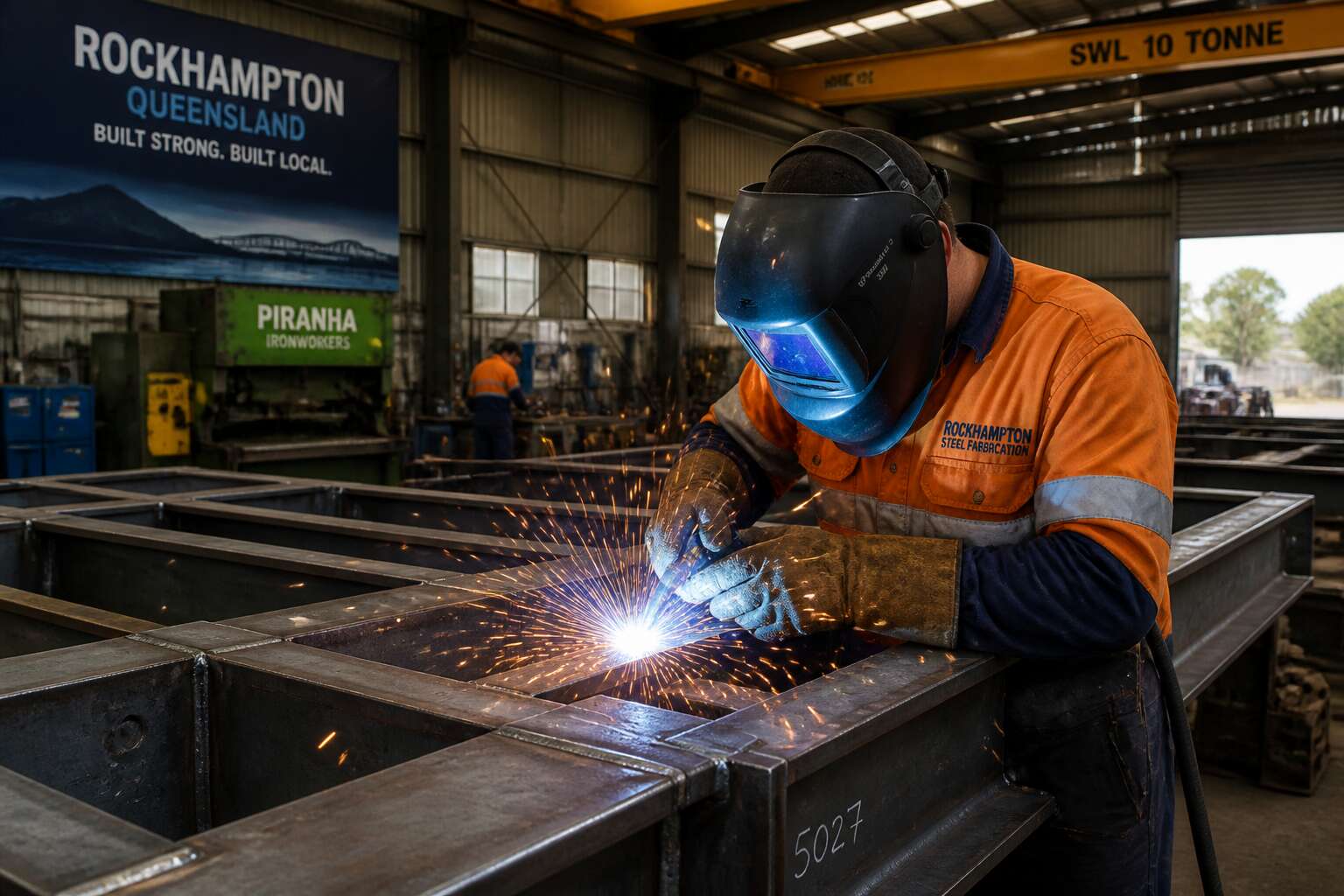
Comprehensive Metal Fabrication Solutions
Custom Steel Fabrication for Industrial Applications
Steel fabrication demands more than machinery. It requires an understanding of how metal behaves under stress, heat, and time. In heavy industry, the difference between a component that endures and one that fails often comes down to precision in every weld and cut. This is where comprehensive metal fabrication solutions prove their worth, particularly for operations that cannot afford downtime.
Custom steel fabrication for industrial applications goes beyond standard profiling. Every project presents unique load requirements, environmental conditions, and tolerances. A competent workshop assesses these variables before the first torch is lit. This approach ensures structural integrity, not just visual compliance. For businesses seeking reliability, the expertise behind each joint matters as much as the raw material itself.
When evaluating a provider, consider these capabilities:
– CNC plasma and laser cutting for complex shapes
– Plate rolling and pipe bending for structural components
– Certified welding for pressure vessels and load-bearing frames
– Stress relieving and shot blasting for durability
The fabrication rockhampton sector has developed a reputation for handling demanding projects with consistency. Local workshops understand the regional conditions and industrial standards. They translate engineering drawings into functional assets. That translation, executed properly, reduces risk and extends service life. Whether you need a single repair or a full production run, the quality of the fabrication determines the outcome. A well-executed steel structure performs quietly. A poorly executed one announces itself through failures. Choose accordingly.
Precision Aluminium Fabrication Techniques
Aluminium brings a different set of challenges to the workshop. Fabrication Rockhampton businesses know that heat distortion and weld porosity can ruin a project. Comprehensive metal fabrication solutions cover everything from CNC routing to TIG welding.
Precision aluminium fabrication techniques demand controlled amperage, proper filler rod selection, and strict attention to joint preparation. For marine, automotive, or architectural work, the tolerances tighten. A good team tests each weld before moving on. They also account for the metal’s thermal expansion during cutting.
That is why local fabricators invest in dedicated aluminium tooling. When you need a lightweight frame or a custom enclosure, these skills matter. The difference shows in the finished edge. No wobble, no burn-through, just clean lines. For fabrication Rockhampton clients, that level of care makes all the difference.
Stainless Steel Fabrication for Corrosion Resistance
Stainless steel stands apart when the environment turns hostile. Salt-laden air from the Capricorn Coast attacks ordinary metal without mercy, yet fabrication Rockhampton specialists rely on this alloy for its chromium oxide shield. That invisible layer self-heals after minor scratches, making it the undisputed choice for structures that must endure decades of humidity, chemicals, or marine spray.
Consider what a corrosion-resistant build actually delivers:
– Lower maintenance intervals, saving labour costs over the asset’s life
– Consistent structural integrity under thermal cycling or pressure
– A clean, sanitary surface for food, medical, or pharmaceutical lines
Unlike painted carbon steel, stainless does not rely on a fragile coating. The entire cross-section resists rust, so drilled holes, cut edges, and welds remain protected. For a fishing jetty, a brewery tank, or an outdoor stairway near the Fitzroy River, this material removes the guesswork. The result is a quieter, safer operation, one that does not demand constant patching or premature replacement. That resilience is precisely why local engineers specify it for projects where failure is not an option.
Structural Steelwork and Heavy Plate Fabrication
Structural steelwork frames the built environment. Heavy plate fabrication handles forces that lighter materials cannot absorb. When a gantry crane must lift forty tonnes or a mining chute must survive constant abrasion, this is where the work begins.
Fabrication rockhampton teams interpret engineering drawings precisely, cutting, drilling, and welding plate up to 100 millimetres thick. The tolerances are exacting, and I have seen crews reject a beam over a deviation thinner than a coin.
- CNC plasma cutting delivers accurate profiles
- Submerged arc welding creates deep, sound welds
- Stress relieving removes internal tensions
These processes ensure the finished structure performs its rated duty without premature failure. Local infrastructure projects, including bridge replacements and sugar mill upgrades, depend on this level of craftsmanship.
On-Site vs Off-Site Fabrication: What Works Best
A single degree of misalignment can turn a perfect weld into a future failure. That is the eternal tension between on-site and off-site fabrication. Out in the field, you fight gravity, weather, and uneven ground. Inside a workshop, you control every variable.
For fabrication rockhampton, the choice rarely comes down to preference. It comes down to what the structure demands and what the site allows.
- On-site fabrication works when moving the finished item is impossible, such as a conveyor frame bolted into existing foundations.
- Off-site fabrication prevails when repeated components need identical tolerances and traceable quality checks.
I have watched crews spend three days aligning a single connection on site. The same joint takes three hours in a shop. But then you add transport and crane hire, and the scales tip again. Honest estimators know this. They measure access, not just cost.
Materials and Advanced Fabrication Equipment
Types of Metals Used in Rockhampton Projects
Every fabrication rockhampton project starts with a question: which metal can endure this environment? The answer dictates tooling and technique. Carbon steel offers dependable strength for structural members. Duplex stainless resists pitting in coastal humidity. Aluminium provides a low weight alternative for dynamic loads. Bronze handles friction points in rotating assemblies. Advanced equipment then transforms those choices into finished parts. CNC plasma cutters slice plate steel with tight tolerances. Laser cutters produce sharp edges on thin sections. Press brakes with crowning control bend high tensile alloys accurately. For complex seams, robotic welders maintain steady heat input. In fabrication rockhampton, the pairing of material and machine rarely leaves room for guesswork. I have watched a well calibrated press brake turn a tricky temper into a clean bend. Those small wins compound into durable structures.
CNC Machining and Laser Cutting Capabilities
The precision of CNC machining and laser cutting redefines what is possible in fabrication rockhampton. I have watched a laser trace a path thinner than a strand of hair, turning a raw plate into a ready-to-weld edge. The tolerance is measured in microns, not millimetres.
These tools require a distinct discipline. A CNC operator reads the metal’s reaction to heat and speed. A laser cutter negotiates with the material’s reflective properties. South African industries, from mining to agriculture, depend on this exact standard of output. The advantages are tangible.
- Reduced material waste through nested cutting paths.
- Unwavering consistency across high-volume runs.
- The ability to produce complex geometries without secondary tooling.
This level of control changes the economics of a project. When a component arrives with perfect alignment, downstream work flows without friction. For a fabricator in rockhampton, this means less rework and more trust. The machine removes the guesswork, allowing the craft to focus on the final assembly. That is the real value!
Modern Welding Methods and Their Advantages
Welding has moved beyond the crackle of a stick electrode. Pulse MIG and TIG processes deliver controlled heat input, which matters when you are joining high-strength steel or aluminium alloys. In fabrication rockhampton, I have watched a robotic welder lay a bead with a consistency no hand can match, yet the operator decides the parameters.
The equipment gets the credit, but the material deserves attention too. Heat-treated plate and pre-finished alloys respond differently under the arc. A synergic power source adjusts voltage and wire feed in real time, limiting spatter and distortion. These advantages show up in the weld and in the project’s final cost!
- Less post-weld grinding
- Smaller heat-affected zones
- Consistent penetration on thick sections
- Higher travel speeds for production runs
South African workshops use these methods to meet stringent specifications. The machinery manages the variables. The welder’s judgement shapes the outcome, and that partnership defines modern fabrication rockhampton.
Surface Finishing and Protective Coatings
Raw material selection determines more than strength. In fabrication rockhampton, abrasive blasting and controlled surface profiles prepare metal for the harshest exposure. Powder coating and zinc-rich primers resist the salt air that plagues coastal steelwork.
Surface preparation equipment has moved forward as well. Automated blasting cabinets and calibrated spray booths remove the guesswork that once caused premature coating failure! South African environmental rules demand low-VOC systems, and modern applicators achieve them without losing adhesion.
The protective systems we specify include:
- Zinc epoxy primers for cathodic protection
- Polyurethane topcoats for UV resistance
- Two-pack epoxies for chemical exposure
The coating only performs as well as the surface beneath it. Dew point monitoring and hygrometer checks prevent trapped moisture before application. That discipline defines quality in fabrication rockhampton.
Industries and Applications Served
Supporting the Mining and Resource Sector
Rockhampton’s position at the heart of Central Queensland places its fabrication shops directly in the service corridor of the state’s most demanding industries. The mining and resource sector relies on locally built steel components that withstand punishing conditions, from coal handling plants to mineral processing facilities. Fabrication Rockhampton teams produce chutes, hoppers, gantry structures, and access platforms designed for continuous operation under abrasive loads. These pieces demand precise tolerances and robust welds, especially when they integrate with existing plant infrastructure.
The sector also requires rapid turnaround for maintenance shutdowns, where downtime translates directly into lost production. Common applications include:
- Conveyor transfer points and skirtings
- Crusher feed boxes and wear liners
- Modular walkways and handrailing systems
- Bin and silo reinforcements
Each project brings its own constraints, and the best outcomes emerge when fabricators engage early with site engineers to align on material selection and lifting strategies.
Agricultural Machinery and Equipment Fabrication
Central Queensland’s harvest cycle leaves no room for failed equipment. A broken tine or folded drawbar can stall an entire operation, and waiting weeks for a replacement part from another state is rarely viable. Fabrication Rockhampton shops have learned to rework existing machines instead of leaving them idle. They repair worn boom spray frames, rebuild header fronts, and fabricate livestock crate inserts from abrasion resistant plate.
- Hydraulic tank brackets and pump skids
- Rubber lined seed hoppers
- Air seeder boom replacements
- Slurry tank mounting frames
Each job begins with an inspection of the original component, because crop dust, fertiliser residue and field vibration change metal over time. A fabricator needs to know where corrosion hides before choosing the next section. This local knowledge keeps machinery moving through peak season.
Construction and Infrastructure Fabrication
In Rockhampton’s construction sphere, the clock moves differently. Tower cranes swing loads above building shells while crews pour footings that must cure before the next pour. A delay in fabrication means a delay in concrete, and that ripple effect costs money. Local fabricators understand this rhythm. They produce steel formwork systems for tilt-up panels, custom edge beams for precast yards, and reinforcement cages for piled foundations. Each piece arrives marked, drilled, and ready to bolt. That saves hours on site.
.
Consider the infrastructure side: drainage pits, culvert headwalls, and pedestrian guardrails. Rain events in Central Queensland can turn a dry creek into a torrent within minutes. Culvert structures have to handle that force. Fabrication rockhampton shops weld heavy gauge steel grates and lintels that sit exposed to flowing water, debris impact, and salt-laden humidity near the coast. They also fabricate sign gantries and bridge parapet sections, all engineered to Australian standards. The tolerances are tight because a bridge deck does not flex to accommodate a misfit.
.
Recently, I watched a crew assemble a temporary access platform for a sewer upgrade. The fabricated components included: walkway panels with serrated mesh flooring, handrail stanchionswith pre-drilled bolt holes, and kick plates bent to exact angles. Each piece slotted into place without a single visit to the workshop. That’s the value of local fabrication:it turns a logistical puzzle into a simple assembly task.
Marine Fabrication for Coastal Environments
The salt air along the Capricorn Coast does not forgive. Marine fabrication Rockhampton shops understand this reality. They build boat ramp walkways, jetty handrails, and mooring bollards that face daily immersion, UV exposure, and tidal push. The steel must be hot-dip galvanized or paired with marine grade alloys to resist the constant attack.
One local fabricator told me about a pontoon frame that needed replacement after two wet seasons. The original lacked proper drainage holes. The redesign used sealed sections and drip channels. No more trapped moisture.
- Boat trailer guides
- Cleat reinforcement plates
- Ladder brackets for pontoons
Every weld gets ground smooth to remove crevices. Every bolt gets a nylon washer. That is the difference between a structure that survives and one that crumbles quietly underwater.
Selecting a Reliable Fabrication Partner
Assessing Experience and Technical Expertise
A workshop’s floor tells you more than any brochure. When you evaluate fabrication Rockhampton options, walk the facility and watch how fitters handle tolerances. Experience shows in the small decisions: how plate edges are prepared, how welders check fit-up before striking an arc.
- Review past project portfolios for similar industries.
- Ask about quality control procedures and non destructive testing.
- Confirm engineers are on site for design troubleshooting.
Technical expertise reveals itself when you discuss material grades and weld specifications. A capable team asks pointed questions about load conditions and service environment. They also offer realistic timelines based on actual capacity. Choose a partner who demonstrates both craft and candour, because capability in fabrication Rockhampton carries long term consequences for safety and maintenance.
Project Management and Communication
Selecting a reliable partner for fabrication Rockhampton demands scrutiny of their internal systems. Their machinery matters, yet project management often determines success. Clear communication prevents small discrepancies from escalating into expensive rework.
When evaluating a workshop, look for these project management hallmarks:
- A single point of contact who holds the authority to adjust schedules.
- Documented weekly milestones tied to specific, measurable quality checks.
- Transparent reporting on material delays before they impact your site.
These practices ensure your timelines hold firm against unexpected variables. For South African industries facing tight deadlines and strict compliance codes, this level of oversight is non-negotiable. Effective communication in fabrication Rockhampton translates to fewer surprises, safer outcomes, and a partner who treats your project as their own.
Transparent Cost Estimation and Quoting
A quote is often where trust breaks down. The workshop that promises the lowest number upfront may pad it with hidden line items later. Transparent cost estimation in fabrication Rockhampton means itemised pricing, material rates, and labour charges that survive scrutiny.
How do you spot genuine transparency? Look for these markers:
– A detailed quote with each material grade and sourcing cost listed separately
– Clear labour hours projected per stage of production
– Written terms on variation costs when design changes occur
If a workshop hesitates to explain its numbers, treat that as a risk indicator. In my experience, the honest fabricator shares their cost structure early, because they know an informed client makes better decisions. You want a partner whose quote reflects reality, not optimism.
Turnaround Times and Delivery Schedules
A deadline is a contractual promise. In fabrication rockhampton, missed schedules force downstream delays. Some workshops quote optimistic turnaround windows to win orders, then shift responsibility to material suppliers. A reliable partner defines delivery in weeks and holds to it.
What separates a dependable schedule from a hopeful one?
- Capacity checks against current workload before quoting
- Milestone dates with payment tied to progress
- Penalty clauses for late handover
Ask for their loading system. If they cannot name the week your job enters the floor, expect drift. Local suppliers shorten logistics delays, but only if the workshop books them early.
Warranty and After-Sales Support
A weld can fail long after the invoice is paid. That reality separates a reliable workshop from a mere supplier. Warranty terms reveal confidence, or the lack of it.
Ask who answers when defects surface months later. A reliable partner documents material traceability and weld inspection records. They offer a written warranty for workmanship and materials. Response time matters too. If a callback takes a week, imagine a repair! I always demand a named contact.
- Clear defect reporting procedure
- On-site assessment within 48 hours
- Replacement or repair at no labour cost
After-sales support extends beyond fixes. Some workshops provide maintenance guidance for corrosive environments. Others keep spare profiles in stock. The best ones track their work long after handover. That is fabrication rockhampton done properly.
Quality Assurance and Safety Compliance
Adherence to Australian Fabrication Standards
In the unforgiving heat of Central Queensland, the difference between a structure that endures and one that fails often comes down to paperwork. A surprising 78% of structural failures in mining and infrastructure are traced back to lapses in quality control, not metallurgy. For any serious fabrication Rockhampton operation, this statistic is a stark reminder that compliance is not a bureaucratic hurdle. It is the very architecture of trust. Robust quality assurance programs do more than tick boxes; they embed verification into every cutting, welding, and assembly phase.
True adherence to Australian Standards means welders hold current certifications, and procedures are qualified to AS/NZS 1554 or similar. You will find that reputable workshops treat non-destructive testing as a routine gate, not an optional extra. This ensures every joint is sound before the component ever leaves the floor. The process involves:
– Documented traceability for all material batch numbers
– Calibrated torque wrenches and inspection tools
– Third-party verification on critical lifting points
– Stage-by-stage sign-offs before paint and finish coatings
Walking through a compliant facility, you will see that safety is a culture, not a slogan. In a region with a booming resource sector, ignoring statutory obligations can cripple a project schedule or an entire career. A solid safety case integrates risk assessments into the workflow, ensuring that every team member returns home safely while engineering robust outcomes for the harsh Australian environment. This commitment reduces costly rework and protects the long-term integrity of entire sites.
Inspection and Non-Destructive Testing Procedures
A weld can look flawless and still hide a void beneath the surface. In fabrication rockhampton, quality assurance depends on tools that see what eyes cannot. I once watched a dye penetrant test reveal a crack that would have failed under load. That inspection saved a project from catastrophic rework.
Non-destructive testing procedures are the core of this discipline. Ultrasonic testing measures internal integrity. Radiography exposes porosity. Magnetic particle inspection finds surface cracks before they propagate.
- Verify material certifications against the drawing
- Confirm welder qualifications remain current
- Apply NDT at prescribed fabrication stages
- Document each result for full traceability
Safety compliance inspection runs parallel to these checks. Statutory obligations are not paperwork. They are the difference between a sound structure and a liability. For any serious fabrication rockhampton operation, this is non-negotiable.
Workplace Health and Safety Protocols
In the heart of Central Queensland, a single statistic from Workplace Health and Safety Queensland often sets the tone: the majority of serious incidents in metal fabrication stem from a lapse in procedure, not a lack of skill. For any serious operator involved in fabrication rockhampton, the physical environment is a direct reflection of the final product. If the shop floor is chaotic, the welds will likely follow suit.
A commitment to safety here is not a sticker on a hard hat; it is the silent architecture that supports every cut and every weld. This culture begins with daily housekeeping rituals that prevent slips and trips, extending to the meticulous segregation of materials to avoid hazardous reactions. The heat and sparks of the workshop demand vigilance, but the quieter risks, such as poor air quality and noise exposure, are equally critical.
To maintain this standard, several key protocols are non-negotiable:
1. Conduct daily pre-start checks on all lifting gear and grinders to identify wear before it becomes a failure.
2. Ensure all ventilation systems are operational to filter welding fumes before work commences.
3. Enforce the use of flame-resistant clothing and auto-darkening helmets, adapting PPE to the specific task.
Ultimately, the integrity of the operation hinges on the physical wellbeing of the team. When a crew feels protected, their focus sharpens, and the precision of their work improves. This alignment of human care and technical rigor is what separates a basic workshop from a benchmark facility. For those seeking superior outcomes, the pathway is clear: safety is not a separate agenda, it is the very substrate of quality production in fabrication rockhampton.
Certifications and Accreditations to Look For
Certifications are the paperwork that separates a metal-bending hobby from a legitimate operation. For clients seeking fabrication Rockhampton services, a quality assurance credential like ISO 9001 signals that a workshop measures what it claims to deliver. It is one thing to promise strong welds. It is another to hold a documented system that proves a repeatable process!
Look for accreditation against ISO 45001 for occupational health and safety management. Welding procedures should reference AS/NZS 1554 or AS/NZS 3992 depending on the material. NATA accreditation for testing labs adds further assurance.
A few credentials worth checking:
- ISO 9001 for quality management systems
- ISO 45001 for safety management
- AS/NZS 1554 for structural steel welding
- Current trade qualifications for the welders themselves
For those evaluating fabrication Rockhampton suppliers, the certificate must match the daily practice. Paper without procedure is just décor.

0 Comments