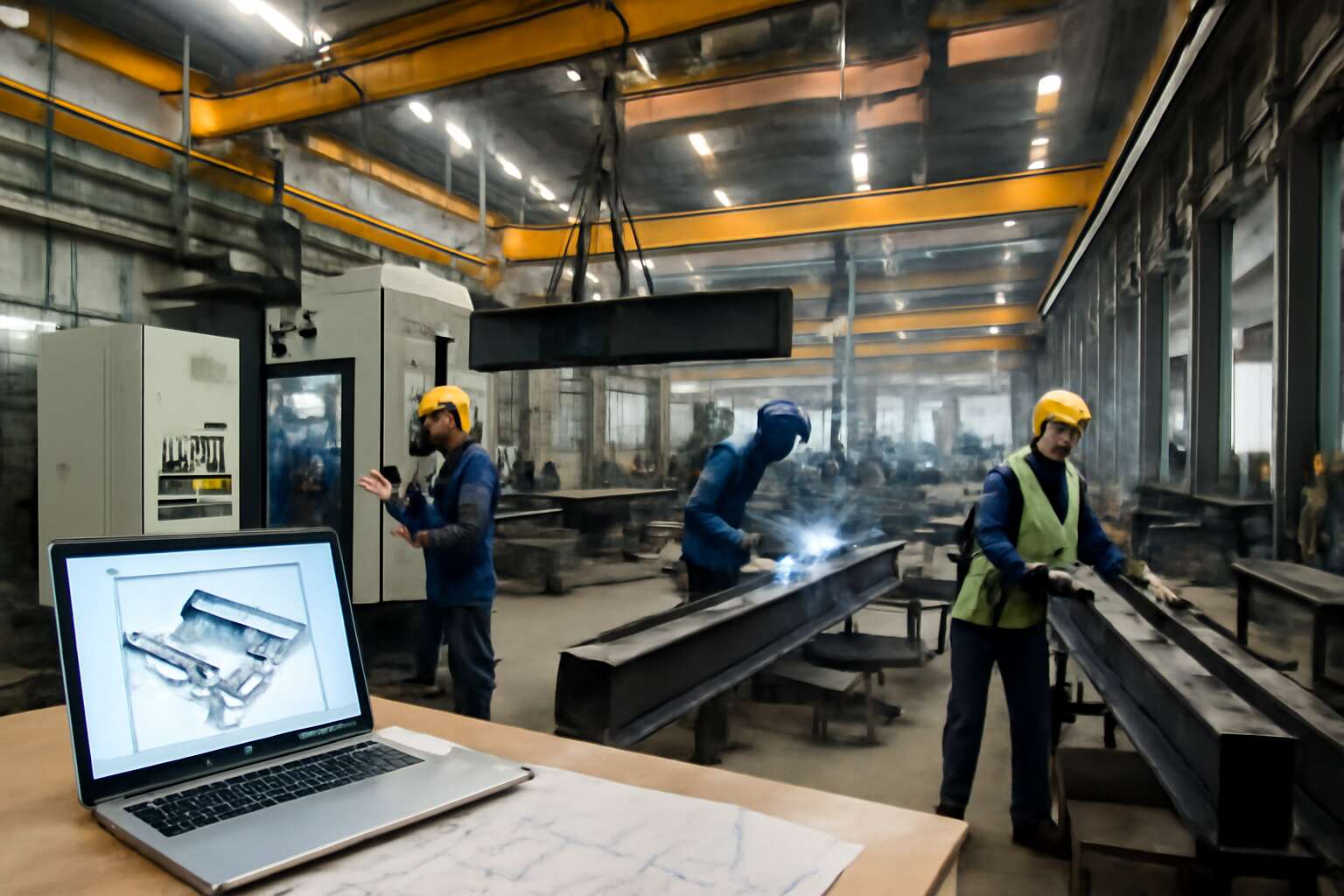
Feasibility and Market Overview
Market demand for steel fabrication
The heartbeat of SA construction isn’t concrete; it’s steel. A foreman once quipped, “If the steel isn’t bending, the project isn’t happening,” and the line still clangs through every scaffold. Feasibility hinges on local supply, price volatility, and a reliable grid—factors this steel fabrication unit project report must size up. It reads as a practical map of capex, labour, and logistics from foundry to site, cutting through red tape with the precision of a laser-cut beam.
Market overview shows SA demand from infrastructure, mining, and renewables. Local fabrication with tight lead times wins bids and reduces risk. The drivers include:
- Infrastructure upgrades in key provinces
- Mining sector modular needs
- Renewable energy structures
- Warehousing refurbishments
In short, the market rewards adaptable, quality fabrication with predictable delivery—the reliability that turns plans into beams.
Target industries and application areas
“If the steel isn’t bending, the project isn’t happening,” a foreman quipped, and that line still rattles through the yard as we assess feasibility. Local supply stability, price volatility, and a reliable grid shape the risk profile. A steel fabrication unit project report captures long-lead items and shop capacity, translating risk into numbers. Feasibility means a realistic path from blueprint to beam—without surprises.
In South Africa, the work finds its rhythm in sectors that demand scale and speed. The market favors modular, durable frames for industrial campuses, processing facilities, and logistics hubs. Tailored fabrication supports quick on-site assembly, with precise connections and bracing that withstand demanding climates. From temporary works to enduring installations, the craft translates visions into prefabricated components that slot into place with crane-hook precision.
Competitive landscape and benchmarking
Steel isn’t a color on a palette; it’s a measure of intent. In a market where a single delay bleeds cash, a steel fabrication unit project report becomes a compass. It translates long-lead items and shop capacity into numbers you can trust, turning risk into a plan you can believe.
Feasibility in South Africa hinges on local supply stability, price volatility, and a reliable grid. The path from blueprint to beam must survive shocks—think variable lead times, crane access, and skilled labour. To benchmark, I focus on throughput, cost per ton, and schedule adherence.
- Lead-time predictability
- Material cost volatility
- Capacity utilization
Market overview and competitive landscape: South Africa’s steel fabrication scene is a chessboard of nimble shops and scale-focused integrators. Benchmarking against global peers helps, but local reliability—timely deliveries and adaptable fabrication—remains the differentiator that turns plans into steel reality.
Regulatory and compliance overview
South Africa’s steel decisions carry grid glitches and budget nudges. A telling stat anchors strategy: delays ripple into costs unless forecasting is precise. This steel fabrication unit project report transforms that volatility into trust, turning uncertainty into a concrete roadmap.
Feasibility in South Africa hinges on local supply stability, price volatility, and a reliable grid. The path from blueprint to beam must survive shocks—variable lead times, crane access, and skilled labour. To reflect reality, a steel fabrication unit project report maps these risks into milestones and viability.
Regulatory and compliance overview is ballast, not bureaucracy. South Africa’s framework keeps ambition honest, with audits acting as stern referees.
- Occupational Health and Safety Act alignment
- National Building Regulations and Building Standards Act compliance
- SABS/ISO welding standards for traceability
- Environmental and procurement regulations (NEMA and PPPFA)
These guardrails in the report translate strategy into reliable execution.
Location, land, and logistics planning
Location can make or break a steel fabrication venture in South Africa. A site choice can shave weeks off lead times and protect margins. Feasibility and Market Overview hinge on land security, zoning clearance, and proximity to suppliers and customers. A steel fabrication unit project report translates that location logic into a concrete path—from site selection to ground-breaking—so stakeholders can see how space becomes production!
Land and logistics must support a smooth flow of components, welding, and finishing. Choose land with durable ground, accessible crane corridors, and room for outdoor storage without congestion. Site layout should align with delivery routes, material staging, and waste management.
- Site zoning, permits, and environmental approvals
- Power, water, and compressed air reliability
- Rail and road access for inbound and outbound flows
Then plan for the horizon: lead times, equipment mobilization, and workforce travel. A resilient logistics plan reduces downtime during crane moves and painting cycles.
Technical and Operational Plan
Plant layout and facility design
Footloose flourishes in lean environments—that’s a tool for growth. A well-planned plant layout can trim lead times and waste, sometimes by a surprising margin. In a steel fabrication unit project report, the Technical and Operational Plan becomes a blueprint for action, turning ideas into concrete floor moves. Space is money, a foreman likes to joke, and this section makes every square meter count!
Facility design focuses on workflow, safety, and maintenance access. We arrange bays, cranes, and workstations in a flow that minimizes handling and bottlenecks.
- Process zoning and material flow planning
- Crane coverage, bay alignment, and equipment spacing
- Utilities, lighting, and maintenance corridors integrated into design
With this, the project aligns operational reality with design intent.
Equipment and machinery specification
“The right machine is the quiet engine behind a steel fabrication unit project report,” a veteran foreman often says. In this section, the Technical and Operational Plan for equipment maps not only what sits on the shop floor but how it behaves—capacity, tolerances, cycle times, and uptime. It anchors decisions to real work: how much we can produce in a shift, how fast we weld, cut, and punch, and how alarms keep people safe. Maintenance access and spare parts are baked into the numbers, so downtime stays predictable.
It also details automation levels, control systems, and data feeds that transform performance into accountability, plus life-cycle costs and supplier commitments. In South Africa’s evolving steel sector, the result is a coherent path from plan to floor, where every machine aligns with safety, maintenance, and quality targets.
Production process workflow and capacity planning
Across South Africa’s steel shops, productivity hinges on a disciplined cadence. A well-tuned line can lift output by as much as 25%, and the steel fabrication unit project report is the blueprint that makes that leap defensible—anchoring every handoff, from cutting to finishing, with a clear, living heartbeat.
From raw input to finished component, the production process workflow follows takt time, cycle targets, and safety-first routines that keep the floor honest.
- Receiving and pre-forming
- Cutting and forming to takt time
- Welding, assembly, and in-process QA
- Finishing, coating, and final inspection
- Packaging and dispatch readiness
The cadence translates into measurable capacity: takt time, cycle time, and buffer zones that keep the line flowing even when demand spikes. Maintenance windows and alarms are scheduled to minimize disruption while upholding safety and quality.
Quality assurance and inspection systems
Across SA workshops, a disciplined QA cadence translates to fewer delays and stronger parts. A well-structured quality assurance plan can cut rework by up to 30%, turning raw steel into dependable components. On the floor, inspection routines anchor every step—from cut edges to weld passes—so that nothing slips through the safety net!
Key systems include:
- Incoming material verification and supplier qualification
- Welding procedure and welder performance qualification, with non-destructive testing where appropriate
- In-process dimensional checks and fit-up traceability
- Coating thickness, surface finish, and adhesion QA
- Final inspection, packing integrity, and dispatch documentation
All of this is captured in the steel fabrication unit project report, a living blueprint that aligns teams, data, and improvement pursuits.
Health, safety, and environmental controls
Health, safety, and environmental controls form the spine of any serious steel work. In South Africa’s busy fabrication yards, a disciplined safety culture has reduced recordable injuries by up to 40%, a statistic that lands like a verdict on the workshop floor. The Technical and Operational Plan must thread hazard analysis, training, and emergency readiness into every cycle—so both machine and worker endure the day with integrity.
- Permit-to-work systems and job safety analyses to constrain risky tasks
- Ongoing training, competency tracking, and near-miss reporting to sharpen judgment
- Waste management, spill response, energy stewardship, and environmental monitoring to protect communities
Within the steel fabrication unit project report, health, safety, and environmental controls are not afterthoughts but a living mandate, binding teams, data, and progress into one cohesive discipline.
Maintenance and downtime management
In South Africa’s bustling fabrication yards, downtime is the loudest villain of progress. A disciplined maintenance cadence can trim downtime by as much as 25%, turning waiting into welding and uncertainty into momentum. The Technical and Operational Plan threads maintenance into every shift, so machines hum with integrity from dawn to dusk.
Maintenance and downtime management demand a living routine: scheduled inspections, predictive analytics, and rapid repair loops that keep the line moving. This approach is embedded in the steel fabrication unit project report.
- Holistic maintenance calendars aligned to production rhythms
- Condition-based monitoring and asset health insights
- Strategic spare parts availability with clear lead-time visibility
When the plant wakes with the morning light, discipline, data, and dexterity compose a quiet arithmetic of uptime—a fortress forged not in heat but in habit. In SA, this is more than procedure; it is a living rhythm guiding every beam and bolt, and turning steel into a story of reliability.
Financial Analysis and Funding
Capital expenditure breakdown
A well-tuned budget can shave months off the curve to production. In the steel fabrication unit project report, the financial analysis ties every rand to capacity, uptime, and quality. The capital expenditure breakdown maps how funds are spent—spanning new plant and automation, site improvements, and the essential working capital that keeps production flowing.
Funding choices reflect risk and resilience. This section outlines a prudent mix of internal cash, bank facilities, and targeted grants, with milestones for release. South Africa’s market realities inform terms and contingencies as the project moves from commitment to commissioning. The following elements crystallize the plan:
- Equipment procurement and installation
- Electrical, automation, and control systems
- Facility upgrades and site services
- Working capital and contingency reserves
Operational expenditure and cost structure
In steel fabrication, every rand tied to capacity and uptime translates into real throughput and reliability. A concise financial model can translate risk into resilience; a well-tuned plan reduces idle time and keeps cash flowing. The steel fabrication unit project report anchors the cost narrative to production reality, from energy use to tooling cycles. That’s how we unlock months of production time!
Operational expenditure hinges on energy intensity, labor productivity, maintenance, and consumables. We forecast Opex by linking unit cost per tonne to uptime targets and yield, with contingency for volatility in steel prices and exchange rates. The result is a lean cost structure that funds both steady running and short-notice maintenance without choking cash flow.
Revenue projections and pricing strategy
Cash flow hides in the margins of a steel fabrication unit project report. In South Africa’s volatile metals market, aligning revenue projections with a disciplined pricing model can deliver a 10–15% uplift in cash flow within the first year. Risk pricing and buffers turn uncertainty into reliability!
Financial analysis maps funding sources—from bank facilities to equity partners—and sets the path for working capital. It shows when to leverage debt, tap reserves, and how currency and steel-price volatility ripple through the bottom line.
- Debt facilities secured against assets and order backlog
- Equity partners and strategic investors aligned with milestones
- Supplier credit and extended payment terms to smooth cash flow
Revenue projections pair with a pricing strategy built on value, risk, and contract longevity. The model tests price bands, volume discounts, and hedging options against currency swings, ensuring margins survive market shocks.
Financial metrics and break-even analysis
In steel fabrication unit project report terms, financial analysis reads like a map of tomorrow. South Africa’s volatile metals market rewards those who pace cash flow with disciplined funding, unlocking margins that stand against volatility and surprise.
Financial metrics anchor the plan: NPV, IRR, debt-service coverage, and a clear break-even analysis that shows when the plant covers its costs. This clarity guides funding decisions and cushions the journey from volatility to reliability.
- Bank facilities secured against assets and order backlog
- Equity partners and strategic investors aligned with milestones
- Supplier credit and extended payment terms
Together, these elements turn uncertainty into a measured forecast, ensuring the steel fabrication unit project report delivers steady liquidity and growth even when markets swing.
Funding sources and financing plan
In a climate where cash moves faster than steel, disciplined funding unlocks margins that weather volatility. The steel fabrication unit project report acts as a map from market signals to committed capital, guiding decisions with clarity and calm. South Africa’s metals market can swing, but a transparent financing plan keeps the plant humming rather than stalling!
Funding sources and financing plan align milestones with liquidity, supported by a mix of instruments:
- Bank facilities secured against assets and order backlog
- Equity partners and strategic investors aligned with milestones
- Supplier credit and extended payment terms
Together, these elements translate uncertainty into a measured forecast, letting the project breathe with the market’s rhythms and supporting steady liquidity and growth.
Implementation Roadmap and Risk Management
Project phases and milestones
Five milestones separate concept from production—and every one matters. In the steel fabrication unit project report, the Implementation Roadmap serves as the spine, translating strategy into action and guiding the team through design, procurement, and construction with intent. A disciplined risk mindset runs parallel, forecasting bottlenecks, safety impacts, and supply shifts in SA before they surge into crises.
- Concept validation and design freeze
- Detailed engineering and procurement plan
- Construction sequencing and commissioning readiness
- Start-up and initial production run
- Post-commission stabilization and handover
Risk management threads weave through each milestone, pairing contingency budgets with supplier risk scoring and on-site safety playbooks. Regular reviews keep the roadmap alive, bending with market shifts and regulatory changes without breaking the schedule. The result is a steady cadence of checks that protect capital and safeguard production integrity.
Procurement and vendor management
From the first sketch to the last bolt, our Implementation Roadmap is the spine of the steel fabrication unit project report. It translates strategy into action, guiding the team through concept validation, design freeze, detailed engineering, procurement planning, construction sequencing, and commissioning readiness—stages that become a steady cadence rather than a sprint. In South Africa, the roadmap must bend with market shifts yet protect capital and schedule, keeping the project moving with intent.
Risk management threads weave through each milestone, pairing contingency budgets with supplier risk scoring and on-site safety playbooks. In procurement and vendor management, we map capacity, lead times, and regulatory alignment with local suppliers. Regular reviews keep the plan alive, catching bottlenecks before they bloom and steering the project toward reliable start-up and smooth handover.
- Coordinate milestones across design, procurement, and construction
- Assess supplier risk and diversify sourcing
- Lock in safety, commissioning readiness, and handover criteria
Construction timeline and commissioning
The Implementation Roadmap is the spine of the steel fabrication unit project report, turning strategy into action and guiding teams from concept validation to commissioning readiness. In South Africa, this roadmap must bend with market shifts while protecting capital and schedule, turning disruption into disciplined momentum. It creates a steady cadence—clarity, not chaos—so design, procurement, and construction advance with intention and purpose.
- Coordinate milestones across design, procurement, and construction with regular, pragmatic reviews
- Assess supplier risk and diversify sourcing to shield the project from single-point failures
- Lock in safety standards, commissioning readiness, and clear handover criteria
Risk management threads weave through each milestone—contingency budgets, on-site playbooks, and regulatory alignment—ensuring the project remains resilient even as conditions shift. Regular reviews keep the plan alive, and I’ve seen this discipline steer a reliable start-up and smooth handover.
Risk assessment and mitigation strategies
Momentum is the art of disciplined escalation, and in steel that rhythm becomes an Implementation Roadmap. This roadmap is the spine of the steel fabrication unit project report, bending with South Africa’s market shifts while protecting capital and schedule. It creates a steady cadence—clarity, not chaos—so design, procurement, and construction move with intention and purpose.
Regular, pragmatic reviews coordinate milestones across design, procurement, and construction.
- Assess supplier risk and diversify sourcing to shield the project from single-point failures
- Lock in safety standards, commissioning readiness, and clear handover criteria
Risk assessment and mitigation strategies weave through each milestone—contingency budgets, on-site playbooks, and regulatory alignment—keeping the project resilient when conditions shift. In South Africa, this disciplined cadence steadies the start-up and smooths the handover, turning disruption into momentum that feels almost inevitable.
Change management and project governance
In the steel fabrication unit project report, the Implementation Roadmap is the spine that keeps ambition upright as South Africa’s market shifts. It’s not a rigid timetable but a living sequence that threads design reviews, procurement gates, and commissioning checks into a steady cadence. When the rhythm holds, chatter drops and actions align—every stakeholder moving with clarity toward a shared horizon.
Change management and project governance are the tempering iron that prevents brittle outcomes. A formal change-control process, clear decision rights, and regular oversight anchor the project, ensuring safety standards and regulatory alignment stay intact even as conditions shift.
- Formal change-control thresholds
- Defined decision rights and escalation paths
- Transparent metrics and commissioning criteria
Risks become manageable when the roadmap anticipates them: contingency budgets, on-site playbooks, and alignment with local regulations, yielding momentum that feels almost inevitable as the project advances.



0 Comments