Industry Landscape and Trends in Fabrication
Global trends shaping fabrication industries
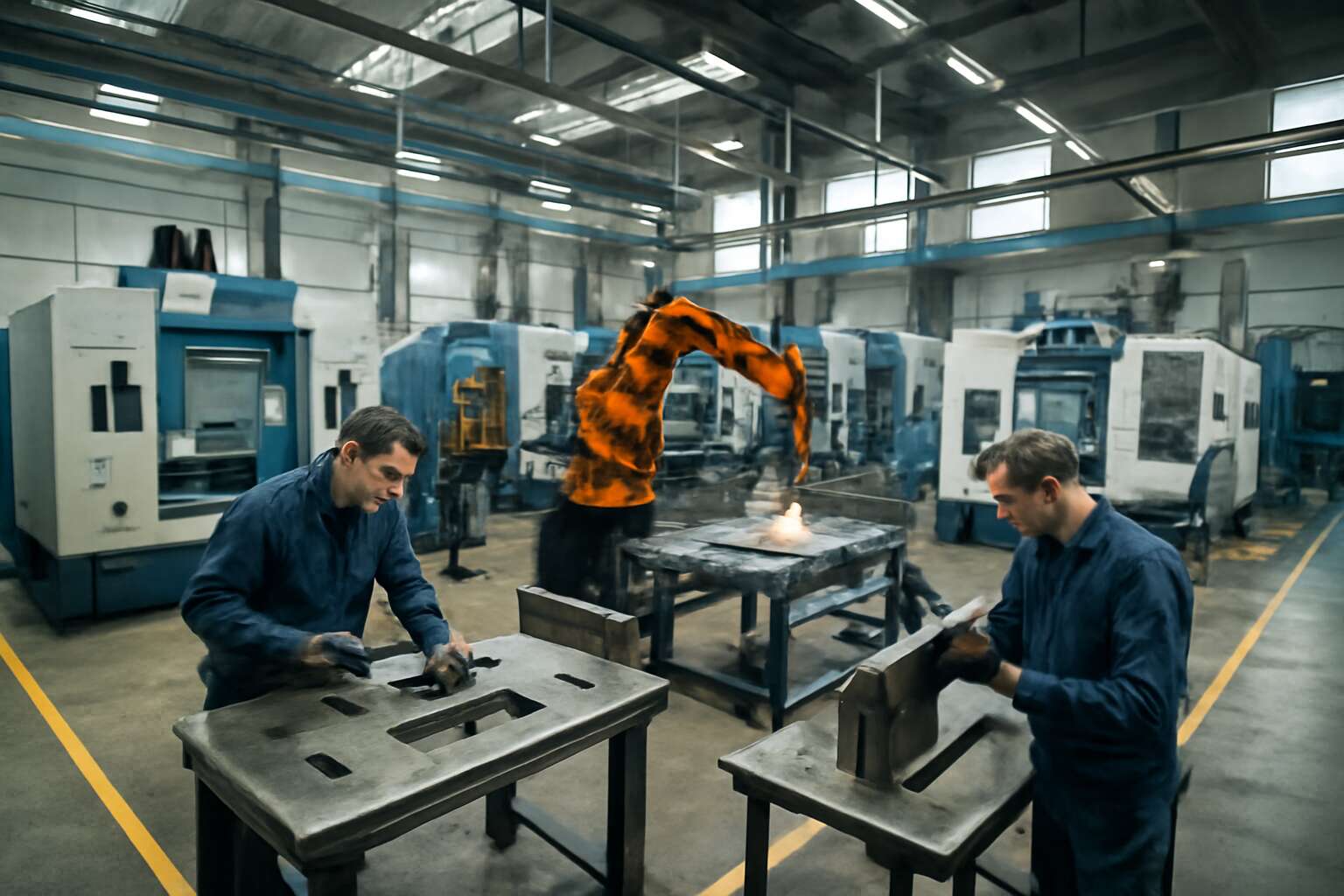
Global fabrication output rose 4.2% last year, a stubborn ascent that echoes in South Africa’s workshops. In this crucible of steel, fabrication companies walk a tight line between tradition and tomorrow, turning grit into precision and routine into poetry.
Industry trends cast a longer shadow: intelligent automation, additive strategies, and digital twins reproportion workflows; circular economies tighten waste loops; and near-shoring cushions the risk. For fabrication companies, resilience means compact factories, cloud-enabled planning, and skilled hands at the helm.
- Digital twins and predictive maintenance
- Automation and collaborative robots
- Localized supply chains and energy efficiency
In South Africa, the landscape favors those who blend craft with data, turning metal into meaning and projects into enduring infrastructure for communities and industry alike. For this sector, this is a canvas where skill and software converge, forging a future that’s as enduring as steel.
Key markets driving demand for fabrication services
In South Africa, a quiet drumbeat drives the industry: reliable delivery and precise tolerances. A veteran foreman quips, “The weld speaks louder than the brochure,” and the line sticks. Demand for fabrication companies threads through infrastructure, mining support, and renewable-energy components, demanding craftsmanship and dependable planning.
Key markets driving demand include:
- Mining and mineral-processing equipment
- Rail and civil infrastructure
- Renewable-energy structures
- Water and wastewater components
From where I stand, these sectors stitch the SA fabrication tapestry together—reliable, bold, and stubbornly on schedule.
For the sector, resilience means compact facilities and a culture of skill transfer, from workshop floor to site handover. Smart procurement and transparent timelines keep projects on track, with communities watching for the completion bell.
Outsourcing vs in-house fabrication decisions
Industry landscapes in South Africa are blurring the line between in-house craft and outsourcing. Outsourcing is a test of capacity and consistency, not a substitute for quality. As local projects push cadence and compliance, fabrication companies align with partners who deliver—on time, every time—without compromising the human touch on the shop floor.
Drivers shaping these decisions include:
- Access to specialized tooling and process know-how
- Capital-light scalability for project waves
- Faster ramp-up with predictable delivery windows
- Shared risk with rigorous quality controls
- Local skills development and supplier collaboration
In this terrain, digital traceability, modular thinking, and steadfast safety compliance guide a symbiotic ecosystem, where outsourcing and in-house teams co-create resilient infrastructure—precisely the kind of collaboration South Africa’s fabrication companies need to weather cycles.
Emerging materials and processes in fabrication
Across South Africa, fabrication companies are navigating a turning point where new materials and smarter processes compress timelines without sacrificing craft. Lightweight composites, corrosion-resistant alloys, and high-strength steels broaden the design envelope, while additive manufacturing and laser-assisted finishing push prototypes toward production-ready parts. In this landscape, digital traceability and modular thinking guide every weld, cut, and assembly so quality stays visible from first cut to final checkout.
- Additive manufacturing enables rapid prototyping and low-volume production
- Advanced composites and high-strength alloys deliver lighter, durable parts
- Robotic automation and adaptive machining preserve the human touch on the shop floor
Emerging materials and processes invite a new kind of collaboration—one where shops connect with material science partners, verify performance in real-world cycles, and deploy safety-compliant automation. For fabrication companies, the payoff is more predictable delivery windows, reduced waste, and the capacity to flex for waves of demand.
Capability Suites and Process Offerings
Metal fabrication services overview
Capability is the difference between a simple drawing and a customer’s wow, and in South Africa’s workshops it’s what keeps machines humming after lunch. “Capability isn’t flashy; it shows up when it counts,” jokes a seasoned fabricator, and the punchline lands: dependable parts arrive on time only when the shop runs like clockwork.
Capability suites arrange metal fabrication services into modular offerings that customers can mix and match: cutting and forming, joining, finishing, and sub-assembly. Each suite pairs process offerings with tight tolerances, material know-how, and quality checkpoints to turn raw sheet into sturdy parts and production-ready components.
- Laser cutting and punching
- Press braking, bending, and forming
- Welding, assembly, and fastening
- Surface finishing and inspection
Process offerings cover quoting, CAD-to-part workflows, standard tolerances, QA, and delivery coordination, ensuring traceability from stock to shipment. For fabrication companies in SA, this integrated approach reduces risk and speeds turnover without sacrificing precision.
Custom prototyping and one-off production
Manufacturing in SA runs on a simple obsession: getting the right part out on time, every time. For fabrication companies, capability is the quiet engine that keeps ships in port and projects on schedule.
Capability Suites turn a bulky service menu into modular strengths: Cutting and Forming; Joining; Finishing; Sub-Assembly. Each suite pairs with tight tolerances, material know‑how, and robust QA to turn a raw sheet into a production-ready component.
Process Offerings sit alongside—transparent quoting, CAD-to-part workflows, standard tolerances, QA, and delivery coordination—ensuring traceability from stock to shipment. Custom prototyping and one-off production slide in for pilots, mock-ups, and low-volume runs; perfect for de-risking new designs.
- Rapid prototyping cycles
- Low-volume production without compromise
- Full QA traceability
- Flexible change management
All of this is what fabrication companies in South Africa lean on when chasing dependable parts and faster time-to-market.
Welding, cutting, machining, and finishing processes
Speed and precision drive the line. The shop floor runs on a simple truth: get the right part out on time, every time. Capability Suites turn a bulky menu into modular strengths: Cutting and Forming; Joining; Finishing; Sub-Assembly. Welding, cutting, machining, and finishing are the core processes, tuned with tight tolerances, material know-how, and robust QA to transform a raw sheet into a production-ready component.
- Welding
- Cutting
- Machining
- Finishing
Process offerings sit alongside—transparent quoting, CAD-to-part workflows, standard tolerances, QA, and delivery coordination—ensuring traceability from stock to shipment. Custom prototyping and one-off production slide in for pilots, mock-ups, and low-volume runs; perfect for de-risking new designs.
For South Africa’s fabrication companies, this approach translates into dependable parts and faster time-to-market.
Material compatibility and tolerance capabilities
There’s a telling stat: 67% of on-time projects credit modular capability suites with smoother handoffs and fewer bottlenecks. In South Africa, that translates into less rework and happier customers for fabrication companies.
Capability Suites compress a bulky menu into modular strengths—structured work streams that blend design intent with practical manufacturing checks. Material compatibility and tolerance capabilities are not afterthoughts; they’re the map and compass, ensuring every part fits its intended use under real-world conditions.
- Material compatibility checks across common alloys
- Tolerance analysis and fit assessment
- Traceable QA and delivery coordination
For South Africa’s fabrication companies, this approach means dependable parts and faster time-to-market, delivering quiet confidence when every shipment leaves the dock.
Quality assurance and certifications in fabrication
In the fast lane of manufacturing, timing is the ultimate currency. A striking 67% of on-time projects credit modular capability suites with smoother handoffs—exactly the rhythm South Africa’s fabrication companies strive for. When promises become deliveries, confidence is the quiet profit of a well-run shop.
Capability Suites compress a bulky menu into modular strengths—structured work streams that blend design intent with practical manufacturing checks. Our Process Offerings map every step from concept to quantity, with traceable QA woven through the workflow, ensuring that each part earns its place in the final build.
- ISO 9001 Quality Management System
- ISO 45001 Occupational Health and Safety
- ISO 14001 Environmental Management
Quality assurance and certifications anchor every project, giving clients assurance as every shipment leaves the dock.
How to Select a Fabrication Partner
Certifications, standards, and compliance checks
“Trust is earned in the kiln of compliance,” a veteran fabricator likes to remind us. For South Africa’s fabrication companies, selecting a partner hinges on certifications, standards, and rigorous compliance checks. These signals travel beyond paperwork—they secure safety, longevity, and the momentum that turns a blueprint into a finished dream.
- ISO 9001 Quality Management System
- ISO 14001 Environmental Management
- ISO 45001 Occupational Health and Safety
- SABS mark or local compliance certification
- ISO 3834 Fusion Welding Quality
- ASME or other industry codes where applicable
Beyond stamps, the readiness of a partner to host audits, share material certificates, and present clear records of traceability speaks volumes. In this market, fabrication companies earn trust by weaving compliance into every weld and joint, not as an afterthought.
Capacity, scalability, and lead times
Capacity is not a number; it’s the heartbeat that keeps a blueprint on track, a whisper from the forge. In South Africa’s market, delays bloom when capacity misaligns with demand, with 40% longer lead times in many sectors. Choosing among fabrication companies hinges on more than price—it hinges on tempo: the ability to scale up and stay precise.
To gauge capacity and scalability, look beyond brochures. Demand a production calendar, run rate data, and changeover times. A partner should demonstrate ramp-up threads—how quickly can a line switch to a larger batch without sacrificing quality.
- Current order book, backlogs, and typical lead times
- Historical ramp-up performance for peak seasons
- Changeover times and line setup efficiency
Lead-time guarantees, stockholding options, and contingency plans for material shortages matter. A seasoned partner negotiates capacity with the schedule, not against it; the result is a predictable flow from draft to delivery.
Project management and collaboration tools
A recent industry pulse in South Africa found that 63% of schedule slips trace back to fragmented communication. That’s where choosing the right fabrication companies becomes less about price and more about tempo and trust.
The project management ecosystem reveals itself in the production calendars, run-rate dashboards, and changeover logs that accompany every order; a unified information stream surfaces data for buyers and makers alike.
- Real-time dashboards and milestone tracking
- Version-controlled drawings and BOMs
- Collaborative change-order workflows
When these tools sing in harmony, the tempo of a project mirrors the forge—steady, precise, and ultimately predictable from draft to delivery.
Cost models, quoting, and budgeting tips
Costs loom like shadows over the shop floor, yet a robust quote is a lantern. In South Africa’s metalwork corridors, a current industry pulse shows 63% of schedule slips trace back to fragmented communication. Choosing fabrication companies isn’t about price alone; it’s about tempo, trust, and the quiet math that binds design to delivery.
Cost models are the heartbeat of budgeting. Fixed-price promises a steady rhythm but tightens scope; time-and-materials honours evolving needs yet invites drift in the ledger; milestone-based terms align cash with progress and keep momentum from wilting. Ask quotes to illuminate what changes truly cost and where contingencies hide.
- Clear scope and documented change-order policies
- Transparent unit costs, BOM visibility, and material allowances
- Currency terms and payment schedules aligned with milestones
Communication, change control, and risk management
In South Africa’s metalwork corridors, 63% of schedule slips trace back to fragmented communication. Choosing a fabrication partner isn’t about price alone; it’s about tempo, trust, and the quiet math that binds design to delivery.
When evaluating fabrication companies, look for communication that feels more like a relay than a bottleneck. A partner who treats drawings as living documents, uses a clear change-control policy, and keeps risk discussions visible helps keep cashflow and timelines honest.
- Clear single point of contact and defined communication channels
- Documented change orders with traceable history and approvals
- Proactive risk management, including early mitigation plans and contingency options
Location considerations and supply chain resilience
In South Africa’s metalwork corridors, 63% of schedule slips trace back to fragmented communication — a reminder that where you locate your partners matters as much as what you build. Among fabrication companies, location isn’t a single checkbox; it’s a living thread that links design, procurement, and delivery.
Choose a partner with geographic alignment that reduces transit drag and keeps pace with demand cycles. Consider proximity to customers and suppliers, access to robust transport corridors, energy reliability, and local regulatory clarity. A resilient network often mirrors a well-tarried map: diverse sourcing, nearshore options, and clear, shared calendars.
- Proximity to transport arteries and customers
- Multiple vetted suppliers and regional access
- Transparent scheduling with clear contingency options
In this equation, the aim is steady tempo and trust—qualities that travel faster when the landscape is understood, not glossed over.
Applications, Case Studies, and ROI
Automotive and aerospace fabrication applications
Automotive and aerospace applications demand strength, precision, and endurance. For fabrication companies, every component carries weight—literally and metaphorically—as we balance safety with efficiency. From lightweight sheet-metal assemblies to intricate CNC housings, disciplined processes deliver reliable parts that perform under high stress and in demanding environments.
Case studies spotlight partnerships where design intent meets manufacturing mastery. A South African supplier reimagined a critical airframe bracket with modular sub-frames, cutting welds and boosting stiffness. The result: smoother assembly, shorter lead times, and a demonstrable uplift in reliability.
- Modular sub-frames reduce complexity
- Tighter tolerances for critical fits
- Robust surface finishes for corrosion resistance
ROI for aerospace and automotive projects is measured by time, waste, and warranty costs saved—a metric that fabrication companies understand. When digital tracking and poka-yoke practices align with production rhythm, profits follow.
- Cycle time reduction
- Material waste minimization
- On-time delivery and uptime
Industrial equipment and machinery fabrication
In South Africa’s industrial landscape, uptime hinges on one metric: a 20% cut in assembly time can unlock productivity. Industrial equipment and machinery demand components that endure grit, heat, and vibration. fabrication companies in SA craft rugged frames, precision housings, and modular panels for harsh environments like mines. The trick is balancing weight with stiffness, delivering corrosion resistance and reliable life without overbuilding. When finishes are disciplined and tolerances tight, downtime drops and uptime climbs.
Case studies reveal partnerships where design meets manufacturing mastery. A South African maker updated a conveyor drive housing with modular sub-frames, cutting welds and boosting stiffness. The outcome: quicker assembly, shorter lead times, and uplift in reliability across shifts.
ROI in industrial equipment projects is readable in time saved, waste avoided, and warranty costs trimmed. Digital tracking and poka-yoke practices align with production rhythms, turning efficiency into profits for fabrication companies and their clients alike.
Energy, infrastructure, and utilities projects
Energy, infrastructure, and utilities projects demand fabrication companies that endure South Africa’s field conditions. Substation enclosures, rugged cable trays, turbine supports, and modular panels must resist grit, heat, and vibration while staying tight on tolerances. Finishes and corrosion resistance aren’t add-ons; they’re the quiet alchemy behind uptime on harsh sites.
- Substation housings
- Rugged cable trays
- Mining-grade modular panels
Case studies show partnerships where design meets manufacturing mastery. A South African fabricator updated a transformer housing with modular sub-frames, cutting welds and boosting stiffness. The result: faster assembly and reliability across shifts.
ROI reveals itself in time saved, waste avoided, and warranty costs trimmed. Digital tracking and poka-yoke practices align with production rhythms, turning efficiency into profits for fabrication companies and clients alike.
Case studies: delivering value and ROI
Applications for fabrication companies in South Africa blend endurance and elegance. From remote substations to bustling industrial corridors, they craft site-ready enclosures, frames, and modular assemblies that shrug off grit, heat, and vibration. Finishes aren’t garnish but the quiet alchemy behind uptime; they turn rough metal into trusted partners on harsh sites. In short, the workflow respects production tempo and site conditions alike, delivering components that stay true under pressure.
- Site-ready enclosures and frames
- Corrosion-resistant finishes and coatings
- Modular assemblies for rapid deployment
Case studies show how design meets manufacturing mastery. A regional client partnered with a fabrication partner to reimagine a transformer housing with modular sub-frames, slashing weld counts and boosting stiffness. The result: faster assembly across shifts and steadier performance on long campaigns, even as temperatures swing and dust swirls.
ROI case studies reveal time saved, waste avoided, and warranty costs trimmed. Digital tracking and poka-yoke practices align with production rhythms, turning efficiency into profits for fabrication companies and clients alike.
Sustainability practices in fabrication processes
Applications across South Africa’s industrial spectrum show how fabrication processes power uptime—uptime can improve by up to 20% in high-demand corridors. For fabrication companies, the work goes beyond parts: it’s about modular assemblies and protective housings that withstand grit, heat, and vibration while fitting site realities.
Case studies illustrate design meets manufacturing mastery in real terms. A regional client combined practical design with lean production, adopting modular sub-frames that reduced weld counts and improved stiffness. The payoff: faster turnarounds across shifts and steadier performance on long campaigns—proof that it works on the floor!
ROI and sustainability go hand in hand in fabrication workflows. Digital tracking and simple poka-yoke practices align with production tempo, trimming warranty costs and waste while boosting uptime. This creates measurable savings and strengthens the case for partners seeking resilience and responsible sourcing.
- Energy efficiency improvements
- Waste reduction programs
- Lifecycle tracking and maintenance planning


0 Comments