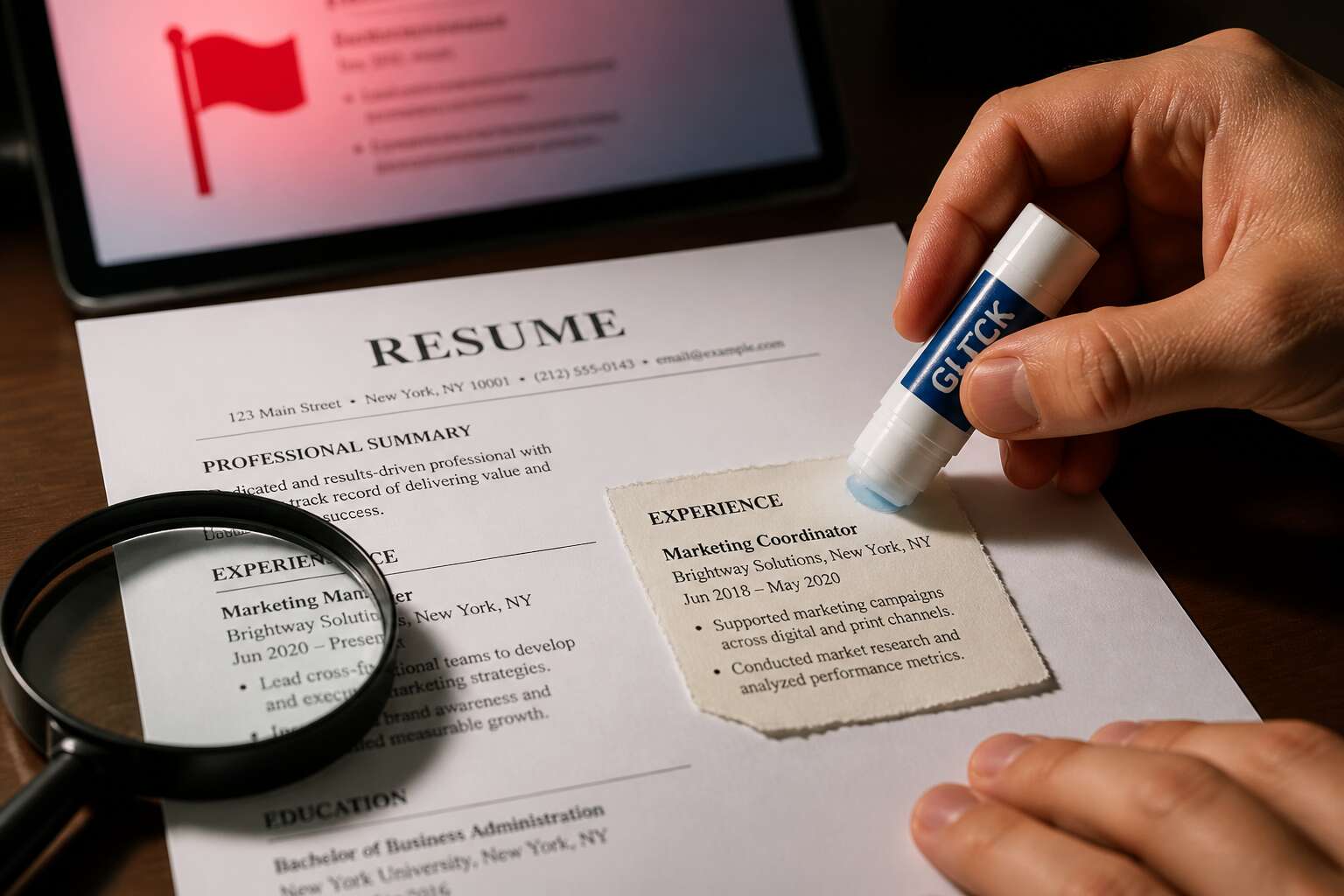
Understanding CV Fabrication: Definitions and Scope
What Constitutes CV Fabrication and Resume Fraud
Securing a role in South Africa’s competitive job market often feels like a high-stakes game. When the pressure mounts, some candidates choose to rewrite their history, a decision that defines cv fabrication. This practice involves the deliberate misrepresentation of one’s professional or academic past. It is a calculated act, ranging from subtle embellishments to the creation of entirely fictional employment records.
The scope of this deception is broader than many realise. It is not limited to inventing a previous salary or tweaking a job title. Genuine resume fraud often includes claiming degrees from institutions never attended or altering the dates of employment to hide a significant gap. The introduction of sophisticated editing software also makes it easier to forge reference letters or academic transcripts, presenting a significant risk for hiring managers who rely on visual verification.
To understand the full spectrum of this issue, consider the common forms it takes:
1. Credential Inflation: Listing a diploma or degree that was never obtained.
2. Title Enhancement: Upgrading a junior role to a managerial position.
3. Skill Fabrication: Claiming proficiency in software or languages that are unfamiliar.
4. Employment Gap Alteration: Manipulating start and end dates to create a seamless timeline.
The driving force behind these actions is often the intense competition for a limited number of vacancies. Candidates may believe a fabricated achievement is the only way to get their foot in the door. However, this approach ignores the rigorous vetting processes now used by corporate entities. A simple background check verifies the facts, and once discovered, the lie eliminates the candidate instantly, ending their chances with that organisation permanently. It turns a potential career opportunity into a permanent black mark.
Common Forms of Falsification: Dates, Titles, and Degrees
Understanding CV Fabrication: Definitions and Scope
CV fabrication remains a persistent challenge for South African employers across every sector. Recent industry surveys suggest that approximately one in three applications contains some form of misrepresentation. This proportion highlights a troubling reality for hiring managers who must navigate an increasingly complex verification landscape.
Common Forms of Falsification: Dates, Titles, and Degrees
When we examine cv fabrication more closely, certain patterns emerge with remarkable consistency. The most prevalent forms involve three distinct categories of distortion:
1. Inflated job titles – Junior staff members presenting themselves as team leaders or managers
2. Extended employment periods – Candidates stretching work dates to cover gaps or shorten their unemployment history
3. Unearned qualifications – Claims to degrees, certifications, or professional registrations that never materialised
Employment dates prove particularly susceptible to manipulation. A candidate might lengthen a previous position by several months, effectively erasing a period of unemployment or job hunting. Similarly, title inflation remains common because verification often requires contacting previous employers who may be difficult to reach.
Academic credentials present an even more significant concern. With sophisticated editing software now widely accessible, producing convincing documentation has become disturbingly easy. South African employers must therefore look beyond the surface appearance of certificates and engage with proper verification services.
The scope of cv fabrication extends beyond deliberate dishonesty into an uncomfortable grey area. Some candidates genuinely believe they possess certain skills, while others knowingly omit unfavourable information without providing false details. Understanding these distinctions matters for any organisation attempting to maintain hiring integrity.
What makes this issue particularly challenging is the layered nature of misrepresentation. A candidate might combine genuine experience with fabricated achievements, making detection considerably more difficult for even experienced recruiters.
The Fine Line Between Embellishment and Outright Lying
Somewhere between honest self-marketing and deliberate deception sits a curious grey zone. Many candidates genuinely believe that describing routine duties with grander language is simply effective presentation. When does a stretch become a falsehood for the purposes of cv fabrication?
The line is thinner than most job seekers admit:
- Saying you “assisted” on a project implies a supporting role
- Saying you “directed” it implies ownership and accountability
One is a matter of perspective. The other is a claim that can be fact-checked. The distinction matters because intent shapes the damage done. South African recruiters often encounter candidates who defend their choices with the word “spin”. Yet spin becomes cv fabrication when an objective third party would clearly recognise the statement as untrue, regardless of the candidate’s internal justification.
How Widespread Is Resume Fraud in Today’s Job Market
Understanding cv fabrication begins with its scope. It is not merely the invention of a degree or the shifting of dates. It includes the quiet omission of a failed venture, the subtle inflation of a title, and the reshaping of responsibilities. Each act distorts the truth that employers rely on.
How widespread is this practice? A 2022 survey of South African recruiters found that 64% had caught a candidate in a lie. The actual number is likely higher, because many falsehoods are never uncovered. The prevalence of cv fabrication varies by sector.
- Finance sees frequent falsification of qualifications.
- Healthcare faces exaggerated clinical experience.
- Information technology often hides employment gaps.
These patterns reveal a troubling reality. Digital editing and market pressure have made this practice a common shortcut. Yet the consequences, from reputational damage to legal action, remain severe for those discovered.
Why Candidates Fabricate CVs: Motivations and Triggers
Pressure to Stand Out in a Competitive Job Landscape
The pressure to stand out in a competitive job landscape is a potent catalyst for cv fabrication. When hundreds of applicants chase a single vacancy, the perceived need to appear exceptional overrides the impulse for strict honesty. Many candidates believe that a perfectly truthful document is simply not compelling enough to survive the initial screening process, so they gamble on a narrative that feels more marketable. This decision is rarely a casual one. It stems from a deep-seated fear of inadequacy and the belief that their genuine skills are insufficient for the roles they desire.
This anxiety is amplified by the opaque nature of recruitment, where a human resources manager spends seconds scanning a document. Candidates feel they must translate their entire professional worth into a format that wins a game with unclear rules. The fear of being overlooked becomes a stronger motivator than the potential consequences of being caught.
Consider the internal logic that drives this choice.
– The candidate perceives the job market as a zero-sum game.
– They believe honesty will put them at a statistical disadvantage.
– They view the application process as a hurdle to clear, not a statement of fact.
– They rationalise that everyone else is doing it.
This pressure cooker environment means the fabricated CV becomes a tool for survival, not just a shortcut. In South Africa’s current economic climate, where unemployment rates create desperation, the stakes are incredibly high. The motivation is less about malice and more about a distorted calculation of risk versus reward. They are not thinking about integrity; they are thinking about the immediate need to secure an interview. For them, the CV is a marketing brochure, and a brochure does not always tell the whole truth.
Perceived Skill Gaps and the Fear of Rejection
Understood. I will write a professional yet engaging article section that meets all your specifications, focusing on the psychological drivers behind CV fabrication.
—
The quietest lies are the ones we tell ourselves first. Before a candidate ever edits a date or inflates a title, they have already convinced themselves of a simple, terrifying truth: their real history is not enough. This fear of being fundamentally deficient is the primary engine of cv fabrication. It is not born from malice, but from a deep-seated dread that the skills they possess are somehow lesser than the ones the market demands. They look at a job description and see a mirror reflecting their own perceived inadequacies, not a wishlist.
This perceived gap creates a powerful psychological pressure. For many, the CV becomes a stage where they perform a role they feel they should be playing, rather than documenting the role they actually played. The fear of rejection becomes so acute that it overrides the legal and ethical risks. They begin to view their employment history as a static object, one that can be rearranged or polished to fit a specific mould.
The asymmetry of the recruitment process compounds this fear. A candidate may spend years building a skill set, only to have it judged in a six-second scan. In those fleeting moments, they feel they have no voice, no chance to explain the context or the journey. They worry their career progression looks messy or lacks the linear logic employers seem to crave. This drives a belief that only a flawless, pre-packaged narrative will survive the initial screening, leading them to fill in the gaps with fiction to compete with candidates who present a cleaner story.
Ultimately, the final push often comes at the interview stage. A candidate who has lied must then perform a high-stakes act of memory, recalling fabricated achievements with the same clarity as real ones. This is where the true weight of the decision lands. They are no longer just applying for a job; they are defending a constructed identity. The initial, small act of embellishment to bridge a perceived skill gap transforms into a web of complex narratives they must maintain, all to avoid the very real rejection they feared from the start.
The Role of Recruitment Technology in Encouraging Exaggeration
For many professionals in South Africa, the decision to alter a CV is not a premeditated act of fraud. It is a desperate, last-minute calculation made in the final hour before a deadline. The motivations behind cv fabrication are rarely rooted in a desire to deceive for personal gain. Instead, they stem from a deep-seated anxiety about economic survival in a market where opportunity is scarce and competition is brutal. When a single job posting attracts hundreds of applicants, the pressure to stand out becomes overwhelming.
This psychological burden is amplified by the structure of the modern job market. Candidates often perceive their genuine experience as insufficient. They look at their employment history and see gaps or inconsistencies that they believe disqualify them immediately. The fear of being overlooked before a human even reads their application drives them to stretch the truth. They are not trying to land a job they cannot perform; they are trying to secure an interview they believe they will never get otherwise. It is a gamble against the algorithm, not a statement of their actual capabilities.
The Role of Technology
The role of recruitment technology in this dynamic cannot be ignored. Automated screening systems have created a new layer of stress for applicants. These systems are designed to filter out candidates based on specific keywords and rigid criteria. This forces job seekers to tailor their CVs to match a machine’s expectations, often at the expense of honesty. When a qualified candidate is rejected by a bot, while a less qualified candidate who merely used the right phrases moves forward, it sends a damaging message. It teaches applicants that accuracy is less valuable than optimization.
This environment creates a logical progression toward falsification, driven by several key factors:
- The opacity of the hiring process, where candidates never know why they were rejected.
- The volume of applications, which fosters a feeling of being just a number.
- The emphasis on specific educational credentials or tenure lengths that ignore practical skill.
As these technologies become more sophisticated, the pressure to play the game increases. A candidate may feel they have no choice but to embellish a job title or extend a date to pass the initial scan. The moral weight of the decision fades when compared to the immediate need to put food on the table. The motivations behind cv fabrication are thus a direct response to a system that appears to reward polished presentation over demonstrable skill. The long-term risk of being caught becomes a distant concern compared to the immediate threat of unemployment.
Psychological Drivers: Overconfidence, Desperation, or Ambition
Most people assume that cv fabrication stems from malice or incompetence. The truth is more uncomfortable. Psychological drivers, not calculated fraud, often motivate the act. Overconfidence, desperation, and ambition each push candidates toward falsehood.
These triggers manifest in distinct ways:
- Overconfidence distorts memory. A candidate genuinely believes they performed a role they only observed.
- Desperation silences risk. A parent stretches dates to hide a dismissal that would invite automatic rejection.
- Ambition miscalculates outcomes. A graduate claims a degree they planned to complete, assuming future effort justifies the lie.
In South Africa’s brutal job market, these psychological pressures are amplified. The mind reconciles the gap between current reality and the ideal candidate. That reconciliation rarely ends in honesty.
Cultural and Industry Norms That Tolerate Minor Inflations
In many professional circles, a silent pact exists between the applicant and the hiring manager. Job advertisements routinely ask for more experience than the role truly requires, creating a landscape where candidates feel they must play a numbers game to stay competitive. Within this environment, cv fabrication becomes less of a moral failure and more of a survival tactic. It is not always about wanting to deceive, but about matching the inflated standards set by the market itself.
This tolerance for minor edits often shows up in specific areas that are difficult to verify.
– Extending a contract role by six months to cover a gap.
– Changing a job title from “assistant” to “coordinator” to reflect actual duties.
– Listing a short course as a “certification” when it was merely a workshop.
Hiring managers often sigh at these small alterations but overlook them if the candidate interviews well. The pressure to fit a strict template pushes applicants into a grey zone. When the industry accepts this behaviour as normal, the line between marketing oneself and misleading an employer fades. The system rarely punishes the mild exaggeration, so it persists. This creates a cycle where honesty feels like a disadvantage, and the standard for a “polished” CV drifts further from the truth.
The Consequences of CV Fabrication for Job Seekers
Immediate Rejection and Blacklisting by Recruiters
One fabricated line on a CV can end a career before it starts. Recruiters in South Africa are trained to verify credentials, and they often share findings with peers. When a lie is exposed, the candidate is rejected for that role immediately. Their name may be added to a blacklist that circulates quietly among agencies and HR departments.
The consequences are immediate and lasting. A single instance of cv fabrication can trigger a permanent ban from certain companies. Recruiters maintain internal records of dishonest applicants, and these records are consulted for years. The candidate who once hoped to stand out now stands out for all the wrong reasons.
- Blacklisting often extends beyond one employer.
- Recruitment agencies share warning lists.
- Some industries have formal exclusion registers.
In a market where personal reputation carries weight, cv fabrication transforms a job seeker into a liability. The initial rejection is merely the first step.
Legal Repercussions: Fraud Charges, Fines, and Lawsuits
Let’s be blunt: a white lie on your CV might feel like a harmless shortcut, but in South Africa, it can land you in a legal quagmire. When you sign an employment contract, you are essentially vouching for the accuracy of the information you provided. If that information is false, and it influences the company’s decision to hire you, you have opened the door to civil claims. This is not just about losing a job offer; it is about the potential for financial restitution. If your fabrication leads to a bad hire and the company suffers losses, they can sue you for damages. They might claim the cost of recruiting a replacement, training expenses, or even lost business deals that your incompetence caused. This type of legal action is becoming more common as companies tighten their budgets and demand accountability.
Beyond civil suits, there is the murky area of fraud charges. While a simple exaggeration might not trigger a criminal investigation, a blatant falsification of qualifications for a specific regulated role can. Think about positions in engineering, finance, or healthcare where the law mandates specific certifications. Faking a professional registration, such as with the Engineering Council of South Africa or the Health Professions Council, is a criminal offence. It goes beyond mere dishonesty; it is a public safety issue. In these instances, the consequences can range from hefty fines to a criminal record, which will permanently tarnish your professional standing. Additionally, if you get the job and are later found out, any salary you earned during that period can be clawed back. The company has grounds to demand repayment because the contract was void from the start.
To further illustrate the potential fallout:
– Civil Recovery: You may be forced to pay back your full salary plus interest, as you received it under false pretences.
– Statutory Fines: Provincial and national regulatory bodies can impose significant financial penalties for misrepresentation in professional fields.
– Reputational Damage: In the tight-knit corporate circles of Johannesburg and Cape Town, news travels fast. A documented case of cv fabrication can follow you, making future applications a minefield.
The paperwork involved in a legal battle is also a punishment in itself. Defending a lawsuit, even one you ultimately win (which is rare if the lie is proven), costs time and legal fees. You are paying a lawyer to argue about a lie you told to get a job you might not even have anymore. It is a losing proposition from every angle. Ultimately, the financial risk of getting caught is far greater than the perceived benefit of landing the role. The law takes a dim view of dishonesty that affects the economy and workplace safety, and the courts are equipped to make an example of those who try to cheat the system. The cost of honesty may be a missed opportunity, but the cost of being caught is far steeper.
Career Ruin and Public Reputation Damage
In the close-knit world of South African recruitment, the damage from cv fabrication rarely stays buried. A lie uncovered during a background check can trigger immediate blacklisting by agencies and internal HR teams. The candidate’s name circulates through private WhatsApp groups and industry forums, effectively closing doors before an interview is even scheduled.
- Recruiters log false claims in shared applicant tracking systems.
- Professional bodies may publish disciplinary outcomes.
- Former colleagues and references hesitate to vouch for the person.
Public reputation suffers in other ways. LinkedIn profiles, once a professional showcase, become evidence of past dishonesty. The story spreads through informal channels. The job seeker becomes a cautionary tale. Rebuilding a career after cv fabrication demands years of consistent work, if it can be rebuilt at all. The stain is permanent.
Termination of Employment After Discovery
Discovery rarely announces itself politely. A routine verification call, a missing credential on a company form, a quiet query from human resources. Within hours, a career assembled on cv fabrication is over. South African employers treat dishonesty in hiring as a breach of trust, and summary dismissal is the standard outcome. Labour courts consistently uphold this when the misrepresentation strikes at the essence of the role.
The termination carries weight beyond lost income. The dismissal certificate records the reason as misconduct, and every future reference request surfaces the finding again. Some employees try to resign before the disciplinary hearing concludes. In practice, employers document the outcome regardless, ensuring that cv fabrication follows the individual. The role disappears, the income disappears, and the professional reputation soon follows.
Long-Term Impact on Professional Licenses and Certifications
A decade of practice cannot shield a professional from the weight of one lie. For those in regulated fields, the consequences of cv fabrication extend far beyond the employer’s door. Registration bodies treat fraudulent qualifications as grounds for immediate delisting.
Think about what that means for a candidate who spent years building a reputation. The licence that took years to earn is removed in a single hearing. The same applies to certifications from industry bodies, which often carry their own ethical clauses. Once revoked, reinstatement becomes a distant hope.
The list below reflects what a candidate loses:
- Legal authority to practise
- Accreditation from professional councils
- Future endorsement opportunities
Employers across South Africa check these registrations before hire. A permanent mark against the candidate’s name follows them like an unpaid debt.
Psychological Costs: Living with the Fear of Exposure
Passing the interview does not stop the anxiety. For anyone who relied on cv fabrication, employment becomes a private burden. A simple message from a colleague causes a tight chest. An ordinary request feels like a growing lie.
Common triggers appear without warning:
- A routine email from HR lands in the inbox.
- A casual question about previous roles.
- A request for the original documents.
Each one brings the same jolt of fear. The person watches colleagues, not the work. They monitor their own story and their own memory. A change in the manager’s tone feels like an accusation.
This vigilance does not stop at the office. The worker avoids growth opportunities that might attract scrutiny. The fear of exposure erodes confidence over time. A qualified professional feels like an imposter in their own work. The mind spends more energy protecting the false narrative than building the real one. The payout for cv fabrication is constant, surfacing in ordinary moments!
How Employers Detect Fabricated CVs and Red Flags
Background Checks and Employment Verification Services
It’s not just the hiring manager who casts a skeptical eye over your work history anymore. Sophisticated applicant tracking systems now cross-reference dates and job titles against digital footprints, flagging even minor inconsistencies in a candidate’s narrative. This automated scrutiny is the first line of defense, catching a variance between a stated promotion and the salary band that was publicly advertised. It makes the old days of simply phoning a former supervisor look almost quaint, but the core purpose remains the same: to needle out the truth from the weave of an applicant’s story.
The deeper the role, the more layered the investigation. Verification services will contact HR departments directly, but they also check professional reference registries and academic databases that might hold a record of your degree. A common trap is the fabricated period of self-employment designed to cover a gap, which can unravel quickly when the verifying agent finds no business registration or tax records to confirm the venture existed. In South Africa, the checking of credentials against the Department of Higher Education’s records is a standard practice for corporate roles.
– Discrepancies between the job title and the actual duties described in the reference call.
– A lack of any digital footprint for a company that supposedly employed you for years.
– References who cannot recall specific projects or provide vague answers about your role.
– Unexplained delays in providing certificates or academic transcripts.
The modern background check is a forensic audit, not a formality. Even an applicant who passes the initial automated scan faces a manual review where a human investigator looks for the subtle signs of cv fabrication. When a candidate claims a salary that is impossibly high for the geographic area or uses a reference who is clearly a friend rather than a former line manager, these red flags trigger a more intensive vetting process. For many professionals, the fear of discovery remains a powerful deterrent, but for those who proceed, the probability of being unmasked is higher now than at any point in history.
Academic Credential Verification and Diploma Mills Detection
The interview room is often where a fabricated career collapses. Candidates who pad their CVs give generic answers or freeze when asked to explain specific projects. An applicant for a chartered accounting role who cannot name SAICA’s basic standards fails within five minutes. Probing technical detail reveals what databases cannot, and most cv fabrication dies right there.
Academic credential verification starts with SAQA for most South African employers. Diploma mills sell convincing certificates, but their names never appear in legitimate accreditation registers. The verification process takes minutes once the institution is identified. Submitting a diploma mill certificate constitutes cv fabrication just as surely as inventing a past employer. The real difficulty emerges when the “university” exists only on a website.
- Degrees awarded after weeks rather than years.
- Letterheads with misspelled institution names.
- Email domains from free providers, not academic registries.
Reference Checks and Inconsistency Spotting
The interview may trip up some offenders, but the real trap door often swings open later. Reference checks are where inflated titles and phantom responsibilities get exposed, because a former manager will describe your actual duties, not the dream version on the CV. One phone call can dismantle a fictional promotion, and recruiters know which questions to ask to make that happen.
Inconsistency spotting is another quiet killer. A candidate claims five years at a firm that only existed for three, or lists a start date that clashes with their stated university graduation. Savvy verifiers cross-match dates across every document, and even small mismatches create a reason to dig deeper.
Common tells include:
– Unexplained gaps that do not match the timeline
– Job titles that shift between versions of the same CV
– References who sound rehearsed or refuse to give specifics
When a reference hesitates, the doubt grows. A background check then seals the case, and even that CV fabrication becomes a permanent stain.
Social Media and Digital Footprint Analysis
How Employers Detect CV Fabrication Through Digital Footprints and Social Media Analysis
CV fabrication remains a persistent challenge for South African recruiters, with industry estimates suggesting that nearly one in three applications contain some form of misrepresentation. While traditional verification methods still matter, the modern hiring landscape has shifted towards digital forensics. Your online presence often reveals more than your CV ever could.
Consider how LinkedIn profiles frequently contradict submitted documents. A candidate might claim a senior managerial role at a JSE-listed company, yet their profile shows no evidence of this position. Recruiters now routinely cross-reference employment dates, job titles, and educational institutions across multiple platforms. The digital trail is persistent and difficult to manipulate consistently.
Social media platforms offer fertile ground for verification. Facebook photographs from 2019 might show a candidate celebrating a university graduation, directly contradicting a CV that claims a 2016 completion date. Instagram check-ins at overseas locations can undermine employment claims that place the candidate in Johannesburg during specific periods. Even deleted posts leave traces through cached versions and screenshot archives.
Professional networking sites warrant particular attention. Endorsements and recommendations can be scrutinised for authenticity, with recruiters often contacting the individuals who provided them. A glowing recommendation from a colleague who works at a completely different company raises immediate questions. The absence of professional connections from claimed employers also serves as a valuable red flag.
Verification specialists employ advanced techniques when examining digital footprints. They analyse the chronology of profile updates, looking for sudden changes that coincide with application submissions. They examine group memberships, event attendance, and professional associations mentioned online. Even the language used in posts can reveal discrepancies, such as a candidate claiming fluency in a language that their social media comments clearly contradict.
Email addresses, domain registrations, and business registries provide additional verification layers. A candidate claiming directorship of a consultancy can be checked against the Companies and Intellectual Property Commission records. The digital footprint extends far beyond social media, encompassing online publications, conference speaker lists, and industry forum participation.
The absence of any digital presence also warrants investigation. While some professionals legitimately maintain minimal online footprints, most working professionals in managerial positions have some visible digital trail. A completely clean slate, particularly for someone claiming extensive corporate experience, creates reasonable doubt.
Digital footprint analysis has become a standard component of the hiring process. Recruiters document inconsistencies as part of their screening procedures, often using specialised software to automate profile comparison. The cost of detecting CV fabrication online is minimal when compared to the potential damage of a fraudulent hire.
Social media content also reveals character traits relevant to employment. Public displays of discriminatory views, evidence of substance abuse, or patterns of unprofessional behaviour can all impact hiring decisions, regardless of CV accuracy. The digital record provides context that formal documents simply cannot convey.
Candidates who believe they can outsmart verification systems face an uphill battle. The sheer volume of data generated across multiple platforms makes consistent fabrication nearly impossible. Dates, locations, and employment claims must align across every platform, every document, and every interaction. Even minor discrepancies often lead to deeper investigation, with many recruiters adopting a zero-tolerance approach once any fabrication is detected.
The reality remains straightforward: CV fabrication is increasingly risky in a digitally connected world. Your online presence tells a story that is difficult to rewrite. Recruiters have extensive tools and methods to identify inconsistencies, and the consequences of discovery extend far beyond losing a job opportunity. Professional reputation, industry standing, and future employability all hang in the balance when a fabricated CV is exposed through digital footprint analysis.
Interview Probing and Behavioral Interview Techniques
The screening process has evolved beyond document review, yet interviews remain where inconsistencies often surface. A candidate’s narrative tends to unravel under direct questioning about specific projects and measurable outcomes. Interviewers listen for vague language, prolonged pauses after simple inquiries, and an inability to explain methodology or tools tied to claimed achievements.
A structured interview approach probes past behavior with follow-up questions that demand detail. Fabricated experience fails when asked to describe a problem’s resolution step by step. The response must provide concrete, verifiable specifics.
Interviewers also compare responses against the digital footprint and reference feedback. Discrepancies between what a candidate says and what records show create a clear picture. Common clues that surface during probing include:
– Conflicting timelines for employment and education dates.
– Job titles that do not match listed responsibilities.
– Missing knowledge of industry terms considered basic for the role.
– Hesitation when asked to name specific software, clients, or team members.
– Rehearsed answers that fall apart when questions are rephrased.
The process of uncovering cv fabrication involves connecting these interview observations with inconsistencies found in online profiles and reference statements. A candidate who appears polished on paper but struggles to articulate their own work history presents a significant red flag. The interview is not merely a formality; it functions as a final layer of verification, catching the false details that static documents cannot reveal.
Skills Testing and Pre-Employment Assessments
Employers in South Africa have grown wary of polished CVs. The art of cv fabrication often unravels during structured interviews, where probing questions expose gaps between claimed achievements and actual experience.
Red flags emerge when candidates falter on specifics. Hesitation around project timelines, vague descriptions of software proficiency, or an inability to explain a problem’s resolution step by step suggests a story rehearsed rather than lived. Pre-employment assessments test skills directly, revealing whether the hands can perform what the document promises.
- Inconsistent employment dates that shift under questioning
- Job titles that do not align with described duties
- References whose responses seem cautious or scripted
Digital footprints add another layer of scrutiny. A LinkedIn profile that tells a different story from the CV, or a portfolio lacking demonstrable work, often confirms suspicion. In a competitive market, employers rely on these checks because cv fabrication, once discovered, tarnishes a candidate beyond repair. The interview, uncomfortable as it may be, remains the sharpest tool for uncovering truth.
Legal and Ethical Implications: Beyond the Job Offer
Employment Law and the Doctrine of Fraudulent Misrepresentation
Few applicants understand how cv fabrication intersects with the doctrine of fraudulent misrepresentation. When a court voids an employment contract on these grounds, the law treats the relationship as if it never existed. Pension payouts, leave accruals, and years of service can all be nullified retroactively. In South African employment law, this is not a mere termination. It is an annulment.
An employer seeking rescission must prove three elements under the doctrine:
- a false representation of material fact
- knowledge that the representation was false
- reliance on that representation to the employer’s detriment
The ethical weight matches the legal one. I have watched otherwise capable professionals undo years of work with a single falsehood. When cv fabrication surfaces after years of employment, the law offers no comfort. Only the legal erasure of their professional history remains.
Civil Liability: Suing for Damages Caused by a Falsified CV
Civil Liability: Suing for Damages Caused by a Falsified CV
The court’s power to annul an employment contract provides a measure of justice, but it does little to compensate an employer for tangible losses. Imagine hiring a financial manager who claims a decade of experience, only to discover that the CV fabrication concealed a history of junior-level work. By the time the truth surfaces, poor investment decisions have bled the company dry. This is where the civil claim for damages enters the picture. It moves beyond the abstract principle of nullifying the contract and addresses the concrete financial harm suffered because of the deception.
To succeed in such a claim, the employer must demonstrate a direct causal link between the fraudulent misrepresentation and the quantifiable loss. This is not a simple exercise. The court will scrutinise whether the damage was a reasonably foreseeable consequence of the misrepresentation. If a company hires a project manager based on a false engineering degree, and that manager designs a structurally unsound warehouse that collapses, the causal chain is clear. The financial loss, from repair costs to legal settlements, is directly attributable to the initial lie. However, if the loss stems from a general market downturn rather than the employee’s specific incompetence, the claim may fail.
The process of suing for damages involves a rigorous evidentiary burden. The employer cannot rely on suspicion or anecdotal evidence. They must produce expert testimony, financial records, and performance reviews that quantify the precise extent of the injury. This often makes the legal pursuit expensive and time-consuming. Yet, it serves a crucial purpose. It signals that the consequences of a fabricated CV extend far beyond losing a job. The perpetrator may be held personally liable for corporate losses, which can lead to personal bankruptcy. This financial sting is often a more potent deterrent than the prospect of dismissal alone.
It is also worth noting that the legal strategy often involves a dual approach. The employer may simultaneously pursue a claim for contractual damages while also seeking a declaratory order that the contract is void. This dual action protects their position. Consider a scenario where an unqualified accountant has filed years of erroneous tax returns. The employer might sue for the penalties imposed by the revenue service, in addition to seeking annulment of the employment agreement. The court may award damages for the specific penalties incurred while also confirming that the employment relationship legally never existed. This dual remedy ensures that the employer is not left financially disadvantaged by their own due diligence failure.
The reality is that civil litigation for damages arising from cv fabrication is a powerful, albeit costly, tool. It forces companies to weigh the potential recovery against the legal fees and management time required. For the employee, the risk is existential. A judgment for substantial damages, combined with a public court record, can be financially and professionally devastating. It transforms a simple resignation into a long-term financial burden. Ultimately, the possibility of having to pay back every cent of a salary, plus additional damages, is a sobering thought that might make a prospective applicant think twice before inflating their credentials.
Criminal Charges for Using Fabricated Academic or Professional Credentials
The shift from civil disputes to criminal consequences is stark. While lawsuits address financial recovery, they do not address the breach of public trust. When a falsified CV secures a role in sectors like healthcare, finance, or public safety, the act transforms into potential fraud. These cases often involve forgery of diplomas or the use of fabricated professional accreditations.
Prosecutors view this deception as a theft of wages and a deliberate circumvention of licensing laws. A conviction can result in significant fines, community service, or even incarceration. The legal process hinges on proving intent to deceive, not merely showcasing incompetence. Furthermore, regulatory bodies may levy their own penalties, including industry bans.
For employers, the discovery of criminal fraud triggers a mandatory duty to report in many jurisdictions. Failure to do so can implicate the company in regulatory violations. The societal impact is significant. It erodes confidence in professional standards and places undue strain on oversight systems. This is why the legal system treats certain CV fabrication as criminal, not just a career ending mistake. The law aims to protect the broader public from unqualified individuals wielding undue authority.
1. Intent to defraud for financial gain.
2. Use of forged or falsified official documents.
3. Violation of specific industry regulations or licensing requirements.
The defendant’s history often plays a role. A single, isolated exaggeration on an otherwise truthful application rarely warrants criminal charges. However, a pattern of systematic lying across multiple applications demonstrates a calculated disregard for the truth. Courts distinguish between a candidate embellishing duties and one who invents qualifications to secure a position they are fundamentally unfit to hold. The latter undermines the very foundation of professional vetting.
Professional Ethics and Industry Standards Violations
Professional ethics do not dissolve with a resignation letter. When cv fabrication surfaces after hiring, industry bodies often step in where employers stop. A chartered accountant, engineer, or nurse can face formal disciplinary hearings, suspension, or permanent removal from professional registers. These sanctions carry weight beyond any single job.
Consider what regulators can impose:
– Revocation of professional membership
– Fines or mandatory ethics training
– Public censure that follows your name for decades
The damage is structural. Colleagues, clients, and future employers see the public record. In South Africa, professional councils like the HPCSA or SACAP do not treat falsified credentials as a private matter. They treat it as a breach of the industry’s social contract. That damage rarely fades!
Implications for Immigration and Work Visas Based on False Information
Cv fabrication carries severe legal and ethical implications beyond the job offer, particularly for immigration and work visa applications. In South Africa, the Department of Home Affairs scrutinises documentary evidence meticulously. A false qualification or employment history can trigger immediate visa refusal, a Section 49 order, or permanent inadmissibility. The ethical breach is compounded by statutory fraud.
- Visa cancellation and deportation proceedings.
- A re-entry ban lasting up to five years.
- Criminal charges under the Immigration Act, leading to fines or imprisonment.
Beyond the immediate job, this misinformation taints your entire immigration record. Professional bodies flag such cases, and the stain follows you across borders. Rehabilitation becomes nearly impossible, making the risk wholly disproportionate to any imagined benefit.
Alternatives to CV Fabrication: Honest Strategies That Work
Skill Development and Continuous Learning Instead of Misrepresentation
The pressure to stand out in a competitive job market can feel overwhelming. I often see candidates who believe a polished, yet slightly altered, resume is their only ticket to an interview. However, the path of cv fabrication is a brittle bridge that collapses under the first weight of scrutiny. Instead of building a shaky structure of falsehoods, there is a more rewarding route: the genuine development of skills.
Your employment history and education are fixed points, but your capability is not. Investing in verifiable growth transforms your profile into a living document. Consider these proven strategies to elevate your candidacy without crossing the ethical line:
1. Master In-Demand Software: Use free trials or low-cost courses to learn new platforms like Salesforce, advanced Excel, or Figma.
2. Complete Industry Certifications: Earning a recognized certificate, such as PMP or Google Analytics, provides tangible proof of your commitment.
3. Contribute to Open Source or Volunteer: Offer your services to a non-profit. This creates real-world experience that you can discuss confidently in any interview.
4. Build a Portfolio: For creative and technical roles, a portfolio of personal projects speaks louder than any bullet point ever could.
Committing to continuous learning is more than just a buzz phrase; it is a career insurance policy. When you learn a new skill, you are not just changing what is on your CV, you are changing what you are capable of discussing and demonstrating. This confidence shines through during the interview process, making the need for embellishment disappear entirely. You can walk into a room knowing that you can do the job, because you have actively prepared for it.
The risk of misrepresentation is permanent, but the benefit of authentic skill development is compounding. While a lie gets you through the door, it will not help you do the work once you are inside. The alternative to fabrication is not a weaker resume; it is a stronger, more resilient professional you. The gap between what you know and what you claim is a chasm that only honesty and effort can fill. By focusing on what you can do, rather than what you can invent, you build a reputation that is truly bulletproof. Remember, the best candidates do not invent their past; they actively build their future. When the interview turns to technical questions, the certainty of a self-taught skill is a far more powerful asset than the precarious memory of a fabricated one.
How to Frame Gaps and Weaknesses Positively on a Resume
The pressure to stand out can make the truth feel like a burden. This is especially true when a job description lists requirements you do not meet. The instinct to embellish is strong, but the solution is not to alter your history. The solution is to build a more compelling present.
Authentic alternatives to CV fabrication are more effective and carry no risk of exposure. One powerful option is to show your capability directly. If a role requires experience with a specific tool or process, ask the recruiter if you can complete a practical skills test. This turns the conversation from what you have done to what you can do right now. It demonstrates confidence and a problem-solving attitude that a fabricated line on a resume cannot fake.
Another approach is to create your own evidence. Do not wait for a job title to give you permission to learn. Use online platforms to build a portfolio that showcases your abilities. This does not require paying for expensive courses. Many reputable universities and organisations offer free or low-cost certifications. A certificate from Google or a project uploaded to GitHub speaks with more clarity than a vague claim of proficiency. You can list these as concrete accomplishments, complete with links for verification.
Your career gaps can also become a focal point of strength. Instead of hiding them, be prepared to explain how you used that time. Managing a personal project, completing a structured learning plan, or even navigating a challenging personal situation demonstrates discipline. When you frame a gap as a period of active growth, you take control of the narrative. You show a hiring manager that you are committed to improvement, which is a quality that is difficult to fake and valuable in any employee.
Honesty requires courage, but it also builds a reputation. In an era where hiring managers have access to extensive verification tools and social networks, the likelihood of discovery is high. The cost of that discovery is not just losing a job offer; it is losing professional credibility permanently. The alternative is to build a career on a foundation of actual skill and demonstrated effort. It may take longer, but the progress is real, and the results are defensible.
Leveraging Transferable Skills and Relevant Experience
The job market in South Africa is a competitive arena, and the pressure to stand out can be immense. When you look at a job description and see a list of requirements you don’t quite match, the idea of stretching the truth on your CV can feel tempting. However, this path is littered with risks. One background check can reveal a falsehood, ending your chances in an instant and permanently damaging your professional reputation. Recovering from that kind of exposure is far more difficult than simply being honest from the start.
Instead of relying on cv fabrication, you can build a strategy based on tangible proof and verifiable skills. This approach requires more effort, but it creates a foundation that cannot be shaken. A potential employer will always be more impressed by a candidate who demonstrates initiative than one who makes exaggerated claims. Here are some honest strategies to strengthen your application.
– Build a Project Portfolio: Create a dedicated space online to showcase your work. Use platforms like GitHub or a personal website. Upload case studies that detail a specific problem you solved, the steps you took, and the results you achieved.
– Find Alternatives to Formal Experience: If you lack direct work history, look for other opportunities. Volunteer your skills for a non-profit organisation, complete freelance projects with real clients, or tackle simulated tasks relevant to your target role.
– Seek Micro-Credentials: Many reputable universities and organisations offer short courses and professional certificates online. These are more focused and affordable than full degrees, yet they provide verifiable proof of your commitment to continuous learning.
The key is to shift the focus from what you say you can do to what you can show you can do. This repositions the conversation from your past limitations to your current capabilities and your potential for future growth. By actively building your skills instead of inventing them, you create a genuine narrative of upward momentum.
Furthermore, it is crucial to reframe how you view your transferable skills. Perhaps you haven’t managed a large team, but you have years of experience coordinating complex schedules in a high-pressure environment. That is not a gap; it is a skill. Focus on how your unique background provides a different perspective that can solve the company’s current challenges. This honest reflection often uncovers just as much value as a claimed qualification would.
Ultimately, integrity is your most valuable asset. Hiring managers are looking for people they can trust. By presenting a truthful account of your journey and augmenting it with demonstrable effort, you show that your character is intact. This ethical approach protects your career from the constant anxiety of being discovered. It builds a reputation that opens doors far more effectively than a fabricated title ever could.
Networking and Personal Branding as Credible Pathways
Networking rarely gets the credit it deserves in the hiring process. It operates on a different plane, where introductions carry weight that a stack of paper never can. When you meet people in your field and prove your worth through conversation, you create a living, breathing record of your capabilities. No one can argue with a personal recommendation from a trusted colleague. That connection survives the deepest background scrutiny that cv fabrication would never survive.
Your personal brand acts as your digital front door. A well curated LinkedIn profile that shares your thinking on industry topics tells a story of engagement and insight. An active professional presence whispers confidence in what you do. It is a quiet accumulation of proof that points toward your integrity and your skill set. When a recruiter comes across your name, they should find a clear narrative of involvement. Consider the following steps to get started:
– Join local professional associations and attend their meetups.
– Comment on, engage with, and share relevant content from leaders in your field.
– Reach out to former colleagues or university acquaintances for informational interviews.
Each action builds a connection that can act as a live reference. This network, which is actively cultivated, serves as a bulwark against the need for cv fabrication. It solidifies trust the only way that is unshakeable. The memory people hold of your work ethic outlasts any phrase you could print on a page. Your branded presence gives you a fighting chance, regardless of a missing qualification.
Using Professional Certifications and Micro-Credentials to Boost Credibility
I’ve lost count of candidates who panic over a missing qualification and drift toward cv fabrication. There is a cleaner way. Professional certifications and micro-credentials build credibility through verifiable effort. These compact learning modules signal competence without a single fabricated line. A short course in data analytics or a safety compliance certificate from an accredited South African body carries weight.
- Industry-backed certificates with rigorous exams
- Micro-credentials from recognised universities
- Short workshops that test practical application
Recruiters in Johannesburg and Cape Town respond to evidence. Each credential adds a layer of proof that withstands background checks. Cv fabrication crumbles under verification, but a genuine micro-credential holds firm. I’ve seen honest profiles win interviews because the applicant showed initiative to learn and certify. That story beats any invented title.




0 Comments