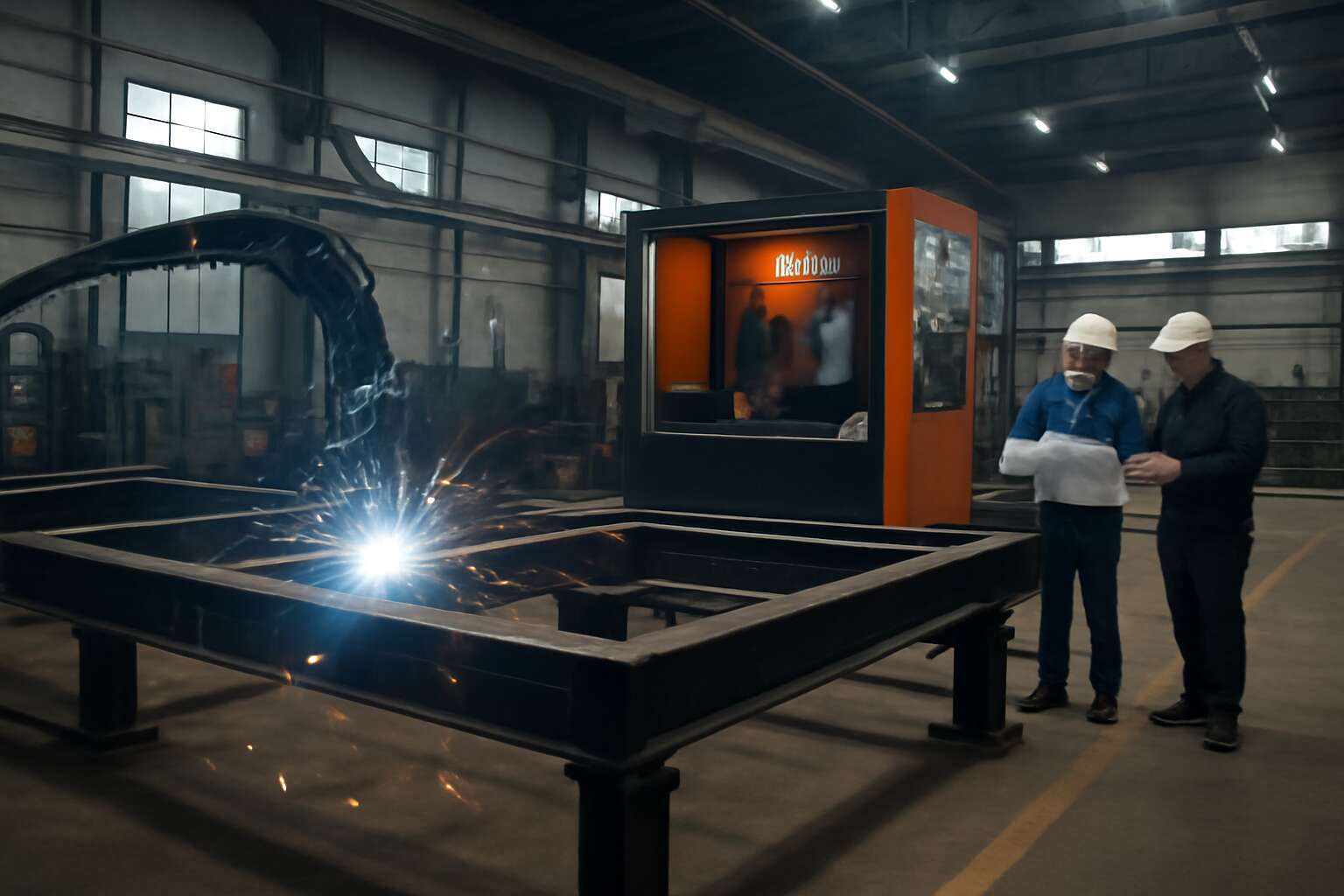
Fabrication and Production Techniques
Process fundamentals and planning for large-scale fabrication
In South Africa’s heavy industries, uptime can top 92% on major fabrications when planning leads the way, and that heartbeat keeps cranes singing and rails glittering. A well-timed process turns chaos into cathedral precision. In 7m fabrication, scale meets precision, and the quiet hum of machines becomes a deliberate rhythm. Mastery of process fundamentals and planning for large-scale fabrication is the quiet art behind every mile of girders and every welded seam.
- material traceability from raw stock to final part
- dimensional control and tolerance alignment across assemblies
- risk-informed scheduling with staged QA gates
Observers note teams thread tolerances and align workflows until the welds read like poetry in steel. The fabricator’s creed is simple: plan, stage, inspect. 7m fabrication demands this choreography, where every module fits as a stanza in a larger, disciplined narrative that travels from workshop to skyline.
Materials and technology for seven-meter fabrication
In South Africa’s heavy yards, uptime on long fabrications often tops 92% when technique and materials align—an audacious tempo that defines 7m fabrication. The narrative blends scale with discipline, turning unwieldy stock into precision-ready girders. Every weld and cut is guided by a clear vision: a safe, efficient ascent from workshop to skyline.
Materials and technology drive performance across long spans, balancing strength, weldability and lifecycle costs. The right mix sustains uptime and tolerances, while automation eliminates drift and repeating errors.
- High-strength structural steels and weathering steels to resist fatigue and exposure.
- Advanced alloys and coatings for corrosion resistance in harsh SA environments.
- Precision production techniques: laser cutting, CNC bending, robotic welding and nondestructive testing (NDT).
In 7m fabrication, the collaboration of human craft and machinery becomes a cathedral rhythm. That harmony keeps towers true from workshop to skyline.
Quality assurance standards and testing methods
In South Africa’s heavy yards, uptime tops 92% when technique and materials align—a tempo that defines 7m fabrication. The craft blends human intent with machine precision, turning unwieldy stock into measured, safe progress!
Fabrication and production techniques demand disciplined sequencing: fixed jigs, controlled heat input, and traceable adjustments that keep tolerance creep at bay. Quality assurance standards anchor the work, from welding procedure specifications to ISO 9001 and ISO 3834 frameworks, ensuring every joint carries more than weight. Discipline underpins every decision, a quiet counterpoint to heat and drift.
- Visual inspection
- Magnetic particle testing
- Ultrasonic testing
- Radiographic testing
The dance between craft and machine reveals the cathedral rhythm of 7m fabrication; each weld speaks, each cut etches the skyline with intention.
Cost, scheduling, and project management for seven-meter fabrication
In the world of 7m fabrication, cost is a quiet drum beneath the arc of every weld, a measure of how intent translates into steel. When design ambition aligns with disciplined sequencing, budgets breathe easier and progress keeps a steady tempo. This is where human craft pairs with machine cadence, turning unwieldy stock into precise, safe progress that feels almost musical in its accuracy.
Production techniques demand rhythm—fixed jigs, controlled heat input, and traceable adjustments—yet the finances of fabrication live in scheduling and governance. Timelines meet material lead times, procurement calendars, and inspection windows, while project management threads the crew’s work into one coherent tapestry, preserving pace and accountability in the ledger and the line.
- Cost visibility across milestones
- Integrated schedule with subcontractors
- Risk and change control frameworks
Industry applications and case studies in seven-meter fabrication
Precision in 7m fabrication shapes South Africa’s bold infrastructure, from mining hubs to port upgrades. A single misstep can ripple through schedules, while a precisely sequenced component keeps delivery on tempo. In this arena, human craft pairs with machine cadence to turn raw stock into safe, ship-ready assemblies.
Across sectors, production techniques translate into tangible industry applications. The following examples show how structured methods yield repeatable success on large scales.
- Mining and minerals processing equipment skids and housings
- Renewable energy subassemblies for wind and solar infrastructure
- Modular bridges and heavy-duty structural elements for urban development
Case studies across South Africa—from Cape Town’s petrochemical modules to Gauteng’s wind-turbine housings—demonstrate how this scale drives efficiency without compromising safety or quality. The shared language is collaboration, with shops aligning design intent, fabrication sequencing, and site integration into a seamless flow.

0 Comments