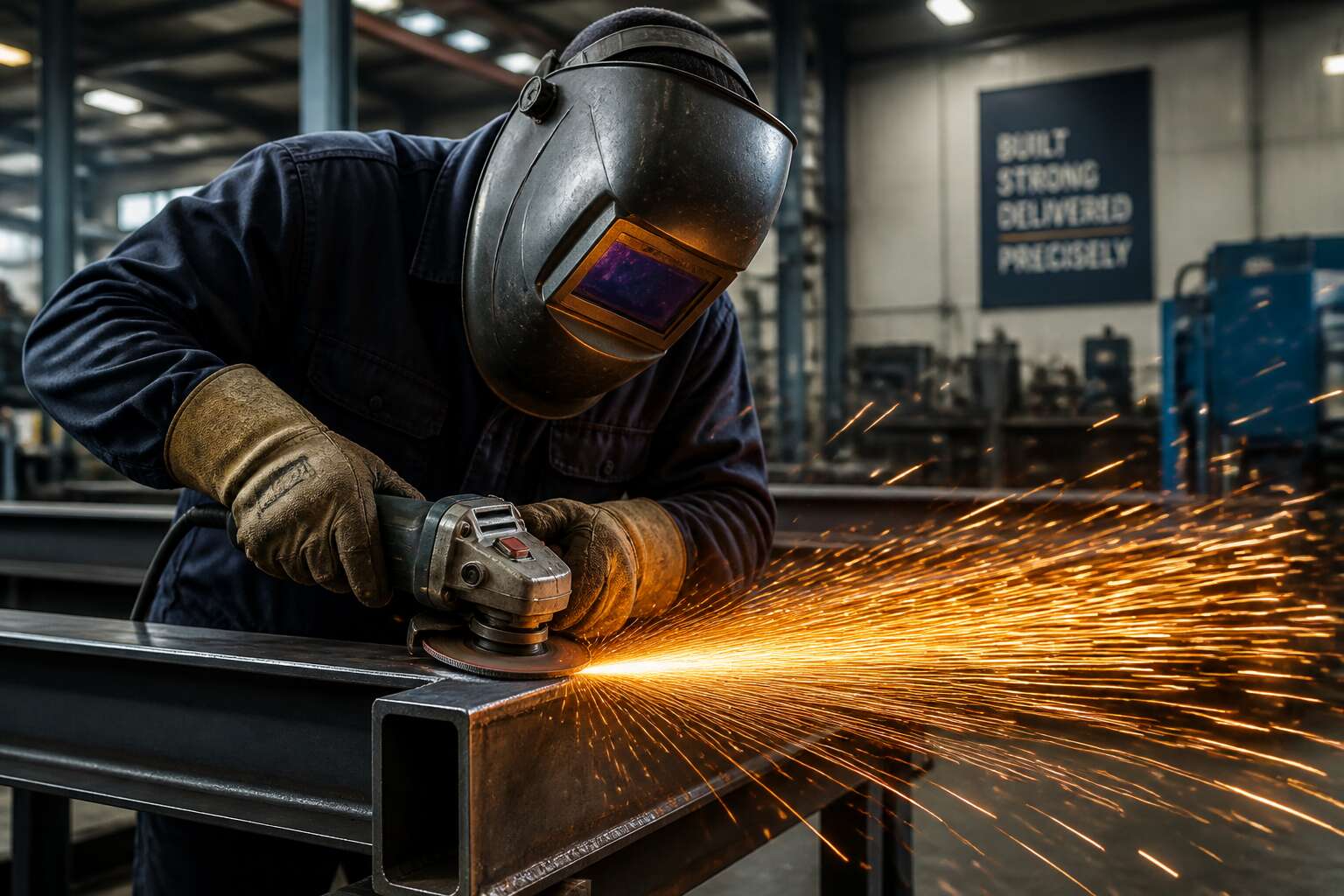
The Growing Demand for Skilled Metalworkers
Factors Driving the Expansion of the Metal Fabrication Industry
The numbers are stark. South Africa’s engineering sector faces a critical shortage of qualified tradespeople, with thousands of steel fabrication jobs remaining unfilled each year. This gap reaches beyond human resources. It signals a fundamental shift in how the country builds its future.
Several forces drive this expansion. Infrastructure renewal projects across major metros require consistent output from fabrication workshops. Renewable energy installations, especially solar farms in the Northern Cape, demand structural steel components. Mining houses continue upgrading their processing plants, and the automotive sector in the Eastern Cape relies on precision metalwork for export.
From my observations, this labour market rewards proficiency with welding torches and press brakes. Consider what fuels the demand:
- The rapid rollout of utility scale energy storage
- Localisation policies that mandate domestic manufacturing content
- The replacement of aging water and rail infrastructure
For certified workers, this is an opportune moment to pursue steel fabrication jobs!
Regional Hotspots for Manufacturing and Structural Steel Careers
Only a fraction of South Africa’s certified boilermakers are under the age of 35, and that ageing workforce is reshaping the landscape for steel fabrication jobs. The artisans who keep the country’s industrial infrastructure running are retiring faster than the training system can replace them. This scarcity elevates the value of those who can interpret complex engineering drawings and weld to international standards. It also pushes salaries upward, making these positions increasingly attractive to younger workers contemplating their options.
Gauteng remains the epicentre, with workshops in Ekurhuleni and the West Rand supplying structural steel for commercial developments and industrial facilities. The Western Cape’s shipbuilding and repair sector along the Table Bay harbour front creates persistent demand for skilled metalworkers who can handle marine-grade alloys. KwaZulu-Natal’s petrochemical corridor adds another layer of opportunity, while the Northern Cape’s expanding solar and mining operations pull artisans into semi-remote work sites. Every province tells a different story, yet all of them point to the same conclusion: the pool of available talent cannot satisfy the requirements of active projects, and employers are offering premiums for steel fabrication jobs that went unfilled for months.
- Structural steel erectors with SACPCMP registration
- Qualified welders holding AWS or SASW certification
- CNC press brake operators with programming experience
For those pursuing structural steel careers, the path often begins with an apprenticeship at an accredited training centre. Time spent on the workshop floor builds competence faster than any classroom instruction, but digital literacy now matters as much as manual dexterity. Reading 3D models and operating automated cutting tables are no longer optional capabilities. In my observation, the workshops that thrive are scheduling second-shift rotations and commissioning new bending machinery to keep pace with project timelines. As infrastructure spending accelerates, the number of steel fabrication jobs available to certified tradespeople is expanding steadily, offering genuine career security to those who take the step.
The Impact of Federal Infrastructure Spending on Hiring Needs
The national infrastructure pipeline, with its rail corridors and energy projects, is pulling skilled metalworkers into the spotlight. Public spending does not simply order steel. It creates a chain of requirements: surveying, cutting, bending, welding, and quality checking. For workshop managers, the bottleneck is people.
A qualified artisan with working experience in heavy fabrication can expect multiple offers before the week ends. Recruiters are dropping lengthy hiring cycles and offering relocation packages to secure talent. Government tenders feed private construction firms, and that multiplies steel fabrication jobs across the value chain. Those firms need fabricators who can interpret drawings and hold tolerances under pressure.
Steel fabrication jobs today come with stronger bargaining power than they did a decade ago, simply because the demand is relentless.
Essential Skills and Certifications for a Career in Metal Fabrication
Core Technical Competencies Every Fabricator Must Master
Certification carries real weight in the steel fabrication trade. The Red Seal endorsement for boilermakers in South Africa demands rigorous theoretical and practical assessment, and AWS D1.1 or ISO 9606 qualifications validate specific welding competencies. These credentials prove a fabricator can interpret engineering drawings, calculate tolerances, and execute precision cuts without constant oversight.
Steel fabrication jobs reward layered expertise. Consider the foundational competencies most employers screen for:
- Blueprint reading and geometric dimensioning and tolerancing
- Metallurgy fundamentals for heat treatment and stress relief
- SMAW, MIG, and TIG welding process mastery
- CNC programming and plasma cutting operations
Understanding distortion control, weld sequencing, and material properties separates a competent fabricator from a remarkable one. Certification verifies baseline ability; proven competence determines long-term employability.
Blueprint Reading, Drafting, and Measurement Precision
Blueprint reading is the foundation of every steel fabrication job. A fabricator who misreads a dimension by two millimetres can scrap an entire beam assembly. Drafting software like AutoCAD and Tekla Structures has replaced manual drawing boards, but the interpretive skill remains unchanged. Measurement precision demands steady hands, calibrated tools, and a respect for tolerances.
- Verify each dimension against the iso metric drawing
- Check weld symbols before setting up your jig
- Confirm datum references for every critical cut
In South African workshops, these tasks separate candidates who merely weld from those who build. Accurate measurement also involves understanding thermal expansion. A steel member heated by the sun can shift its length before you mark the next hole. That awareness turns a routine task into a craft. Professionals seeking steel fabrication jobs must master this discipline.
Welding Certifications, Safety Training, and OSHA Compliance
Welding certifications function as the primary credential in this industry. In South Africa, candidates pursuing steel fabrication jobs often need certification against standards like AWS D1.1 or the South African QSE requirements. These credentials prove you can produce consistent, code-compliant welds under examination conditions, not merely in a workshop setting.
Safety training carries equal weight. Compliance with the Occupational Health and Safety Act, aligned with OSHA principles, signals to employers that you understand the consequences of negligence. Gas safety, confined space entry, and hot work permits all demand structured knowledge.
- AWS D1.1 structural welding certification
- SAQWeld or QSE welder qualification
- First aid and firefighting competency
- Fall protection and working at heights training
Employers advertising steel fabrication jobs increasingly filter applicants by certification status. Without these documents, your practical experience remains unverifiable at a glance. A certified worker also commands higher hourly rates, since verification removes guesswork.
Physical Stamina, Attention to Detail, and Problem-Solving Abilities
Physical stamina underpins every shift in this trade. The work demands long hours on your feet, repetitive lifting, and steady hands in extreme temperatures. Attention to detail separates a reliable fabricator from a liability. A misread dimension or a skipped inspection point can compromise an entire structural component.
Problem-solving abilities carry equal weight. When a weld defect appears or a fitting misaligns, you diagnose the cause before touching the torch again. In South Africa, employers value workers who identify faults swiftly and correct them without guesswork.
Key qualities include:
– Manual dexterity under fatigue
– Spatial awareness for complex assemblies
– Patience for repetitive quality checks
These traits, combined with formal qualifications, make candidates stand out. Steel fabrication jobs reward precision and persistence in equal measure.
Exploring Different Roles Within the Fabrication Industry
Welders, Cutters, and Solderers: The Hands-On Craft
Inside a small fabrication workshop in Vereeniging, the air carries the sharp scent of oxyacetylene and fresh steel. Welding, cutting, and soldering are not interchangeable tasks. Each demands a distinct skillset and a tolerance for detail. A welder must control puddles of molten metal with patience, while a cutter uses plasma torches and beveling equipment to shape structural steel before any weld is laid down. Solderers work with lighter metals, often in tight assemblies.
For many artisans, these steel fabrication jobs provide a rare mix of independence and hard skill. Within the full range of steel fabrication jobs, welders, cutters, and solderers occupy the core positions. The work changes daily. You might spend the morning prepping a rusted beam and the afternoon completing precision joints on a custom gate. For those who take pride in seeing a finished product, this role provides something an office cannot. Every piece of metal tells you exactly where you stand.
Fitters and Assemblers: Bringing Components Together
After the cutting and welding comes the fitting. Fitters and assemblers make sure every girder, bracket, and panel lands exactly where it belongs. They line up bolt holes, check gaps, and adjust misalignments before a single weld is struck. In South Africa, where structural steel supports mines, bridges, and factories, this role is essential. A fitter’s eye can save hours of rework later.
The job demands steady hands and practical thinking. One moment you handle heavy components, the next you work to fine tolerances. Some days you assemble pre-fabricated sections on site; other days you build frames in the workshop. Each piece must meet the spec, and the spec does not bend.
For anyone seeking steel fabrication jobs, this role offers a clear path. It requires patience and measurement, but it rewards you with work you can touch. A structure stands because you made it fit.
CNC Machine Operators and Programmers
A CNC program leaves no room for guesswork. The machine cuts exactly what you program. CNC machine operators and programmers convert design data into machine instructions, writing the G-code that drives plasma cutters, press brakes, and water jets. A single decimal point error can scrap a plate of steel.
These roles demand a hybrid mindset. You read a blueprint, convert that vision into toolpaths, monitor the machine during production. You adjust feed rates and inspect output in real time.
- Setting up tooling and work offsets
- Running first-off inspections
- Editing programs
For anyone exploring steel fabrication jobs, CNC work offers another route. The operator’s judgment matters, because sensors cannot catch every anomaly. You watch the sparks, listen for strain, and know when to stop the cycle. South African workshops are adopting more automated equipment, and steel fabrication jobs in this niche reward workers who combine programming logic with shop floor instincts.
Detailers, Drafters, and Structural Design Specialists
Before a single plate is cut, a structure exists as data. Detailers and structural design specialists occupy the quiet, precise layer of steel fabrication jobs. They take architectural intent and break it into discrete elements: connection details, bolt patterns, camber calculations. Their drawings tell the welder where to place a stiffener and tell the CNC programmer which hole gets tolerance. In South Africa, where projects range from mining infrastructure to commercial high-rises, the drafter’s role carries real weight. A missing gusset plate on paper becomes a costly rework on site. These specialists work through 3D modelling software, clash detection, and material schedules that govern procurement. The work demands spatial reasoning and a tolerance for iteration. It is less about sparks and more about foresight, but it is foundational to every successful project. For those drawn to steel fabrication jobs without the heat of the torch, this path offers a different kind of craft.
How to Launch Your Career in the Metalworking Trades
Apprenticeship Programs and Accredited Trade Schools
The moment you decide to pursue a trade, you face a fork. Apprenticeship programs offer paid, on-site training while accredited trade schools provide structured theory. Both paths lead to steel fabrication jobs, yet they demand different temperaments.
- Apprenticeships suit those who learn best through repetition.
- Trade schools favour learners who need classroom fundamentals first.
In South Africa, the QCTO has streamlined artisan qualifications, but employers still value practical proof over certificates. I have watched apprentices struggle when they rush into a job without blueprint basics. Take time to research each route. For those seeking steel fabrication jobs, the choice matters less than the commitment. A mixed approach, starting with a short course and then securing a learnership, often yields the most resilient fabricators.
Building Hands-On Experience Through Entry-Level Positions
Every serious fabricator I know began in the same place: at the bottom of the workshop floor, sweeping metal shavings and sorting stock. Entry level positions in the metalworking trades are not glamorous. They are necessary. A labourer who watches the fitters, who asks questions between tasks, who learns why a weld fails before perfecting the weld itself, builds something more durable than any certificate.
In South Africa, workshops from Gauteng to the Cape take on general workers and train them upward. The path is rarely linear. Some move from cutting torch operator to fitter over years. Others find their calling in CNC operation after months of feeding raw plate. Those early shifts teach material behaviour, tool discipline, and the patience that steel demands. Steel fabrication jobs reward people who show up, observe, and handle the dirty work without complaint. Each shift adds knowledge that no classroom provides.
Networking, Unions, and Professional Industry Associations
Metalworking careers often advance through personal connections as much as technical ability. Union halls and trade association meetings link the industry’s key players. A welder who joins the South African Metalworkers’ Union gains access to employers actively seeking steel fabrication jobs candidates.
Industry associations host technical seminars and skills expos where fitters exchange contact details. Employers frequently call their association contacts before advertising vacancies. I have watched artisans receive job offers simply because they attended a regional meeting and introduced themselves properly!
Union membership offers more than collective bargaining. Many unions run training facilities and maintain job placement registers. For a newcomer, these lists provide direct access to workshops that rarely publish openings.
A fabricator’s name carries weight in these rooms. Job openings often circulate through these networks before any advertisement appears.
Salary Expectations and Career Progression in Fabrication
Mid-Career Earnings by Specialization and Geographic Location
Mid-career earnings in South African fabrication carry a cold arithmetic. A certified pipe welder in Secunda earns near R480,000 annually, while the same qualification in Cape Town stalls around R340,000. Location determines value as surely as skill does, and the gap is stark! I have watched welders relocate from Gauteng to Mpumalanga purely for this differential.
Specialisation shifts the trajectory. CNC programmers and structural detailers see their wages climb steadily after five years of service. Those who master robotic welding systems outpace generalists.
- Structural steel fitters in Johannesburg: R280,000 to R420,000
- CNC machine operators in Durban: R250,000 to R380,000
- Pipe welders in Mpumalanga: R320,000 to R480,000
Steel fabrication jobs reward persistence. The work is harsh, the shifts long, but the wages climb for those who remain.
Pathways to Foreman, Superintendent, and Plant Management Roles
Only one in five fabricators ever moves beyond the shop floor into management. The rest plateau, not from lack of skill, but from failing to see that steel fabrication jobs change shape as you climb. A foreman in Gauteng earns R450,000 to R600,000, yet the real wage is in learning to coordinate crews and production schedules.
Superintendents command R650,000 to R850,000 and answer for entire project timelines. Plant managers hold the whole facility accountable: output, safety, equipment, and profit margins. Budgeting and client relations outweigh welding skill at this level.
The progression follows a pattern:
- Chargehand or leading hand after three to five years
- Foreman once you master scheduling and quality control
- Superintendent when you manage multiple teams
- Plant manager after proving you can run a facility profitably
Each promotion demands fresh competencies. Steel fabrication jobs reward those who shift from producing parts to producing outcomes.
Union vs. Non-Union Employment: Benefits and Trade-Offs
The union question splits South Africa’s fabrication floor into two philosophies. Union shops negotiate wages collectively, protecting experienced hands. Non-union employers offer faster merit increases, but they also carry more variability.
Consider the actual numbers. A unionized Boilermaker in Gauteng might earn R280,000 annually. The non-union equivalent could start at R240,000, then jump to R320,000 after proving their value. The trade-off is stability versus speed. Union members gain grievance procedures and pension structures. Non-union fabricators keep flexibility and direct negotiation power.
Steel fabrication jobs in union environments often include:
– Guaranteed annual increases
– Defined shift allowances
– Protected overtime rules
Non-union plants instead reward individual output and cross-training. These steel fabrication jobs suit workers who prefer negotiating their own raises. Your progression depends on which risk profile matches your career goals.
The Future Outlook for Fabrication Professionals
Automation, Robotics, and the Changing Shop Floor
Three years ago, I stood on a shop floor in Johannesburg where a robotic arm laid weld beads faster than any human could. The operator, a man in his forties, was not replaced. He was retrained to supervise that machine. This is the reality shaping steel fabrication jobs across South Africa.
Automated cells now handle repetitive tasks such as MIG welding and plasma cutting with consistent precision. The human role pivots to programming the path, monitoring the process, and troubleshooting faults. This shift does not eliminate skilled hands. It redirects them to more complex tasks.
- Robotic cell operators who teach weld sequences
- Maintenance technicians trained in servo motors and PLCs
- Quality inspectors who interpret digital weld data
Entry level workers now meet robotics earlier in their careers. Their willingness to learn control systems often determines advancement. Steel fabrication jobs will keep growing, but the daily routine will look different. The trade remains, the tools have changed.
Green Steel, Sustainable Manufacturing, and New Materials
Green steel is no longer a talking point. It arrives on South African docks as low carbon billet and verified recycled scrap. In shops I have visited, this material behaves differently under the torch. Fabricators who understand its grain structure and heat response hold an advantage in steel fabrication jobs.
New alloys, including hydrogen ready grades, require updated cutting and welding parameters. Professionals who thrive read the data sheets and ask why the puddle behaves differently. Sustainable manufacturing pushes shops to track energy use and waste per tonne. That accounting becomes part of the trade. These evolving demands are reshaping steel fabrication jobs.
Fabrication professionals will encounter materials their mentors never touched:
- Advanced high strength steel with tighter tolerance windows
- Low carbon rebar produced from electric arc furnaces
- Corrosion resistant alloys for renewable energy structures
The future belongs to fabricators who approach each new plate with the same intensity they gave their first weld.
The Importance of Continuous Learning and Upskilling
The future of steel fabrication jobs depends on how seriously professionals treat their own development. The material science evolving on South African shop floors demands more than muscle memory. A fabricator who learned to weld on mild steel now faces duplex stainless and hydrogen ready alloys.
Continuous learning means reading the mill certificates. It means questioning why a puddle behaves differently. The fabricators who adapt:
- Attend supplier training sessions
- Study new welding parameters
- Request cross-training on CNC equipment
Those habits keep the profession rewarding for decades. Fabricators who treat every shift as a chance to refine their craft will define what comes next.

0 Comments