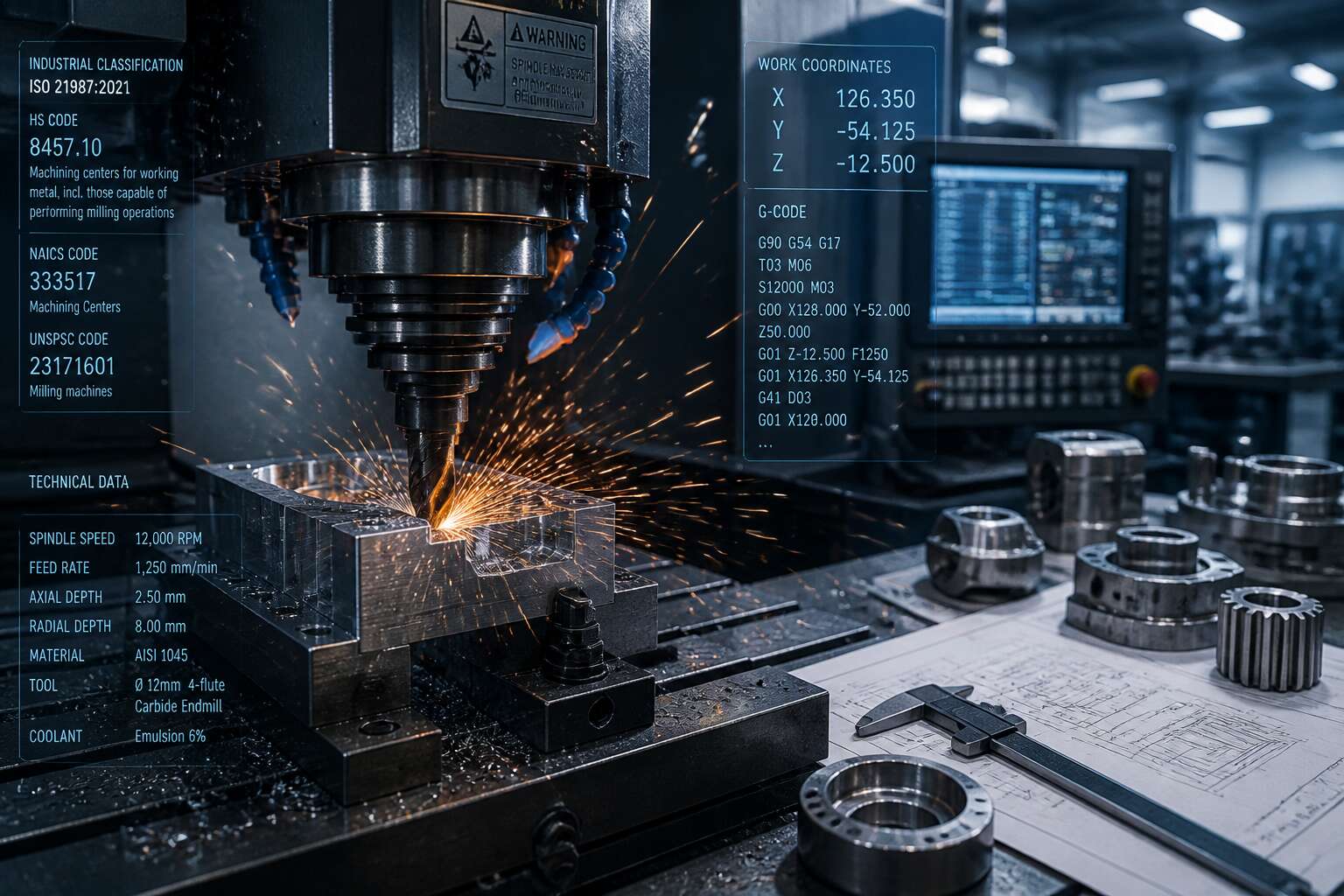
Understanding Business Classification Codes
What Are Industry Classification Codes?
Every business in South Africa carries a numerical identity that most owners never think about. Industry classification codes, such as the NIC system, group companies by their primary economic activity. The fabrication service nic code falls under manufacturing categories, distinguishing metalwork from other industrial activities.
Consider what a code actually does. It tells SARS, banks, and statisticians what your workshop does before you say a word! When I review a registration, the code often reveals more than the business name. Without the right classification, your business may appear in the wrong sector entirely. That creates problems with tenders and industry surveys.
The NIC structure follows a logical hierarchy:
1. Broad economic sectors
2. Sub-sectors for specific industries
3. Detailed classes for individual activities
Each level narrows the description until your fabrication service nic code identifies your exact trade. Understanding this system helps you position your business correctly.
The Role of NIC in India
India assigns its own NIC codes with a precision that surprises most outsiders. The Ministry of Statistics and Programme Implementation maintains the classification, revising it every few years to capture new industrial activity. A fabrication service nic code in India pinpoints the exact metalworking process, from structural steel to ornamental ironwork.
This level of detail serves practical functions:
- It determines access to production-linked incentives.
- It shapes state-level industrial policy decisions.
- It allows annual surveys to measure factory output accurately.
When I compare the Indian structure to South Africa’s, the differences are matters of emphasis, not fundamentals. Both systems demand the correct fabrication service nic code before your business can engage fully with banks and regulators. Knowing the Indian model helps you understand how classification shapes industrial visibility worldwide.
Difference Between NIC and Other Codes
Classification systems love their acronyms, yet few reward scrutiny like NIC. A fabrication service nic code identifies a specific slice of metalwork, while ISIC and SIC stay content with broader strokes. ISIC groups at international level. SIC freezes categories for years. NIC refreshes with every shift in production technology.
Consider how these differences surface in practice:
- NIC distinguishes between structural steel and ornamental ironwork.
- ISIC lumps them into a single metal products division.
- SIC often leaves fabrication firms searching for the nearest approximation.
For a South African business, this precision transforms compliance. Banks read NIC to assess risk. Regulators use it to match your output with incentive schemes. The right NIC code ensures your operation appears exactly where it belongs, not in a vague industrial bucket. That clarity is worth the paperwork.
Why Accurate Classification Is Essential
A fabrication service NIC code is not a clerical detail. It is the numerical identity that decides how your workshop is seen by the tax man, the bank, and the tender board. Choose the wrong one and your structural steel business could be mistaken for a general repair shop. That misstep invites audits, delays incentive payouts, and muddles your credit profile.
Accurate classification gives your operation a clean seat at the table. It clarifies which industry levies apply, and which export or empowerment schemes you can legitimately claim. For South African fabricators, this matters more each year, because automated systems now cross-check codes against every submitted return.
- Mismatched codes can stall B-BBEE verification.
- Wrong codes trigger unnecessary paperwork from the CIPC.
- Correct codes speed up supplier approvals on large contracts.
Getting the fabrication service NIC code right is not busywork. It is the quiet guardrail that keeps your business visible to the right people, and invisible to the wrong kind of scrutiny.
Identifying the Correct Code for Fabrication Services
General Structure of Metal Fabrication Activities
Metal fabrication rarely involves a single activity. A typical workshop combines cutting, bending, welding, and assembly, each with a potential code. The fabrication service nic code depends on the principal process, not peripheral services.
The general structure of metal fabrication activities follows a clear hierarchy. Broad classes are subdivided by material and output. Fabrication activities fall into categories like:
- structural beamsand girders
- tanks, reservoirs,and containers
- precision machined components
These divisions exist because each process yields distinct products. The correct code emerges after mapping the primary activity to the finest applicable category, often bypassing a general label. The NIC manual provides the notes needed to resolve any ambiguity.
Code Range for Fabrication Works
One wrong digit on a fabrication service nic code can stall an entire tender. The code range for fabrication works sits in NIC Division 25, which spans manufactured metal products, excluding machinery and equipment. This division carries groups for structural metal products, tanks, reservoirs, and steam generators.
Finding the right code means matching the principal output to the exact descriptor. A workshop that cuts and bends steel for other firms does not share a code with one that bolts together frameworks. The NIC manual prints exclusion notes. Heed them!
- On-site structural steel erection belongs to construction, not fabrication.
- Repair and maintenance of metal items hold separate codes.
The division also splits outputs by material shape. Sheet metal work carries its own entry, distinct from forged or cast product lines. Scrutinising the notes is non-negotiable. The correct fabrication service nic code requires that level of scrutiny.
Distinguishing Between Structural and General Fabrication
A steel staircase and a steel column can leave the same workshop floor, yet they answer to different industry codes. Structural fabrication deals in load-bearing frameworks: trusses, columns, and girders. General fabrication turns out handrails, brackets, panels, and custom assemblies. NIC Division 25 keeps these lines separate, and the product decides your place.
When you match your fabrication service nic code, ask what the item does once installed. Does it hold up a roof? That is structural. Does it bolt onto an existing structure? That is general. The process looks identical. The classification does not.
- Structural: roof trusses, portal frames, crane girders
- General: handrails, machine guards, ducting, enclosures
The workshop’s main output, not its equipment list, sets the code. The right fabrication service nic code follows that single decision.
How to Locate Your Exact Code in the Official Directory
The official directory runs past eight hundred pages, but your exact fabrication service nic code sits in the index. The directory is organised by product, not by process. I always tell workshop owners to search for what leaves the loading bay. A steel stair stringer belongs under structural fabrication. A bolt-on bracket belongs under general fabrication. This separation guides every search.
To locate your code in the official directory, follow the item’s end use.
- Name the finished product exactly as it appears on your sales invoice.
- Open the alphabetical index, not the activity tables.
- Compare the description against the division notes for metal products.
Once you find a match, verify the exclusion notes. They often shift borderline items to another subheading. That final check secures your fabrication service nic code and prevents a reclassification later.
Why This Classification Matters for Your Business
Government Registrations and Licenses
One wrong digit can stall an entire license application. For South African companies entering India, the fabrication service nic code determines your statutory compliance. Without the exact code, your registration may bounce between departments, wasting weeks.
Registrars use this code to route your application. The GST authority, labor office, and pollution board each cross-check it. A mismatch risks rejection. You might even face penalties. Verify the code against the official directory before filing.
- Match the code to your primary operation, not secondary tasks.
- Confirm the code aligns with India’s NIC schedule, not South Africa’s SIC.
- Keep the same code across all applications for consistency.
Authorities reconcile your permits and tax filings using this information. A single change in your service scope demands a new code review. Miss that and your renewal gets flagged. The fabrication service nic code supports your compliance with Indian regulators!
Taxation and GST Compliance
Your fabrication service nic code quietly decides your GST fate. It sets the tax slab, determines reverse charge applicability, and even shapes your input tax credit claims. Misclassify it and your returns may not match the department’s expectations. The mismatch triggers notices, not polite reminders.
For South African companies, this is especially thorny. Your home SIC classification means nothing here. Indian GST officers cross-reference the NIC code against your declared services, your invoices, and your annual returns. A discrepancy in any of those documents can delay refunds.
- Wrong slab means overpaying or underpaying tax
- Mismatched returns invite scrutiny from GST intelligence
- Input tax credit gets blocked if the code does not align with your purchases
Each financial year, the code follows you across every filing. Keep the fabrication service nic code consistent, keep it verified, and the compliance path stays clear.
Industry Benchmarks and Economic Data
A single code decides whether your South African fabrication business gets benchmarked against structural steel giants or boutique component workshops. That code is your fabrication service nic code. It places you within a statistical universe economists and investors track closely. Choose the wrong segment,and your performance metrics distort against actual competitors. Industry benchmarks are stratified by NIC codes, so your operational ratios get compared against a defined peer group.
This classification feeds operational data. Inventory turnover, gross margin,and labor productivity feed into sector-wide analyses. These numbers shape investor confidenceand credit access. A correct fabrication service nic code ensures your business appears in the right data pools. Financial institutions use these pools to filter companies for loan assessments. Government economic planning also relies on these codes to allocate resources.
For illustration, benchmarks highlight:
- Capacity utilisation rates
- Cost of sales percentages
- Working capital cycles
Steps to Select the Right Code for Your Fabrication Unit
Analyze Your Core Fabrication Activities
A single misclassified digit can cost your fabrication unit months of compliance headaches. Before you settle on a fabrication service NIC code, audit what your workshop genuinely does all day. Do you cut and bend raw metal, or do you assemble pre-fabricated parts? This distinction shifts your classification.
Start by listing your revenue generating processes. Welding, shearing, laser cutting, and press braking each point to different subclasses. Then check the official NIC directory for the activity that matches your primary function.
- Identify your main output: structural frames or general components
- Note any secondary services like machining or surface treatment
- Compare your list with the NIC description word by word
Your chosen code must reflect the core activity, not the ancillary one. This precision ensures the fabrication service NIC code aligns with your actual operations and future expansion.
Cross-Check With the Official NIC Directory
A misplaced digit in your fabrication service nic code can stall customs documentation for weeks, regardless of your floor output. The official NIC directory rewards deliberate reading. Cross checking demands that you inspect the exclusion notes, not just the heading text, because each subclass carries specific language about processes.
Work through the directory in a specific order.
- Open the concordance and locate the four digit range.
- Read the explanatory notes for that group in full.
- Compare the verb in the description with your actual machinery.
If the text says “by rolling” and you employ pressing, the fabrication service nic code does not apply to you. I have seen units waste a year under a wrong classification because they trusted a familiar title. The directory is not a venue for approximation. It speaks in precise verbs, and your workshop must answer in the same language. Those exclusion notes are the difference between a seamless audit and a painful correction.
Seek Help From Business Consultants or Industry Bodies
In my years working alongside South African fabricators, I have watched promising units stumble over a single classification choice. The fabrication service nic code is often the quiet culprit behind rejected tax invoices or stalled border clearances. It is not the machinery that trips you up. It is the mismatch between what you actually produce and what your paperwork claims.
Seeking help from business consultants or industry bodies is the step most owners skip. They assume their accountant understands metal work. Often, that accountant understands spreadsheets, not shearing lines or welding processes. A consultant who specialises in manufacturing classifications will review your operations against the directory language. They will also flag downstream effects on incentives and rebates.
Consider who should sit in that conversation:
– A tax practitioner familiar with customs schedules
– A representative from a metals industry association
– A production manager who knows the shop floor limits
– A compliance officer from your local chamber of commerce
I often tell workshops to treat this as a review of their own records, not a favour to an outsider. When a consultant asks about your fabrication service nic code, they are testing your internal systems. If your team cannot explain why you chose that code, the auditor will struggle too. Getting external eyes on the classification is not an admission of confusion. It is a deliberate act of protection, one that keeps your registrations aligned with your true output. The right guidance turns a bureaucratic headache into a straightforward confirmation, and that is time well spent.
Validate the Code With Your Chartered Accountant
Your chartered accountant may be a genius with tax law, but the fabrication service nic code demands more than arithmetic. I have watched workshops hand over their classification to an auditor who never sees the shop floor, only the invoice values. That handover carries risk. The code on your returns must match your true output, and validation starts with a frank conversation.
Bring your production manager along. Ask your accountant to read the directory description aloud while your manager points to matching operations. If your workshop cuts and bends structural steel, a general fabrication code may seem easier, but it will cause rejection during review. I always say: treat this as a rehearsal for an audit. Have your accountant challenge your logic until inconsistencies surface.
Prepare a simple file. Include inside it:
- order history
- material types
- process descriptions
Your accountant then checks whether that code aligns with SARS requirements andisked incentives. That is the moment a classification step becomes a safeguard.
Common Mistakes and How to Avoid Them
Using Too Broad a Category
Nearly half of small fabricators in South Africa choose a generic NIC category at registration, only to discover the error during a tax audit. Using a broad code like “manufacturing, not elsewhere classified” might seem harmless, but it muddies your compliance and skews industry benchmarks. The fabrication service nic code exists to pin down your exact activity, whether you’re cutting, welding, or assembling structural frames. When you stay too wide, you lose that precision. For example:
- Picking “metal products” instead of “structural metal fabrication”
- Selecting “general manufacturing” over “forging or stamping”
- Ignoring sub-classes for repair vs. new production
I’ve seen consultants charge hours just to untangle these missteps. The solution isn’t complicated: read the official directory with your actual processes in hand, and check whether the code covers your primary revenue stream, not just one side job. Get that right, and the rest of your paperwork flows smoother.
Confusing Fabrication With Pure Manufacturing
Every month, I meet a South African fabricator who registered under a code for casting or rolling. That code describes a different process! Fabrication involves cutting, bending, welding, and assembling components to order. Pure manufacturing implies repetitive output of identical items, often via automated lines. The NIC system separates these activities, and so do SARS and the Department of Trade, Industry and Competition.
The fabrication service nic code for a structural steel workshop sits under division 25, while the rolling mill down the road belongs to division 24. Swapping them feels harmless until your tax audit compares your declared activity with your physical output.
- A workshop producing custom gates is fabricating.
- A factory stamping thousands of identical brackets is manufacturing.
The classification notes for each code should be mapped against the actual shop floor. That single step keeps compliance honest.
Overlooking Repairs and Installation Services
Repairs and installation slip past many business owners when they register under a fabrication service nic code. A steel workshop that also restores damaged industrial equipment, or sends a team to erect a mezzanine floor on a client’s premises, performs work beyond basic production. The NIC system treats these tasks as distinct economic activities, often under a separate service code.
Overlooking them creates a mismatch between what your company declares and what it physically produces. Your tax audit might flag revenue from repair work attributed to a manufacturing classification, and the DTIC may question your sector data. Consider these typical oversights:
- On-site assembly of prefabricated components
- Reconditioning or maintenance of metal structures
- Emergency repair services for gates and fences
Review your full range of services before you settle on a fabrication service nic code. This single habit prevents the most common compliance errors.
Ignoring Recent Code Revisions and Updates
Many business owners treat the fabrication service nic code as a fixed truth. Yet the NIC directory undergoes periodic revisions. The 2008 and 2020 updates introduced new categories and merged old ones. If you still rely on a code from the 2004 list, your compliance stands on outdated ground.
Consider what changes when codes shift:
New entries for emerging metal fabrication technologies
Reclassification of repair work into separate service codes
Deleted or merged categories that invalidate your current registration
Each revision carries weight. A fabrication service nic code chosen before a major update may no longer match your actual activities. Cross-verify your code against the latest official directory before filing annual returns. Ignoring revisions is not a small oversight; it is a direct path to regulatory friction.
Copying Codes From Similar Businesses Without Verification
Another common misstep is borrowing a fabrication service nic code from a business that looks like yours. A competitor in the same city might fabricate steel frames. You fabricate aluminium components. The codes differ. Even within one workshop, two activities can fall under different classifications. I have seen enterprises copy codes from suppliers, clients, or old invoices without a single look at the official directory. The resemblance is superficial. The registration is meaningless.
The NIC directory records each enterprise by its primary activity. A code borrowed from a friend carries no authority. Verification takes minutes. Locate your exact operation in the directory, compare descriptions, and confirm with your accountant. That small step protects your compliance.
Practical Applications and Benefits of Accurate Classification
Tender Eligibility and Contract Bidding
When a public sector tender for structural steel arrives in your inbox, the evaluator’s first filter is not your shop floor. It’s your paperwork. The fabrication service nic code printed on your company profile determines whether your bid is even read.
Accurate classification gives you a direct line to specific contracts. It aligns your tender documents with the exact scope, preventing costly disqualification. Private sector buyers also search registries by precise code, so your compliance becomes your visibility!
- Qualifying for set-asides reserved for specific fabrication sub-sectors.
- Eliminating disqualification risk during the technical evaluation phase.
- Building a verifiable compliance record for repeat contracts.
In my work with Johannesburg fabricators, I have seen a correct code turn a rejected proposal into preferred bidder status. That single digit on your fabrication service nic code certificate is a decisive factor in procurement.
Access to Subsidies, Loans, and Incentives
The fabrication service nic code plays a direct role in financial support. When a South African fabricator applies for funding from development finance institutions, the code on the application is checked against their lending criteria. A mismatched code often triggers rejection, even for a profitable workshop. I have watched businesses lose access to grant funding because their classification pointed to general manufacturing instead of structural steel work.
Consider the advantages that arrive with precise classification:
– Eligibility for sector-specific subsidy programmes from agencies such as the IDC
– Improved access to preferential loan interest rates
– Qualification for incentive schemes tied to local content requirements
These benefits are grounded in the registry itself. The fabrication service nic code tells the lender exactly what you do, and that clarity reduces their risk. It becomes the first proof of credibility, long before financial statements are reviewed.
Simplifying Tax Audits and Compliance
The fabrication service nic code, when accurate, makes tax audits a quiet affair. SARS expects consistency between your declared activities and your financial records. A precise code means your invoices, purchase orders, and expense claims align with the classification on your return. That alignment shortens audit timelines considerably.
I have watched audits stall for months over a vague classification. The assessor cannot verify whether steel purchases belong to structural work or general manufacturing. An accurate fabrication service nic code removes that doubt. It gives the auditor a clear record of your revenue streams.
- Fewer follow-up queries from SARS
- Reduced need for manual explanations
- Faster resolution of VAT and income tax assessments
The code becomes quiet evidence of compliance, long before any documents are requested.
Better Market Positioning and Customer Credibility
In the metal fabrication trade, your fabrication service nic code acts as a public declaration of what you actually do. Clients, especially those in construction and engineering, check it before signing contracts. A precise code tells them you are a structural steel specialist, not a general handyman operation. That distinction shapes their perception before you send a single quote.
This positioning matters when competing for private sector work. Procurement teams compare your classification with your portfolio. When they match, you become a credible supplier. When they do not, you invite doubt.
- Accurate codes align with marketing materials and company profiles
- They support quality assurance documentation during client reviews
- They strengthen responses to requests for quotation
Customer credibility grows when your paperwork mirrors your promises.
Enhancing Industry-Specific Networking Opportunities
Your fabrication service nic code is the first filter decision-makers apply when scanning for partners. I have watched this dynamic influence outcomes in South African trade circles. A precise code broadcasts your professional boundaries directly to procurement managers, routing you into conversations about structural steel instead of generic metalwork inquiries.
Networking opportunities do not materialize from event attendance alone. They form when your classification lets the right systems direct you toward specific forums, tender portals, and regional clusters of similar specialists. The code shapes your visibility long before you greet anyone.
- It grants access to specialized B2B platforms.
- It triggers membership options in relevant industry bodies.
- It enables your profile to match niche project inquiries.
Without an accurate fabrication service nic code, your expertise is effectively invisible to the networks that route opportunities. With the right fabrication service nic code, you become a discoverable node in a system that values precision.



0 Comments