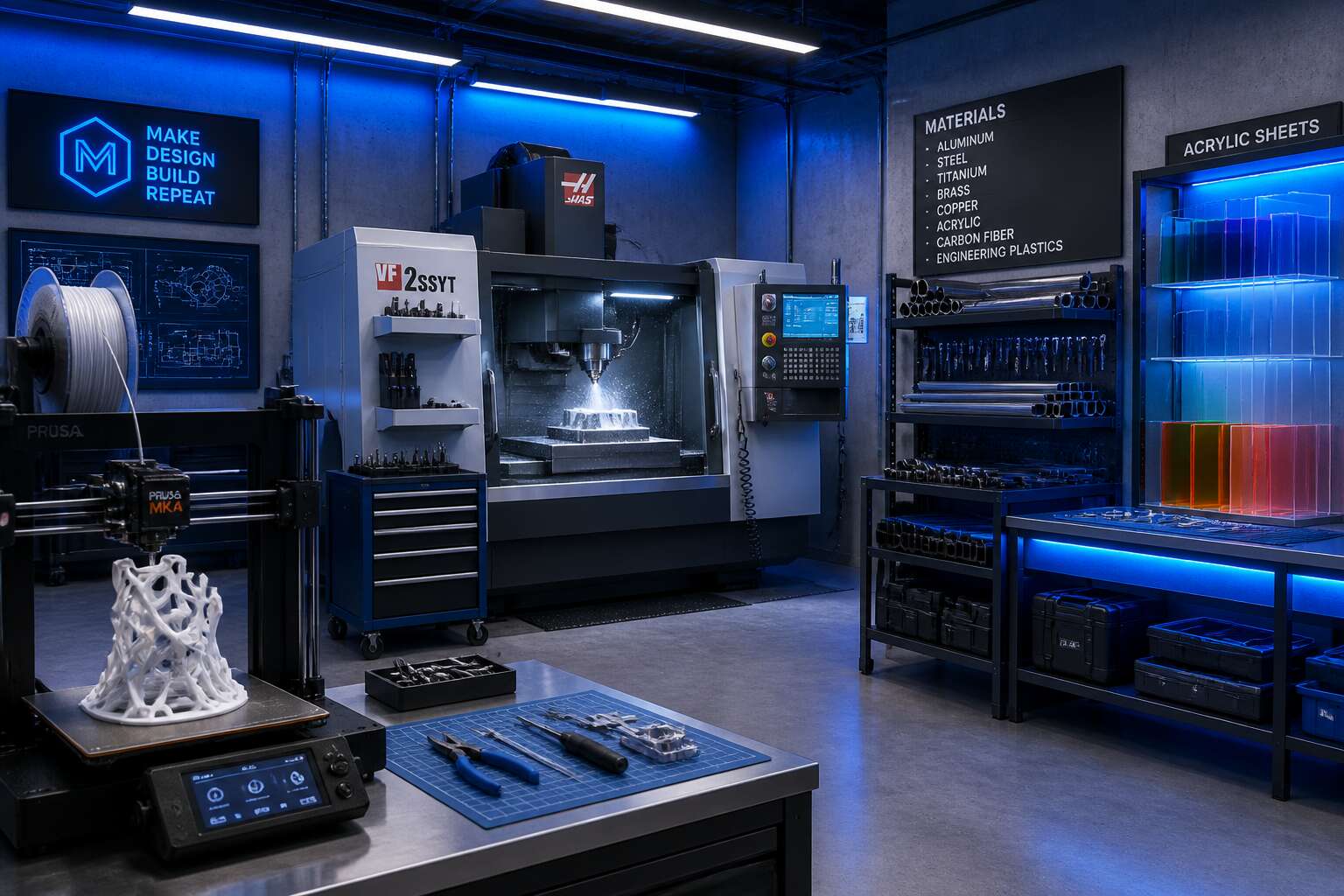
Understanding the Modern Fab Lab
What Exactly Is a Fab Lab?
Globally, over 2,500 fabrication laboratories exist, yet their purpose often gets misunderstood. A fab lab is not a typical workshop; it is a shared space where digital tools meet hands-on creation. These facilities empower individuals to turn concepts into physical objects, from replacement parts to custom electronics.
What differentiates a fabrication laboratory? The core rests on open access and peer learning. In South Africa, such spaces are sprouting in cities like Johannesburg and Cape Town, offering practical skills to students and entrepreneurs alike. The typical inventory includes:
- Precision laser cutters
- 3D printers for prototyping
- CNC milling machines
Users work alongside experienced mentors, converting raw materials into functional goods. A fabrication laboratory thrives on collaboration, not isolation, making it a vital engine for local innovation.
The History and Evolution of Digital Fabrication Spaces
The first fabrication laboratory opened its doors at MIT in 2001, and that single room sparked a quiet revolution. What began as a grant funded experiment has since evolved into a sprawling ecosystem of digital fabrication spaces across six continents. In South Africa, this evolution carries particular weight, where access to prototyping tools once belonged to industrial giants alone.
Early fab labs focused on proving that desktop machines could produce tangible goods. Over time, the mission shifted toward open design and local problem solving. The modern fabrication laboratory now blends advanced software with community driven workflows, making it a distinct step beyond the original blueprint.
- 2001: MIT launches the first lab with laser cutters and milling machines.
- 2008: Open source designs begin circulating through global lab networks.
- 2015: Mobile and low cost units expand reach into rural areas.
- 2024: Labs integrate AI assisted modeling and smart materials.
I have watched these spaces transform from novelty workshops into vital hubs for skills development and small scale manufacturing. They no longer simply offer machinery. They sustain a culture of iterative learning, where failure is a starting point. For South African makers, that means a direct path from idea to working prototype, without leaving their neighbourhood.
Core Principles: Open Access, Education, and Innovation
In South Africa, a fabrication laboratory thrives when its doors stay open to the curious and the experienced alike. Open access is not a courtesy; it is the engine of local invention. The moment a student shares a workstation with a small business owner, the lab becomes a place where knowledge compounds.
Education follows a practical rhythm. Everyone learns by measuring, cutting, and testing. That process builds confidence faster than any manual. Innovation emerges from these repeated acts of trial, especially when the community decides what to make next.
- Open access lowers the barrier to entry.
- Education turns mistakes into skills.
- Innovation solves neighbourhood problems.
I have seen this model turn a single fabrication laboratory into a launchpad for careers, all without leaving the community it serves!
Common Machines and Tools Found in a Fab Lab
A fabrication laboratory in Soweto shares its essential toolkit with labs in Berlin and Tokyo. That consistency is deliberate. The global Fab Lab network standardises core equipment so skills travel across borders.
The modern machine roster divides into four working groups:
- 3D printers that fuse filament into functional prototypes
- laser cutters that slice and engrave sheet materials
- CNC mills that carve metal and hardwood with precision
- electronics stations for circuit design and microcontroller programming
Each machine serves a different stage of making. A designer tests ergonomics with a 3D print, then cuts a durable enclosure on the laser. The electronics bench brings the product to life. This toolkit lets a single fabrication laboratory move from idea to working device.
Who Uses These Flexible Production Facilities?
The silent hum of a fabrication laboratory in Johannesburg at midnight holds a different crowd than the morning shift. Engineers arrive, but so do artists, tinkerers, and small business owners. The machines care little for your resume.
Consider the informal sector. A tailor prototypes a jig for a sewing machine. A mechanic prints a replacement gear for an obsolete part. They bring a problem and leave with an object!
- Artisans seeking custom tooling
- Startups iterating on a physical product
- Students learning through error
Here I see a fabrication laboratory where the unemployed graduate and the established inventor share the same bench. Access unlocks a kind of alchemy, though nothing mystical occurs, only the slow, deliberate turning of raw material into function.
Essential Equipment and Technologies Inside a Fab Lab
3D Printers and Additive Manufacturing Basics
Layer by layer, additive manufacturing reshapes how South Africans make things. The fabrication laboratory houses these machines, building objects from digital blueprints. For many makers, the journey begins with fused deposition modeling, where heated filament traces precise pathways. A typical setup includes a heated bed, extruder, and slicing software that translates 3D models into machine instructions.
Beyond desktop units, resin printers offer higher resolution through photopolymerization. Stereolithography, or SLA, uses ultraviolet light to cure liquid resin, producing intricate details unattainable by extrusion alone. The fabrication laboratory environment must manage ventilation and post-processing, as uncured resin demands careful handling.
Common additive technologies include:
- FDM for rapid prototyping
- SLA for fine detail work
- Selective laser sintering for durable nylon parts
Each method serves distinct purposes, yet all share a foundational premise: material added only where needed. I find this elegance compelling.
CNC Mills and Routing for Precision Cutting
Inside a fabrication laboratory, CNC mills and routers handle the work additive machines cannot. These subtractive tools spin cutting bits at thousands of revolutions per minute, carving steel, wood, and plastic into exact shapes. A typical router cuts sheet stock, while a mill tackles solid blocks. Both rely on computer code to guide every pass.
I have watched a router trace a dovetail joint with unnerving accuracy. The machine follows coordinates to within fractions of a millimetre. Operators must manage chip removal, coolant, and tool wear. One misstep in the CAM software sends the bit through the fixture. Common operations include:
- Facing and squaring stock
- Drilling precise hole patterns
- Engraving identification marks
Laser Cutters, Engravers, and Etching Tools
One pass of a laser cutter through a fabrication laboratory can turn a sheet of plywood into a doily of interlocking gears. The beam cuts with such precision that you forgive the smell of scorched wood. Engravers, the quieter cousins, use lower power to char surface detail instead of slicing through. Etching tools add serial numbers and barcodes to metal parts, a job no 3D printer can do.
I once watched a laser engrave a QR code onto a stainless steel flask in a fabrication laboratory. The operator adjusted the focus by eye, which seemed reckless until the code scanned perfectly on the first try. Some machines even handle curved surfaces with rotary attachments.
Materials that take kindly to laser work:
- Acrylic and polycarbonate
- Basswood and birch ply
- Leather and cork
That volatile smell lingers on your jacket for a day.
Electronics Benches, Microcontrollers, and Sensor Kits
Somewhere between a jeweler’s bench and a radio repair shop sits the electronics station. In a fabrication laboratory, soldering irons rest in their holders, tips cooling after the last connection. A microcontroller, no larger than a fingernail, can be programmed to sense heat, light, and motion. Sensor kits unpack into a rainbow of jumpers and tiny boards.
The essential components for any beginner:
- Microcontrollers such as Arduino or ESP32
- Breadboards and jumper wires
- Resistors, capacitors, and diodes
- Environmental sensors for humidity, gas, and pressure
Last week, at our fabrication laboratory, I watched an engineer calibrate a soil moisture sensor for a rooftop garden. The engineer adjusted each variable with calm precision. Mistakes vanish with a desoldering wick, and the faint smell of rosin lingers as proof.
CAD and Simulation Software for Design and Modeling
A single simulation can expose design flaws that would otherwise surface only after an hour of machining. CAD and simulation software reduce prototyping costs before any machine starts. Engineers test structural loads, thermal stress, and fluid flow without wasting stock. This digital stage matters for South African makers who cannot afford repeated failures.
Core software tools include:
- Parametric design suites like FreeCAD and Fusion 360
- Finite element analysis for stress testing
- Circuit simulators for board-level validation
These technologies allow rapid iteration. A mistake in a simulation costs seconds; the same mistake in a fabrication laboratory might ruin a costly workpiece. Mastering CAD separates thoughtful design from guesswork.
Practical Applications Across Industries
Rapid Prototyping for Product Designers and Startups
I’ve watched a Cape Town startup founder turn a napkin sketch into a working prototype before lunchtime. That speed is the defining feature of a fabrication laboratory. For product designers, the value lies in iterative failure. A flawed handle, a misaligned clip, a hinge that binds. Each version costs a few rand in material instead of a fortune in tooling!
Startups use these spaces to test market reactions with physical samples, not renderings. They adjust ergonomics, weight, and finish. They learn what breaks under real handling. This cycle of making, testing, and revising compresses months of development into weeks.
- Validate a product concept with a physical model
- Refine tolerances before investing in injection molds
- Produce small batches for pilot customers
The fabrication laboratory allows product teams to move from idea to object with minimal friction.
Educational STEM Projects for Schools and Universities
The same fabrication laboratory that prints a prosthetic hand can also cut a school’s geometry set. That range explains why these spaces are spreading across South Africa. In Johannesburg, medical firms use them to create patient-specific surgical guides. In the Eastern Cape, agricultural cooperatives print replacement gears for irrigation pumps.
The educational impact is just as concrete. Projects range from simple to complex:
- Assembling a weather station from sensor kits
- Laser cutting enclosures for electronic devices
- Building and testing wind turbine blades
These projects teach iteration, measurement, and teamwork. They also show how products move from screen to shelf. For educators, this space turns abstract equations into objects students can hold. It prepares learners for technical careers. It strengthens the local innovation ecosystem.
Custom Manufacturing for Local Businesses and Entrepreneurs
Local manufacturers in South Africa are discovering that a fabrication laboratory can replace costly minimum order quantities. A small furniture maker can laser cut precise joints without buying industrial tooling. A township bakery can produce custom moulds for artisanal breads. These spaces turn digital designs into physical goods within hours.
Entrepreneurs use the equipment for short production runs and bespoke components. Consider these practical uses:
- Cutting replacement parts for aging agricultural machinery
- Engraving branded metal tags for craft products
- Moulding silicone gaskets for local repair shops
The fabrication laboratory lowers the barrier to entry. Businesses test a product before investing in mass production. This flexibility supports innovation across sectors, from food processing to automotive repair.
Medical Device Prototyping and Assistive Technology Development
In South Africa, one in seven people lives with a disability, yet custom assistive devices often carry prohibitive price tags. A fabrication laboratory changes this equation. Clinicians and engineers now share a workspace where patient scans become tangible prototypes within days. I have watched a paediatric hospital in Pretoria design adjustable splints for children with cerebral palsy. The devices cost a fraction of imported alternatives. Another team produced custom hearing aid shells using desktop scanning and resin printing.
This iterative process allows immediate feedback from patients and therapists. A fabrication laboratory encourages rapid refinements, such as:
- Ergonomic wheelchair cushions mapped to individual pressure points
- Prosthetic socket liners shaped from 3D scans
- Communication switches for motor impaired users
Each iteration addresses real needs. That speed matters when a child outgrows a brace within months, and it turns medical innovation into a local, practical reality.
Art, Architecture, and Sculpture Through Digital Fabrication
A sculptor in Johannesburg no longer needs a stone block and a chisel. Digital files drive the cutter. A fabrication laboratory turns those files into physical objects with precision. In architecture, this enables parametric facades and custom brickwork from the same machine that crafts museum pieces. For sculpture, digital tools expand what is possible:
- Reproducing a model at any scale without losing resolution
- Carving composite materials that resist harsh weather
- Creating interlocking forms impossible with traditional methods
These capabilities attract designers who once outsourced production overseas. Now they iterate locally. I have watched a Cape Town studio produce an entire installation wall from recycled plastic panels. The speed changes what artists attempt!
Community-Led Innovation in Rural and Urban Maker Spaces
Some of the most inventive work I have seen in a fabrication laboratory did not come from a designer with a portfolio. It came from a farmer in Limpopo who needed a replacement part for an irrigation valve. That is the quiet power of community-led innovation. A maker space down the road becomes a workshop where practical problems meet digital tools.
In urban settings, these spaces turn discarded plastic into school furniture and street signage. In rural towns, they keep broken machinery alive long after suppliers have moved on. The pattern repeats:
- Locals identify the problem
- A shared machine solves it
- The solution remains in the community
This loop strengthens local resilience. A fabrication laboratory is not a novelty. It is a utility with a soldering iron and a strong Wi-Fi connection.
Building and Equipping Your Own Fab Lab
Selecting the Right Location and Floor Plan
In South Africa, repurposing an old warehouse into a fabrication laboratory often fails due to poor pedestrian flow. A successful floor plan positions noisy machinery away from quiet design stations. You need clear sightlines, but also separate zones for dusty work and clean assembly.
Start with power outlets, ventilation, and sturdy tables. Then arrange equipment in a U shape, which reduces walking distance and lets one supervisor monitor everyone.
- Measure door widths for large CNC machines.
- Place laser cutters near an exhaust point.
Natural light boosts morale, but direct sunlight interferes with sensor calibration. Budget for adjustable blinds and a dedicated electrical line for each heavy tool.
Budgeting for Startup Costs, Equipment, and Maintenance
A fabrication laboratory in South Africa rarely starts below R200,000, and that is before you pay for recurring consumables. I learned this while pricing second-hand CNC mills and new laser tubes! Your budget must separate one-time purchases from ongoing costs.
- Core machines: 3D printer, laser cutter, CNC router
- Dust extraction and safety gear
- Electrical upgrades and ventilation
Maintenance consumes budgets quietly. Calibration, belts, nozzles, and software licenses demand monthly reserves. A typical reserve sits around 10% of equipment value annually. The cheapest tools break faster, costing more in downtime.
Establishing Safety Protocols and Operational Guidelines
One loose cable causes more downtime than any failed print. Building a fabrication laboratory means planning for movement, noise, and heat before the first machine arrives. Concrete floors absorb vibration, but they also conduct cold. Zone your space: dirty work near extraction, clean assembly away from dust.
Safety protocols start with physical rules. Every operator must know emergency stops and fire suppression. Operational guidelines should include scheduled checks for filters, guards, and electrical loads. A daily walkthrough prevents failure.
- Lockout/tagout for maintenance
- Eye wash station within 10 meters
- Ventilation triggers for laser or resin work
These specifics shape a culture where access stays open and incidents stay rare.
Best Practices for Running a Successful Fabrication Studio
Streamlining Workflow from Design to Production
A fabrication laboratory thrives when everyone stops treating the design file as unchangeable. The real bottleneck in most studios is the clumsy transition between CAD, toolpath, and physical output. I’ve seen operators redraw geometry because they couldn’t find the export button. That’s not a machine problem.
Streamlining means standardising the digital handoff. For every job, three things must be fixed: file format, material tolerance, and tooling details. Get those right early, and the machines behave.
- Name files with date, version, and operator initials
- Keep a shared cloud folder for all source CAD
- Run a 10 minute setup check before every batch
Good studios also track metrics like queue time and scrap rate. They cut waste, keep makers satisfied, and produce repeatable output without the daily drama.
Scheduling Maintenance and Calibration for Machines
A fabrication laboratory runs on machines that receive regular attention. Uncalibrated equipment produces scrap parts that waste money. In my experience, scheduling maintenance is not an expense. It is a necessity. Set fixed intervals for each machine. Track hours, not days. A laser cutter needs lens checks after every 40 hours of operation. A CNC router demands spindle vibration tests weekly.
- Lubricate moving parts every Monday morning.
- Calibrate bed leveling before high tolerance jobs.
- Document every service in a shared log.
Power qualityin South Africa complicates machine upkeep. Install surge protectorsand stabilizers to protect controllers. Include power restoration stepsin your maintenance routine. When machines sit idle after load shedding, moisture can affect optics. Schedule calibration after any outage longer than two hours. This practice prevents unexpected failures during critical production runs.
Building a Member Training and Certification Program
Fifty percent of machine damage in South African community workshops stems from untrained operator error. In a fabrication laboratory, a structured certification program prevents that waste while building member confidence. We start every new member with a safety orientation and a basic tool proficiency check. Then we assign competency tiers. Each tier unlocks specific machines.
For each machine, members follow the same certification path:
- Pass a written safety quiz.
- Complete a supervised test piece.
- Produce one independent project.
This sequence ensures both theoretical understanding and practical skill. We track certifications in a shared spreadsheet with expiry dates. Members must renew every six months or after any observed unsafe practice. For repeat offenders, we offer refresher sessions rather than bans. This keeps the space accessible while maintaining high standards. Training also covers material selection and setup procedures, because most failed jobs come from poor preparation, not equipment failure. Our program has cut scrap rates by a third since launch.
Documenting Projects to Inspire Future Makers
Every project that leaves our fabrication laboratory carries a story. We photograph each completed piece, from the first rough sketch to the final polish. These images sit in a simple digital archive. When a new member hesitates over a complex joint, we pull up a past success. That visual proof matters more than any manual.
- Capture progress shots at each stage.
- Record the material choice and tool settings.
- Note the maker’s own words about the challenges.
We started this habit after watching too many brilliant designs vanish into memory. In rural workshops, knowledge often dies with the maker. A small camera and a shared folder changed that. The archive now serves as both inspiration and reference, showing what a fabrication laboratory can achieve with local hands and available machines. This humble record keeps our community connected across seasons!
Fostering Community Partnerships and Recurring Funding
In our fabrication laboratory, we learned that goodwill does not pay the electricity bill. Partnerships with local municipalities and technical colleges brought in machinery and training support. Recurring funding came from small monthly memberships and a percentage of commercial prototyping work. We review these relationships on a quarterly schedule.
Community partnerships require more than a signed memorandum. They need direct contact with people who understand the studio’s constraints. Our city council now includes us in their economic development briefings. This visibility leads to budget allocations that repeat annually.
- Negotiate machine maintenance packages with suppliers.
- Offer short paid workshops to businesses that sponsor materials.
The fabrication laboratory survives when no single revenue stream covers more than half of operating costs, and that forces us to stay useful to different groups!

0 Comments